Tran Thi Thanh My, head of the Vietnam Trade Office in Australia, told the Vietnam News Agency that the partnership framework, established in March 2024, has injected more confidence into business communities, fueling trade and investment.
Bilateral trade held above USD 14 billion during 2024–2025, up from under USD 10 billion in 2020. Vietnam’s exports to Australia have surged, jumping from roughly USD 3.6 billion in 2020 to around USD 6.8 billion in 2025. The result was a much more balanced trade ledger, with imports and exports running close.
    |
 |
|
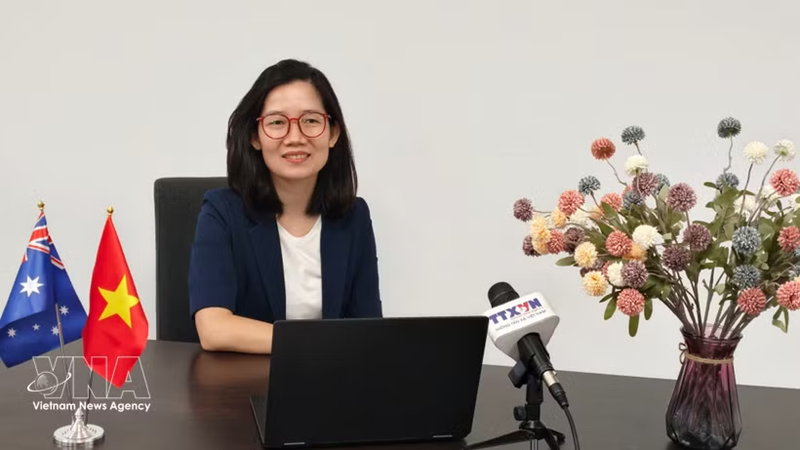
Head of the Vietnam Trade Office in Australia Tran Thi Thanh My |
By the end of July, total registered Australian investment in Vietnam topped USD 2 billion. In the other direction, major Vietnamese firms have launched projects in Australia, especially in high-tech agriculture, with total investment near USD 600 million.
These numbers show economic ties are moving well beyond simple goods trade into supply chain integration, production and technology transfer, My said.
Party General Secretary and State President To Lam’s state visit is expected to supercharge economic ties, especially in technology, an emerging pillar of cooperation. My said. She hoped that the visit will mark a new milestone, opening the door for firms on both sides to forge stronger links and launch concrete cooperation agendas, helping hit that USD 20 billion trade goal sooner rather than later.
The target is within reach, she said, if both countries effectively tap new growth engines while keeping traditional product groups growing.
Drawing on the trade office’s market study and business support, My singled out three areas with the biggest room to run, including quality agricultural and processed food, construction materials, and minerals and energy.
Beyond traditional agricultural and fishery exports, Vietnamese firms can step up shipments of deeply processed products such as dried, canned and ready-to-eat foods, Halal-certified goods and organic ones. These match consumer trends in Australia and allow Vietnamese goods to capture far more value than raw or semi-processed exports.
Construction materials offer another major opening. Australia is racing to build more infrastructure and housing, with a government target of 1.2 million new homes over five years. That creates demand for Vietnamese steel, wooden furniture and a range of other building materials. But to lock in sustainable access, firms must fully meet local technical standards, environmental rules and green development requirements.
In minerals and energy, Vietnam needs imported raw materials for production while Australia is a top global mineral supplier and also boasts strengths in renewables and green technology.
The two economies are highly complementary, creating opportunities to cooperate not just in mineral trading but in investment, deep processing, technology transfer and building sustainable supply chains, according to the official.
A ministerial-level energy dialogue is expected on the sidelines of the high-level visit. The Trade Office is hoping for concrete outcomes that lay the groundwork for new projects and deliver real benefits to businesses and citizens on both sides, My noted.
As Australia remains one of the world’s toughest markets on technical standards, biosecurity, food safety, traceability and sustainability, her advice to Vietnamese firms is shifting to a compliance-first mindset, studying import rules for each product category in detail, and controlling quality from the production stage onward.
For agri-food products, requirements concerning biosecurity, pesticide residue limits, traceability, labelling and packaging must be strictly observed. Violations don’t just hurt a single company’s bottom line and reputation, but can drag down the whole Vietnam brand in Australia.
Beyond meeting standards, businesses must build brands and tell compelling product stories.
She also urged firms to squeeze more advantage from the free trade agreements both countries share. Vietnam and Australia are members of three multilateral FTAs that offer major tariff and market access breaks. Mastering rules of origin, certification steps and relevant commitments will help Vietnamese goods unlock tariff benefits and sharpen their price edge against global competitors.
Source: VNA