At ASIAD 20 in Aichi-Nagoya, Japan, Vietnam finished 20th overall with 25 medals, including three gold, three silver and 19 bronze. The result met the delegation’s target for overall ranking but fell short of its goal of winning at least four gold medals.
    |
 |
|
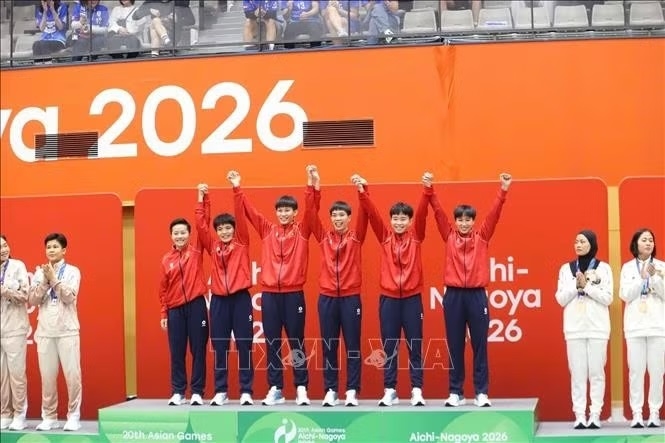
The results at the ASIAD 20 in 2026 spotlight the need for Viet Nam to focus resources on key sports. (Photo for illustration) |
Vietnam’s gold medals came from karate and sepak takraw, reaffirming its strengths in sports with established traditions and focused investment. Meanwhile, bronze medals in canoeing and teqball showed potential in events where Vietnamese athletes are gaining international experience.
The results also highlight the need to assess competitiveness beyond medal counts, including the quality of coaching, nutrition, sports medicine, equipment, international competition experience and the ability to develop successors.
Decision No.816/QD-TTg, issued by the Prime Minister on May 7, 2026, on developing key sports for ASIAD and Olympic Games for 2026-2045, focuses on developing athletes, improving training conditions and applying science and technology to enhance performance.
Nine key sports have been identified, including shooting, archery, weightlifting, cycling, rowing, athletics, swimming, karate and sepak takraw. Selecting sports with strong medal prospects provides a basis for concentrating resources amid limited funding and training conditions. However, the effectiveness of this orientation depends on identifying the right areas for investment, developing cyclical plans, and evaluating results against specific indicators.
The program also calls for the selection and development of around 35-40 additional athletes and events with potential to compete for medals at the ASIAD and Olympics.
The Strategy for Development of Viet Nam’s Physical Training and Sports through 2030, with a vision to 2045, aims to keep Viet Nam among the top three at the Southeast Asian Games and the top 20 at the ASIAD by 2030. It targets five to seven gold medals at each ASIAD edition, as well as medals at the Olympic and Paralympic Games. By 2045, Viet Nam aims to rank among the top 15 at the ASIAD and top 50 at the Olympics.
Maintaining achievements across multiple cycles requires a continuous system to identify and develop young athletes, from grassroots talent detection to specialized training, international competition and advancement to national teams. Athlete welfare, including nutrition, medical care and training conditions, also needs attention.
Science and technology should be further applied through performance data analysis, workload monitoring, fitness assessment and tailored nutrition, alongside qualified experts and coordination between training centers and research institutions.
After ASIAD 20, the sports sector needs to translate strategic goals into specific plans for each sport, event and athlete group, assessing not only medals but also performance at Asian and world championships, the development of young athletes and the strength of the next generation.
The Aichi-Nagoya results show that Viet Nam has established strengths but still faces challenges in turning potential into continental-level achievements. To pursue higher goals at future ASIAD and Olympic Games, the country needs to focus resources on key areas, improve training quality and build a sustainable athlete development system.
Source: VNA