Developing distinctive tourism products
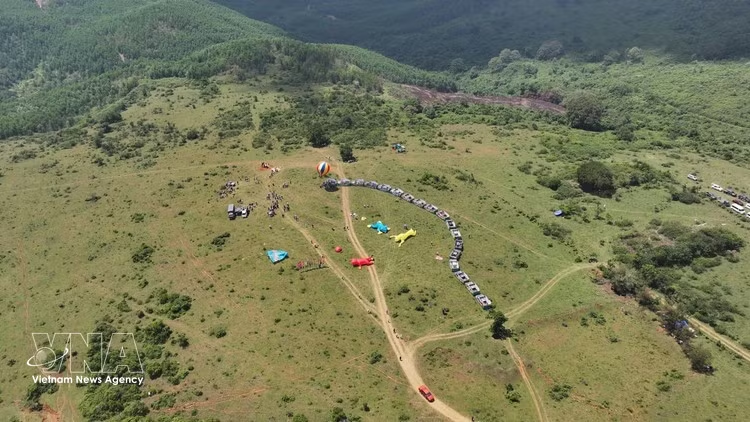
Surrounded by mountains and forests, La Vuong Plateau features vast grasslands, lakes and lush forests. Its location linking coastal areas, lowlands and mountainous areas also creates favorable conditions for tourism products combining nature, culture, agriculture and community life.
    |
 |
|
La Vuong Plateau seen from above |
In recent years, the plateau has emerged as an attractive destination, offering camping, trekking, sightseeing, photography and opportunities to explore nature and local lifestyles. Its spacious, tranquil setting is also ideal for short getaways and outdoor relaxation.
Le Thi Phuong Linh, a resident of Quy Nhon Dong ward, said her first visit to La Vuong has left her delighted by the fresh air and cool weather, far from traffic noise, exhaust fumes and the bustle of urban life.
According to Tran The Nguyen, Vice Chairman of the Hoai Nhon Bac Ward People’s Committee, La Vuong’s key advantage lies in its connections between the coast, lowlands, rural villages and highlands. The locality is therefore exploring tourism products that combine natural landscapes with cultural heritage, agricultural activities and community experiences.
Potential itineraries could link the plateau with Thien Chanh beach, Doi Muoi historical site, Chuong Hoa sedge-mat weaving village, Truong well and Vang spring. Such routes would diversify tourism products and encourage visitors to extend their stays rather than make only day trips.
The locality is studying ecotourism, nature exploration, camping, glamping, farmstays, agricultural experiences and relaxation services suited to local conditions.
Community participation and environmental protection
Hoai Nhon Bac is shifting its focus from simply showcasing scenery to developing tourism products with the active participation of the community. Residents are expected to provide accommodation, food, agricultural products, guided experiences and introductions to local culture, creating additional jobs and income while preserving traditional values.
Nguyen stressed that the deeper the community’s involvement, the greater the potential for sustainable tourism development.
To realize this vision, the locality needs to improve essential infrastructure, upgrade service quality and strengthen residents’ hospitality skills while ensuring tourism activities remain within the environment’s carrying capacity.
Its guiding principle is clear: “Develop La Vuong without sacrificing La Vuong.” Rather than pursuing dense construction, the locality prioritizes appropriately scaled tourism activities that minimize impacts on forests, landscapes and the environment while safeguarding community interests.
Turning the plateau’s potential into distinctive products and stable livelihoods will require continued infrastructure improvements, better services and stronger community engagement. Balancing tourism development with conservation will be essential to establishing La Vuong as a sustainable destination.
Source: VNA