In total, the country received nearly 4.7 million foreign tourist arrivals in the first two months of 2026, representing a year-on-year increase of 18.1%.
    |
 |
|
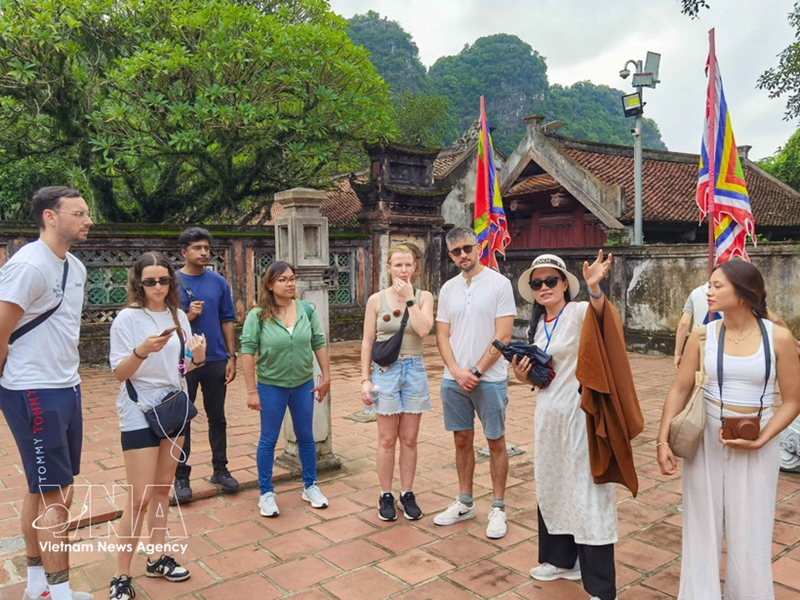
International tourists visit the historical sites of the Dinh and Le Kings' temples in the ancient capital of Hoa Lu, Ninh Binh province |
Tourism experts attributed the strong growth to a combination of factors, including more open visa policies, diversified tourism products, and intensified promotion activities. Vietnam’s growing reputation as a safe and friendly destination has also played a significant role in attracting international travelers.
In recent years, the country’s tourism sector has frequently been recognized by international organizations and media outlets for its safety and reliability. U.S.-based travel website Travel Off Path has described Vietnam as the safest destination in Asia, while Best Diplomats, a New York-based organization focusing on training future diplomats, listed the country among the 10 safest destinations in Asia.
Meanwhile, Travel+Leisure Magazine recently ranked Vietnam among the top five standout destinations in its list of the 25 best countries for solo travelers. British magazine Time Out also named Vietnam one of the world’s nine safest destinations for solo female travelers, making it the only representative from Southeast Asia on the list.
As independent travel, solo journeys and small-group trips continue to gain popularity worldwide, such recognition helps reinforce international travelers’ confidence and influences their choice of destinations.
Vietnam’s safety advantage stems from its stable socio-political environment, low crime rate, and peaceful landscapes. The friendliness of local people and the responsiveness of authorities in supporting tourists have further strengthened this image.
There have been multiple cases in which lost belongings of foreign visitors were returned after being found by local residents. Travelers facing difficulties have also received timely assistance from local communities and authorities.
For example, police in Ninh Binh province returned a wallet with cash and documents to an American tourist after verifying the owner’s identity. In another case in Quang Ngai province, authorities successfully located and assisted a foreign tourist who was lost in a mountainous area. Such actions have left a positive impression on international visitors of a hospitable and responsible Vietnam.
Experts noted that safety is not only a prerequisite but also a competitive advantage for tourism destinations. Vietnam is well positioned to attract travelers shifting away from risk-prone areas towards safer locations.
However, to fully capitalize on this advantage, the tourism sector should continue improving destination management and strengthening cooperation with domestic and international airlines to expand air routes and enhance connectivity.
Authorities are also urged to further build a civilized tourism environment by addressing issues such as fraud and overcharging, while improving mechanisms to protect tourists’ rights, maintain effective hotlines, and enhance the capacity to respond to incidents.
Together with its natural attractions, cuisine and quality services, a strong sense of safety and comfort will remain a key factor in ensuring Vietnam’s appeal to international travelers.
Source: VNA