The program seeks to reduce child abuse nationwide and provide timely protection and comprehensive support for child victims of violence, sexual abuse and illegal child labor, children at risk of violence, exploitation and neglect, as well as those of other special circumstances.
By 2030, the program targets providing all families with children with knowledge and skills on child protection through various channels. All school students will receive age-appropriate education on life skills, self-protection against abuse, school violence and online violence, and child labor prevention.
    |
 |
|
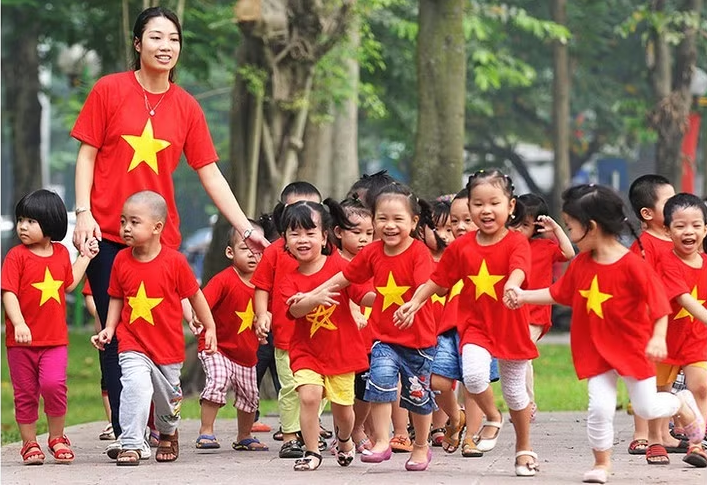
The national program on child protection, and child labor prevention and reduction aims to ensure that every child grows up in a safe and healthy environment. |
It also aims to ensure that all officials, public employees and service providers working in child protection, health care, education and social assistance are equipped with stronger professional capacity, while 90% of businesses, cooperatives, business households and service establishments will receive guidance on preventing, detecting and reducing child labor.
Nationwide, all provinces and cities are expected to establish integrated child protection service models; 95% of commune-level administrations will provide inter-sectoral child protection services and all commune-level ones will have child-friendly investigation rooms.
The program sets a target of reducing child violence and sexual abuse cases by at least 5% annually and lowering the child labor rate among those aged 5–17 to below 1.1%.
It also requires that all identified child victims and children at risk receive timely intervention and support, that all requests for legal aid for children are met in accordance with the law, and that all vulnerable children are managed through the national child database connected with other relevant databases.
To achieve these goals, the program outlines measures including improving the legal framework, expanding child protection services, strengthening public awareness campaigns, enhancing professional training, preventing child labor, stepping up international cooperation, and promoting digital transformation in child protection.
A key task is to review and amend the Law on Children and related legislation to align them with the Party’s and the State’s policies and Vietnam's international commitments, particularly the regulations supporting organizations, institutions, families and individuals involved in delivering child protection services.
The program also calls for developing standards, technical regulations and service procedures, as well as clearer criteria for identifying child labor and children at risk, alongside stronger inter-agency coordination in preventing child violence, sexual abuse, and labor.
The program underlined the necessity to raise public awareness of laws, increase education, and building capacity for child protection, noting that communication campaigns, public education on knowledge and skills, and social advocacy will be carried out to promote children's rights and responsibilities for child protection.
Authorities are instructed to expand integrated and multi-sector child protection services, particularly in remote, border, insular, disadvantaged and ethnic minority areas, while making greater use of digital platforms and online communications to raise public awareness.
Priority will also be given to detecting and preventing child labor in agriculture, supply chains, business households and individuals, small production facilities and craft villages. Children removed from child labor will receive support to access education, vocational training and social welfare services while their families will be assisted in improving livelihoods and reducing poverty.
The program further encourages businesses and cooperatives to establish self-monitoring mechanisms to identify and mitigate child labor risks in their supply chains.
In addition, Vietnam will strengthen international cooperation, mobilize technical support from international organizations and development partners, and accelerate the standardization and integration of child-related data while ensuring information security and protecting children's personal data.
Source: VNA