The Nam Quang Tri Special-use Forest Management Board announced the findings on October 20 following a three-month survey assessing the reserve’s bird diversity.
Six of the newly recorded species are of conservation significance, representing four orders and five families. They include the White-winged Magpie (Urocissa whiteheadi Ogilvie-Grant, 1899), great hornbill (Buceros bicornis) and greater spotted eagle (Aquila clanga), some of which are listed in Viet Nam’s Red Data Book and the IUCN Red List.
    |
 |
|
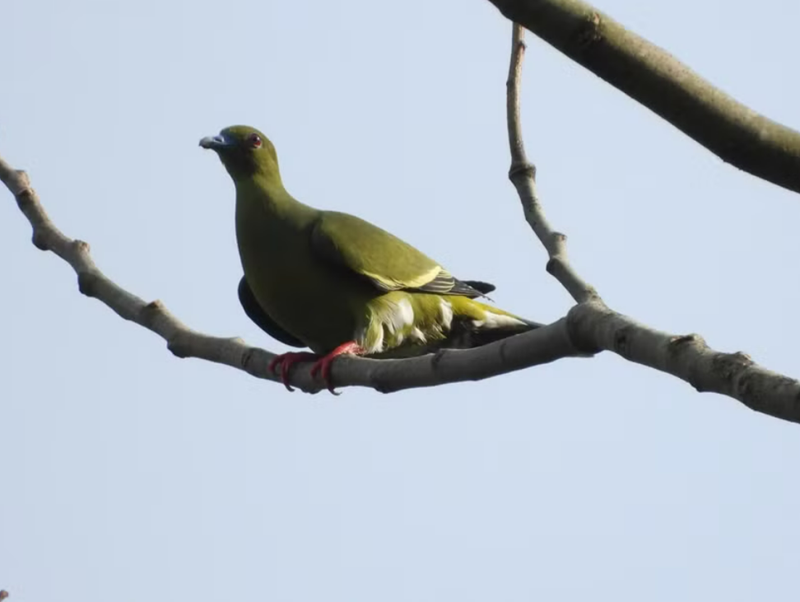
Six of the newly-recorded species are of conservation significance, representing four orders and five families. |
Camera traps also captured several endangered and rare wild animal species classified under Groups IB and IIB in Circular No. 85/2025/TT-BNNMT issued by the Ministry of Agriculture and Environment, including the stump-tailed macaque (Macaca arctoides), Annamite striped rabbit (Nesolagus timminsi), northern pig-tailed macaque (Macaca leonina), southern serow (Capricornis milneedwardsii), spotted linsang (Prionodon pardicolor), lesser mouse-deer (Tragulus kanchil), red-shanked douc ((Pygathrix nemaeus), and Asian palm civet (Paradoxurus hermaphroditus).
Conducted from June to September 2026, the survey aimed to assess bird species diversity, identify major threats, and propose conservation measures. Researchers surveyed more than 10 routes covering different habitats and elevations, walking a total of over 36.6 km through forests.
They also established 10 bird capture-and-release sites, using 57 mist nets for a combined 2,076 hours, and installed 34 camera traps at 34 survey sites. More than 4,000 images were collected, around 61% of which contained data.
The survey documented 228 bird species from 55 families and 17 orders. Compared with a 2005 study, the latest survey added 35 species from 18 families and one order to the reserve’s bird checklist.
The findings provide a scientific basis for prioritizing conservation targets, conducting further research and developing appropriate habitat protection and monitoring measures, helping improve biodiversity conservation in Dakrong Nature Reserve and the Truong Son range.
Source: VNA