In a report submitted to the Government on March 16, the ministry said developments in the region are increasing operating costs for transport enterprises and putting pressure on logistics.
    |
 |
|
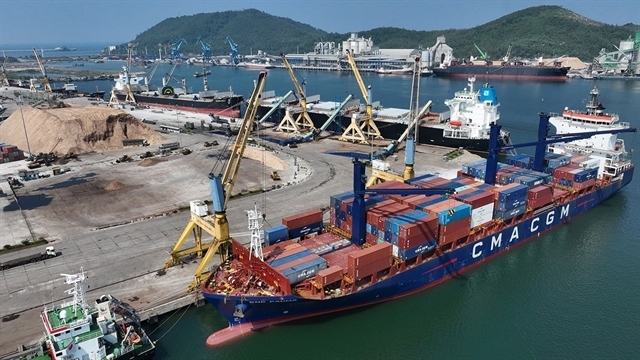
Containers are unloaded at Nghi Son International Port in Thanh Hoa province. |
The ministry said fuel currently accounts for around 35–40% of airlines’ operating costs. Airspace restrictions in parts of the Middle East have forced airlines to reroute flights, increasing fuel consumption as well as insurance and operational expenses.
Statistics show operating costs at Vietnam Airlines have risen by about 50–60%, while Sun Phu Quoc Airways reported an increase of roughly 30%. Vietjet Air has also incurred additional costs of around 2 trillion VND (76 million USD) per month.
Aviation fuel prices have also increased. Jet A-1 fuel in Singapore is currently trading at about 160 USD per barrel and could approach 170 USD by the end of the month.
According to the International Air Transport Association, if prices rise to 200 USD per barrel, airline operating costs could increase by more than 70%.
The maritime sector has also been affected by the situation in the Middle East.
The ministry reported that 15 vessels owned by Vietnamese enterprises are currently operating in the region, including eight flying the Vietnamese flag. Some ships have resumed normal operations, while others remain anchored awaiting further instructions, although all vessels and crew members are reported to be safe.
Global container freight rates have also risen. The Drewry World Container Index increased by about 10% compared with the previous week and 12–15% compared with the period before the conflict, reaching around 2,300-2,500 USD per 40-foot container.
Freight rates on the Asia – Europe route have surged by more than 20%, while those on Asia – Mediterranean routes have risen by about 10%. Several shipping companies have also begun imposing war risk and fuel surcharges on certain routes.
Fuel costs also account for roughly 30–40% of operating expenses in maritime transport. If fuel prices rise by 20%, sea freight rates could increase by about 15%, while inland waterway transport costs may rise by around 18%.
Domestically, road transport costs have been rising as fuel prices increased by 20–30%. For railway transport, passenger ticket prices have increased by 3% and freight charges by 4%. However, since March 13 prices have declined slightly, after Vietnam Railways Transport JSC reduced fares following a modest drop in diesel prices.
Proposed tax and fee reductions
To ease cost pressures on transport companies, the Ministry of Construction proposed several fiscal measures.
The ministry recommended that the Ministry of Finance consider reducing special consumption tax and environmental protection tax on fuel for a certain period to mitigate the impact of global energy price fluctuations.
|
|
 |
|
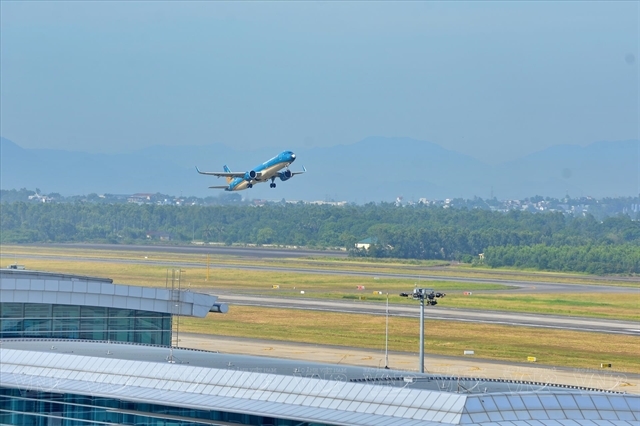
A Vietnam Airlines aircraft takes off at Da Nang International Airport |
It also proposed cutting aviation landing and take-off fees and air navigation service charges by 50%. In addition, it suggested reducing or exempting port entry and exit fees for inland waterway transport.
Another proposal is to include fuel used in transport in the list of goods eligible for a reduction in value-added tax from the current 10% to a lower level.
The ministry also urged the Ministry of Industry and Trade to direct refineries and gas processors to diversify input supplies to sustain output. Fuel distributors should prioritize supply for transport and key industrial sectors if shortages emerge.
According to the ministry, it will continue coordinating with relevant agencies to monitor developments and support transport enterprises in maintaining stable logistics operations amid global uncertainties.
Source: VNA