They shared the assessment with Vietnam News Agency correspondents in Brussels on the sidelines of the Vietnam–E.U. Science, Technology and Trade Workshop recently held in the Belgian capital.
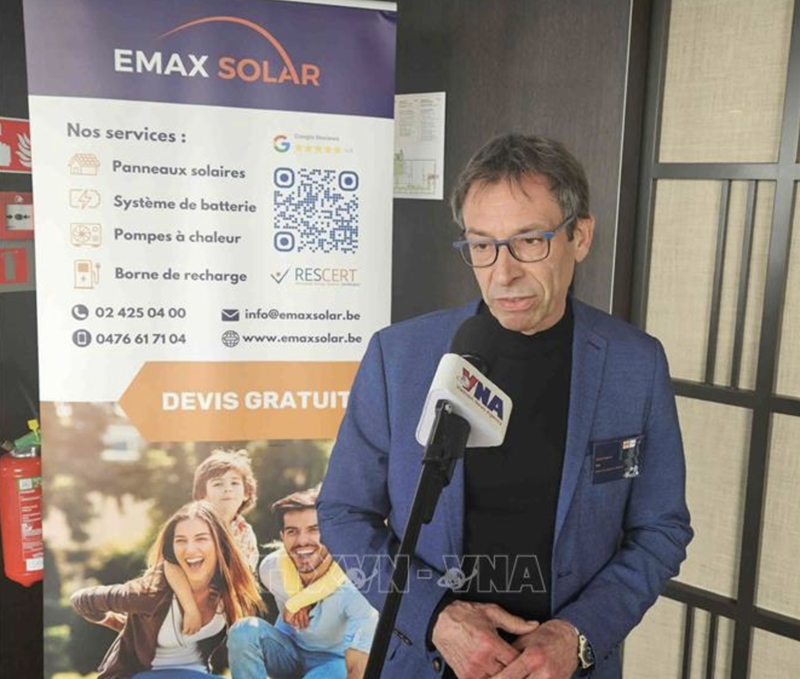
Professor Geert Angenon of Vrije Universiteit Brussel (VUB) described the workshop as a valuable platform for strengthening connections between European and Vietnamese researchers. Having collaborated with Vietnamese colleagues for many years, he said the event offered an opportunity not only to reconnect with existing partners but also to engage with younger Vietnamese scientists.
    |
 |
|
Professor Geert Angenon of Vrije Universiteit Brussel shares with Vietnam News Agency correspondent in Brussels, Belgium. |
A specialist in plant biotechnology, Angenon noted that the field has made significant progress, particularly in gene-editing technologies. He highlighted the potential of systems such as CRISPR-Cas, which allow scientists to precisely modify specific segments of genetic material to develop improved crop varieties. According to him, the practical applications of such technologies could be particularly significant in Vietnam, given the country’s strong agricultural base.
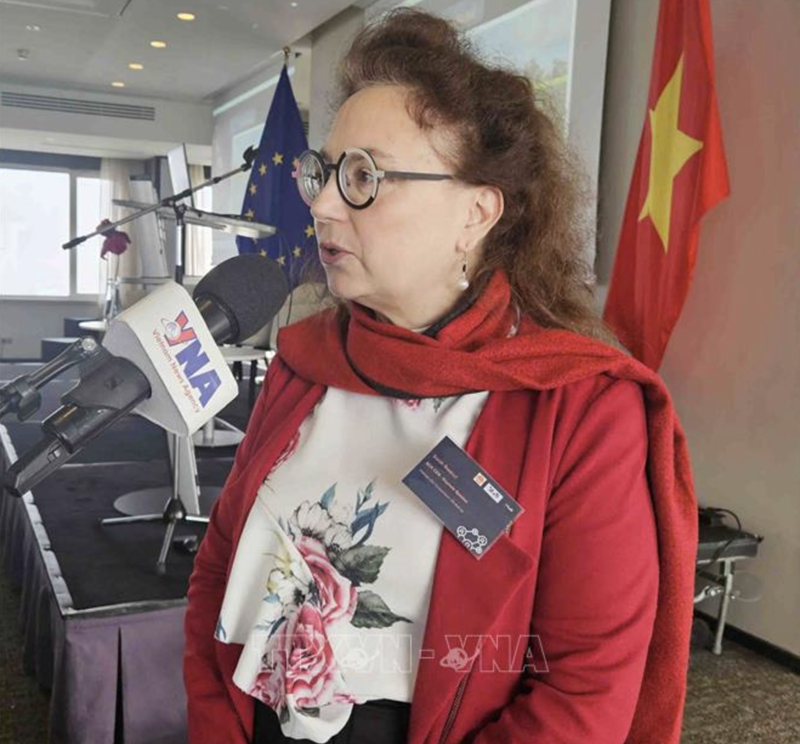
In the healthcare sector, Professor Sarah Baatout, Deputy Director of the Institute for Nuclear Medical Applications at the Belgian Nuclear Research Center (SCK CEN), said Vietnam has made notable progress, especially in nuclear medicine, adding that her discussions with representatives from Vietnamese hospitals ahead of the workshop also highlighted strong interest in expanding cooperation.
|
|
 |
|
Professor Sarah Baatout, Deputy Director of the Institute for Nuclear Medical Applications at the Belgian Nuclear Research Center, shares with Vietnam News Agency correspondent in Brussels, Belgium. |
Baatout noted that AI applications in medicine are still at an early stage but are developing rapidly. While the technology offers major benefits, it also presents new challenges. She welcomed Vietnam’s establishment of legal frameworks governing AI, describing it as an important step toward ensuring responsible development of emerging technologies.
At the European level, the E.U. has also adopted the Artificial Intelligence Act. According to Professor Baatout, similarities in policy orientation between Vietnam and the E.U. create favorable conditions for deeper cooperation in AI and science and technology.
Experts believe that as demand for technological innovation grows and international partnerships expand, Vietnam has big opportunities to deepen cooperation with European partners in high-tech agriculture, healthcare, digital transformation and artificial intelligence. Events like this workshop are expected to help foster concrete projects and strengthen Vietnam–E.U. cooperation in science and technology in the years ahead.
Source: VNA