As international integration deepens, medical tourism is making an increasing contribution to economic growth. However, Ho Chi Minh City has yet to fully tap this potential as most hospitals lack specialized services for international patients.
Competitive costs, high professional standards
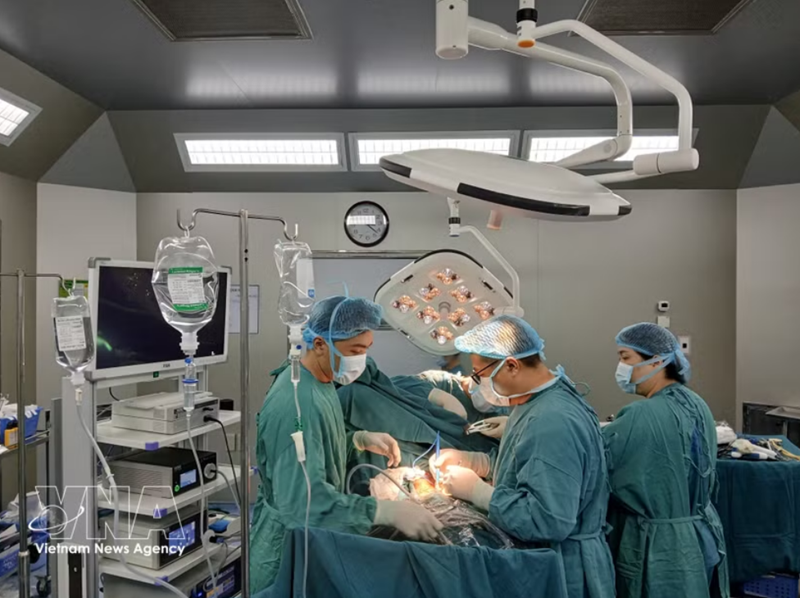
In early October, Minh Anh International Hospital in Ho Chi Minh City admitted a 31-year-old Cambodian woman in critical condition due to mesenteric artery embolism, near-total necrosis of the small intestine and multiple organ failure. After emergency surgery, intensive care and specialized treatment, her condition gradually improved, and she was discharged.
A 41-year-old Singaporean patient was referred to Tu Du Hospital after her unborn baby was diagnosed with a severe congenital heart defect. Having waited more than a decade to have a child, she did not want to terminate the pregnancy. Following two fetal cardiac interventions, the baby's heart condition improved, offering hope for survival.
    |
 |
|
Viet Nam's advantages include affordable treatment, professional expertise, modern technologies and the development of both public and private hospitals. |
Professor and Academician Nguyen Van De, Chairman of the Viet Nam Association of Private Hospitals, said that while Vietnamese people commonly travelled abroad for treatment 30 years ago, the trend is now beginning to reverse.
Viet Nam's advantages include affordable treatment, professional expertise, modern technologies and the development of both public and private hospitals.
For some services, De noted, treatment costs are only 30–50% of those in Singapore and Thailand. A dental implant costs around 1,000–1,200 USD in Viet Nam, compared with up to 5,000 USD in the U.S., while in vitro fertilization (IVF) costs about one-third of the price in Thailand and one-fifth of that in the U.S.
Combining medical expertise with quality services
Viet Nam is strengthening its capabilities in advanced fields such as organ transplantation, cardiovascular intervention, robotic surgery, assisted reproduction and cancer treatment. Hospitals are investing in modern equipment and advanced techniques to improve treatment outcomes and attract international patients.
Traditional medicine also offers potential. Doctor Do Tan Khoa, Director of the Ho Chi Minh City Hospital of Traditional Medicine, said acupuncture, catgut embedding, therapeutic exercises and herbal medicine could become distinctive medical tourism products when properly combined with rehabilitation and resort services.
Viet Nam's dental sector attracts around 100,000 international patients annually, generating estimated revenue of 3.5 trillion VND (135.3 million USD). Assisted reproduction is another emerging strength thanks to reasonable costs, modern techniques and high success rates.
Stronger coordination needed
According to the Ho Chi Minh City Department of Health, the city recorded hundreds of patient visits from Cambodia, Laos, Indonesia and other countries in the first nine months of 2026.
However, Dr Huynh Minh Chin, Deputy Director of the department, said only a small number of hospitals have developed dedicated services for international patients.
Most healthcare facilities remain focused on conventional treatment, with limited links to tourism, accommodation and patient care. Coordination among the health, tourism, public security and foreign affairs sectors is still fragmented. Inadequate market research and medical tourism data also hamper policy development and promotion.
Chin said the city's specialized hospitals, skilled workforce and modern medical capabilities provide a strong foundation for developing services in specialized treatment, dentistry, assisted reproduction, cosmetic procedures and health check-ups.
Following its merger with Binh Duong and Ba Ria - Vung Tau, the city can better connect healthcare with coastal and ecological tourism, resorts, traditional medicine and rehabilitation, creating an integrated chain from treatment to recovery and wellness.
Dr Duong Huy Luong, Deputy Director General of the Department of Medical Service Administration under the Ministry of Health, said Viet Nam cannot compete sustainably with Thailand and Singapore on low costs or individual medical techniques alone. The country needs specialized medical centers, standardized services and stronger partnerships between hospitals, travel companies and accommodation providers.
By combining medical expertise with internationally standardized services and effective branding, Viet Nam can turn medical tourism into a high-value service sector that contributes more significantly to economic growth.
Source: VNA