Exploring Ha Noi’s skies
The IOAA 2026 recently took place in Ha Noi, attracting 65 teams from 64 countries and territories, with nearly 500 participants, including approximately 320 students. Despite their different cultural, linguistic, and educational backgrounds, the students shared a passion for exploring the universe. Theoretical examinations, data analysis, and astronomical observations tested not only their scientific knowledge, but also their analytical thinking, perseverance, and ability to apply knowledge to practice.
    |
 |
|
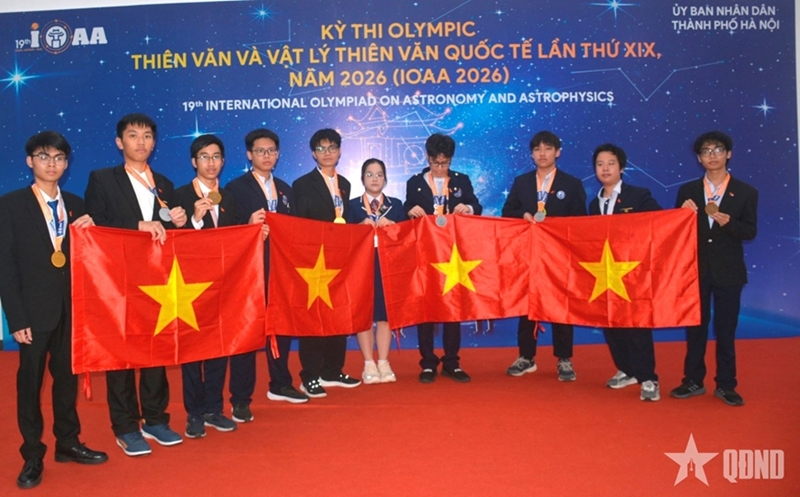
Members of the Vietnamese team at the competition |
Using modern telescopes to observe the skies above Ha Noi allowed students to connect classroom learning with the natural world and explore astronomical phenomena firsthand.
Dinh Tran Phuong, a teacher at Ha Noi-Amsterdam High School for the Gifted, said, “Bringing Ha Noi’s skies closer to students also nurtures their love for the city, inspires them to contribute to its development, and opens up more opportunities for learning and research.”
For Vu Ngoc Nhat Viet, a 12th-grade student at Nguyen Hue High School for the Gifted who won a gold medal at IOAA 2026, the observational examination was a memorable experience. Although born and raised in Ha Noi, regularly observing the night sky through modern telescopes was a new experience. His first international competition also gave him the opportunity to meet peers from different countries, share their passion for astronomy, and learn about new scientific research.
These experiences highlight the value of bringing an international scientific competition to Ha Noi. The city was more than just a venue; its skies became a space for learning, discovery, and international exchange, inspiring students to explore new questions about the world around them.
From scientific exchange to cultural discovery
Beyond the competition, visits to Ha Noi’s historical sites and traditional craft villages gave international contestants a deeper understanding of Viet Nam. Their cultural itinerary included the Temple of Literature Complex, the Imperial Citadel of Thang Long, and Bat Trang Ceramic Village.
At the Temple of Literature Complex, contestants learned about Viet Nam’s longstanding tradition of valuing education, knowledge, and teachers. The values embodied in the country’s first university resonated with the aspirations of young people pursuing scientific knowledge.
Kevin C. Yang, a U.S. contestant who won a gold medal, said the visit introduced him to Vietnamese cultural traditions, including the custom of students visiting the Temple of Literature before examinations to pray for academic success. He also enjoyed Ha Noi’s cuisine, particularly peach tea and several types of traditional noodle soup. The competition enabled him to make friends with students from Australia, Singapore, Armenia, and Norway.
At Bat Trang Ceramic Village, contestants experienced Vietnamese culture through traditional craftsmanship and hands-on pottery making. Sumant Gupta, an Indian contestant who won a gold medal at IOAA 2026, recalled buying souvenirs and making a ceramic bowl to take home. For him, the experience was both enjoyable and memorable. The bowl represented not only a traditional craft village but also the people he met and the joy of creating something in a foreign country. Gupta expressed his desire to return to Viet Nam and explore more of a country he had little time to explore during this trip.
|
|
 |
|
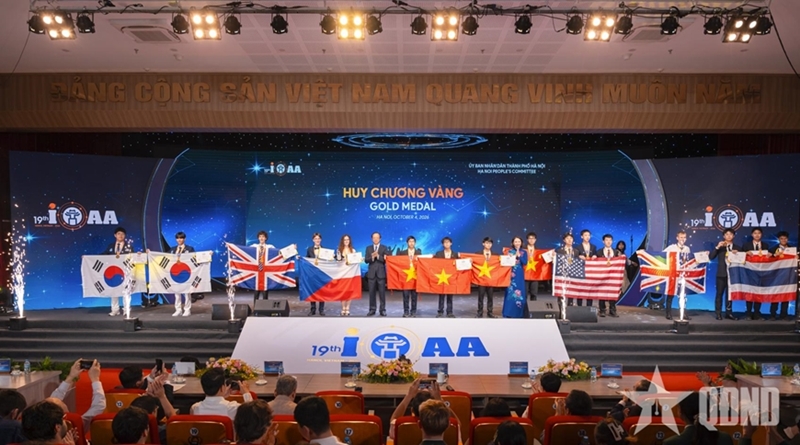
Vietnamese and international students receive gold medals at the competition. |
During the visit, Vu Ngoc Nhat Viet introduced international contestants to several local ceramic products. He recalled explaining how to use a pottery item to a contestant from Uruguay who was interested in it. For Viet, it was his first visit to Bat Trang and an opportunity to share Vietnamese culture with his international peers.
Through Ha Noi’s skies, the young contestants discovered new scientific horizons. Through its historical sites, craft villages, and local people, they gained a deeper appreciation of a city that preserves its heritage while continuing to evolve and embrace the world.
Looking up at Ha Noi’s skies, therefore, means more than gazing at distant stars. It reflects the aspirations of a city seeking to connect with the world through knowledge, culture, and a humanistic spirit. Ha Noi welcomes international visitors with scientific achievements, captivates them with its rich cultural heritage, and inspires them to return through the warmth and friendliness of its people.
Translated by Tran Hoai