According to a report on the incorporation of feedback and revisions to the draft law, several important provisions have been amended, including those on exclusions from criminal liability, suspension of criminal prosecution, exemption from criminal liability, criminal liability for preparatory acts, and the scope of criminal liability for commercial legal entities. The draft also introduces new offences and criminal acts while removing certain existing offences.
    |
 |
|
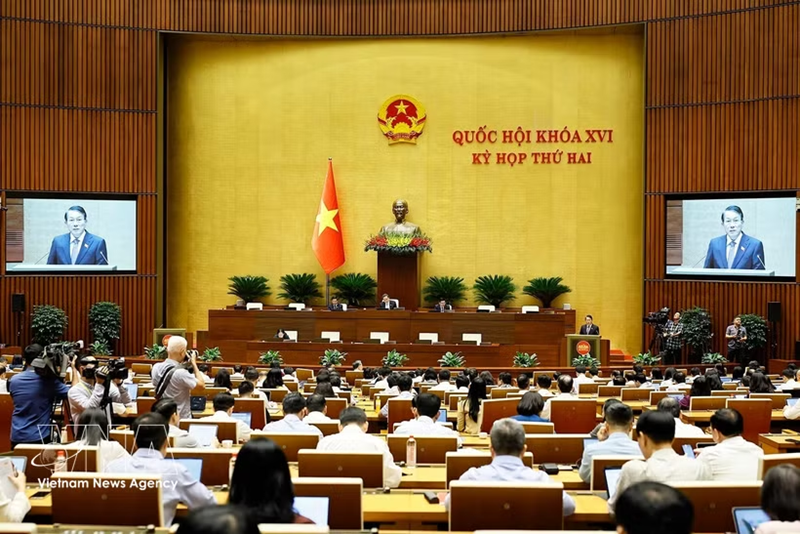
A plenary sitting of the 16th National Assembly's second session |
However, differences remain over several provisions, including organized crime, legitimate self-defense, penalties for commercial legal entities and individuals committing offences on their behalf, and leniency for offenders who voluntarily admit guilt and accept punishment.
In response, the drafting agency revised provisions on penalties for commercial legal entities, proposing the removal of time-limited suspension of business operations and reductions in fines for certain offences. The changes aim to avoid excessively harsh penalties that could adversely affect workers and business operations.
The draft also replaces the mechanism for determining penalties for individuals committing crimes on behalf of commercial legal entities based on the proportion applicable to individuals acting independently. Instead, courts would determine penalties based on each individual's role, degree of fault, motives, purpose and benefits gained.
Additional revisions clarify leniency principles and allow penalties below the minimum prescribed range for offenders who voluntarily admit guilt and accept punishment, ensuring consistency with the draft revised Criminal Procedure Code.
In the afternoon, the legislature is scheduled to discuss the draft revised Law on the Organization of Criminal Investigation Agencies and a draft resolution on piloting mechanisms for the recovery and handling of crime-related assets without a criminal conviction.
Source: VNA