Not only do these schools maintain regular operations throughout the summer, but they also flexibly organize after-hours and weekend childcare services to support workers and ethnic minority communities living in the project areas where the units are stationed, particularly during peak agricultural and production seasons.
When summer becomes busiest season
At 7 a.m., the playground of Hoa Hong Kindergarten under Defense-Economic Unit 717 is already filled with cheerful voices and laughter. Groups of parents bring their children to school before quickly returning to the rubber plantations. The children happily wave goodbye to their parents and join their teachers and friends in various activities.
    |
 |
|
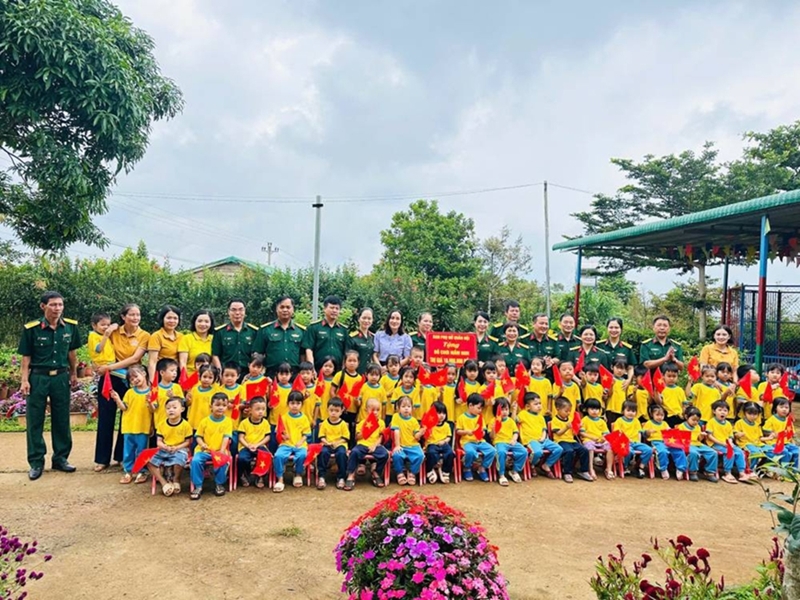
The Military Women Advisory Board visits and presents gifts to Sao Mai Kindergarten. |
This scene unfolds every day at the four kindergartens operated by Corps 16. While many schools close for the summer holiday, teachers here continue their familiar routine. Classrooms remain open, meals are carefully prepared, and afternoon naps are supervised with the same attention and care as during the regular academic year.
For these schools, summer is not a period of rest but a particularly important time of the year. It coincides with peak production activities, plantation maintenance, and harvest seasons, resulting in consistently high demand for childcare services from parents.
Non-commissioned Major Roan Thi Ngoc Hao, Principal of Sao Mai Kindergarten under the Defense-Economic Unit 726, shared that although there is no longer pressure from the formal curriculum, teachers remain busy. In addition to caring for the children, they organize a variety of experiential activities, traditional folk games, storytelling sessions, drawing, singing, and outdoor physical activities to ensure that children enjoy a meaningful and enriching summer.
Fulcrum of workers in border areas
|
|
 |
|
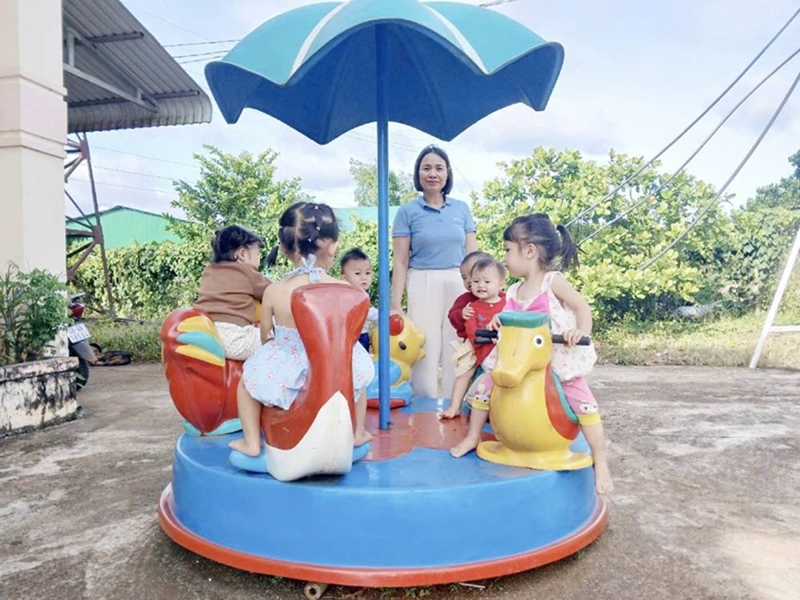
Teacher and children at Hoa Sin Kindergarten |
For many families of rubber and coffee plantation workers, as well as ethnic minority households, the continued operation of kindergartens during the summer carries special significance.
Within the Defense-Economic Units of Corps 16, the workday often begins very early. Many workers must be present at work before dawn and do not return home until late in the afternoon. Without the childcare services provided by these schools during the summer break, many families would face considerable difficulties in arranging care for their children.
The kindergartens not only remain open throughout the summer but have also, for many years, maintained after-hours childcare services, including on weekends during peak production periods.
Whenever the coffee harvest, cashew harvest, or irrigation season for coffee plantations begins, labor demand increases significantly. Local people often have to work longer than usual, and many families do not know how to take care of their young children. In response, the schools proactively develop plans and assign teachers on duty to extend drop-off and pick-up hours, enabling parents to focus on their work with peace of mind.
At all four schools, ensuring children's safety remains the highest priority. Playgrounds and recreational facilities are inspected regularly; kitchens strictly comply with food hygiene and safety regulations; and nutrition plans are carefully designed to meet the needs of each age group.
Sowing love through simple deeds
Behind the smooth operation of these summer classrooms lies the dedication of the administrators, teachers, and staff members at the four kindergartens.
While many people spend the summer break with their families, teachers here continue to report to work early each morning. From welcoming children at the school gate and organizing recreational activities to managing meals and nap time, every task is carried out with a profound sense of responsibility and love.
|
|
 |
|
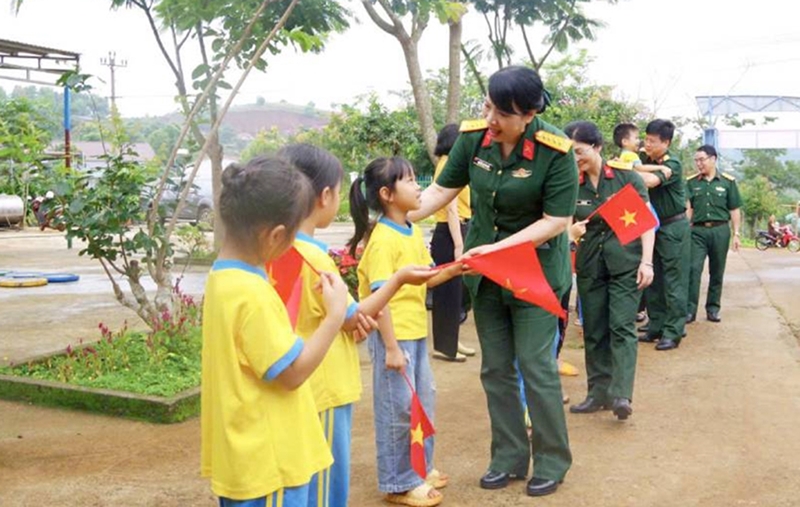
Sr. Col. Nguyen Thi Thu Hien, Head of the Military Women Advisory Board, visits Sao Mai Kindergarten. |
Sr. Col. Vu Van Dinh, Deputy Political Chief of Corps 16, stated that the kindergartens remain operational during the summer to meet the practical needs of officers, workers, and local people in the area. This is not only a childcare service but also a practical solution that enables workers to focus on their duties and production activities, thereby contributing to local stability and strengthening the people's trust.
Over the past years, the corps has consistently invested in educational facilities, improved the quality of the teaching staff, and built a safe, friendly, and happy learning environment for children.
These deeds have contributed to beautifying the image of Uncle Ho’s soldiers in border areas. The schools not only fulfill their educational mission but also provide a reliable source of support for working families and a place where hundreds of workers and ethnic minority households can confidently entrust the care and education of their children.
Translated by Chung Anh