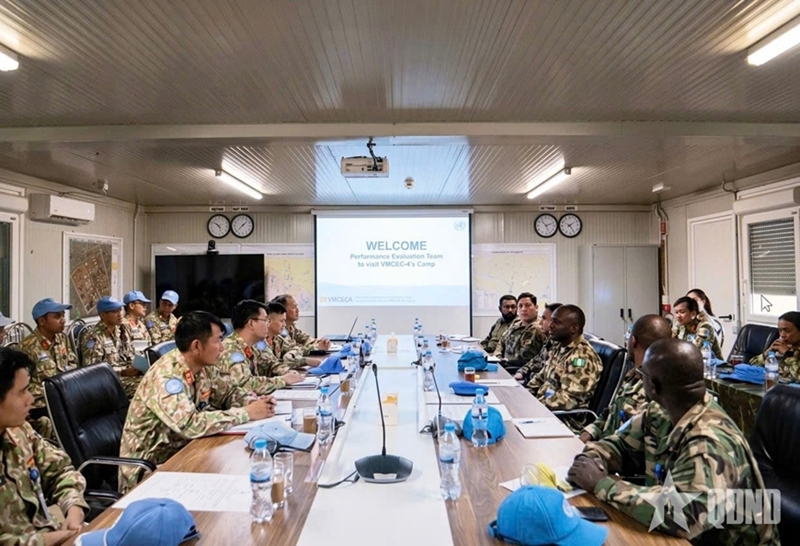
Held every six months, the comprehensive assessment involves experts from logistics, transportation, medical, communications and equipment divisions, aiming to review all aspects of a unit’s operational readiness and mission performance.
    |
 |
|
The UNISFA expert delegation closely supervises and evaluates the unit’s operational capabilities. |
|
|
 |
|
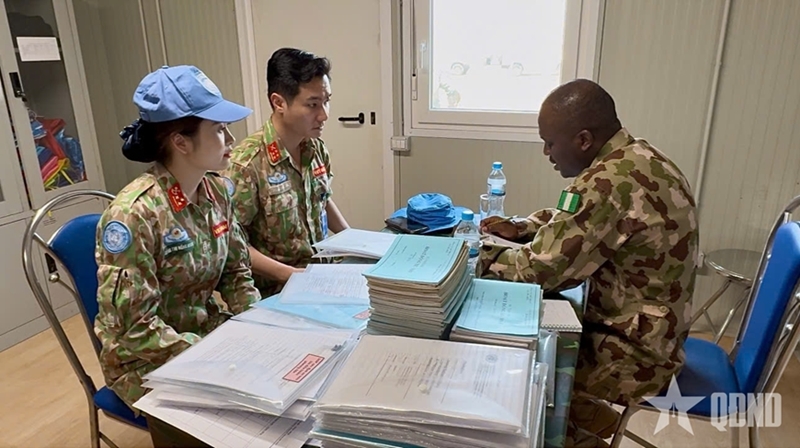
All documentation and response scenarios of Engineering Company Rotation 4 are systematically digitized and transparently managed. |
During the evaluation, the Vietnamese engineering unit demonstrated strong organizational and operational capabilities. Inspectors reviewed personnel management, situational awareness, logistics, communications and training systems. All operational procedures and emergency response plans have been systematically digitized and documented in line with strict U.N. standards, including water treatment operations and hazardous waste management.
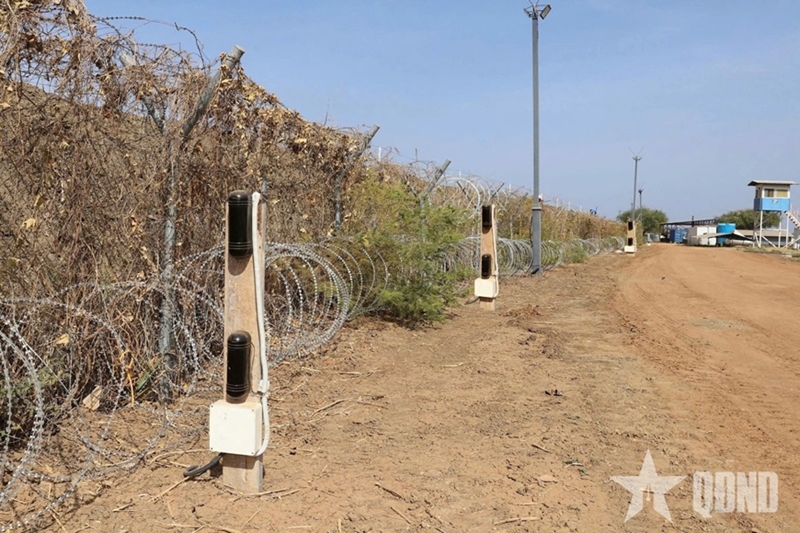
In operational capability assessments, Engineering Company Rotation 4 stood out as the only unit within UNISFA to establish a five-layer defensive system combining traditional fortifications with modern technology. The system includes deep trenches, earth embankments, multi-layer barbed wire and a laser-based electronic early warning fence.
A representative from the UNISFA Operations Division described it as the strongest defensive system in the mission area, noting that the Vietnamese unit has created a model of pro-active operational capability for other units to follow.
Lieutenant Colonel Van Dinh Quy, Deputy Head of Engineering Company Rotation 4, said the unit entered the evaluation period with the mindset of not only to complete the mission, but also to demonstrate the true capabilities of Vietnamese peacekeepers in an international environment.
|
|
 |
|
Laser “eyes” serve as a highly sensitive technological safeguard within the five-layer defensive system. |
Beyond documentation and defensive systems, the unit’s construction achievements were also highlighted during the assessment. The vital Abyei–Agok road was completed in just 85 days, transforming difficult muddy terrain into a standard transportation route.
Lieutenant Colonel Henry Obediah Agu, Head of Planning Division and head of the inspection delegation, praised both the speed and quality of construction, describing the project as clear evidence of the outstanding technical capability of Vietnam’s peacekeeping force.
The infrastructure projects have also generated positive recognition from local authorities. In less than eight months of deployment, Engineering Company Rotation 4 received three letters of appreciation, including one issued at the central government level and signed by the Minister of the Office of the President on behalf of the Government of South Sudan.
|
|
 |
|
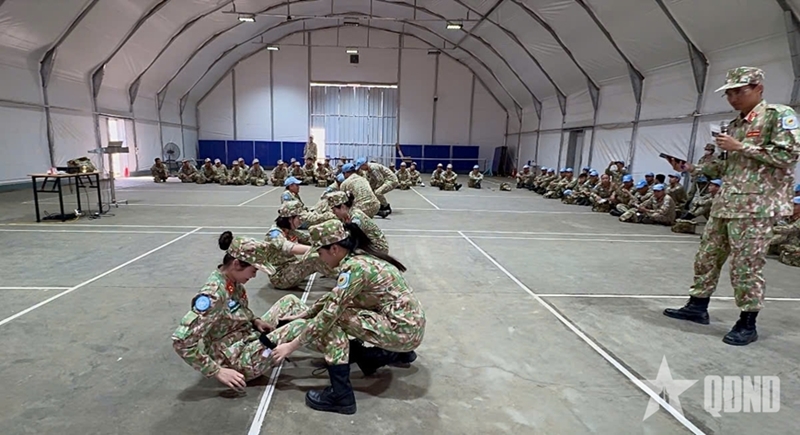
Medical personnel at the Level-1 Field Hospital conduct practical first-aid training sessions. |
Justice Charles Jok, Chief Administrator of the Abyei Special Administrative Area, said the Vietnamese engineering unit had not only built roads but also created “lifelines of hope” for local communities.
The evaluation also acknowledged the high level of readiness maintained by the Level-1 Field Hospital, particularly in first-aid training and the implementation of U.N.-standard casualty evacuation and medical evacuation procedures.
Following the comprehensive field assessment, Engineering Company Rotation 4 was recognized as an exceptionally outstanding unit that consistently exceeded expectations in all assigned tasks. The recognition reflects the professionalism, discipline and dedication of Vietnam’s peacekeeping force, as well as its contributions to peace, stability and development in the Abyei region.
|
|
 |
|
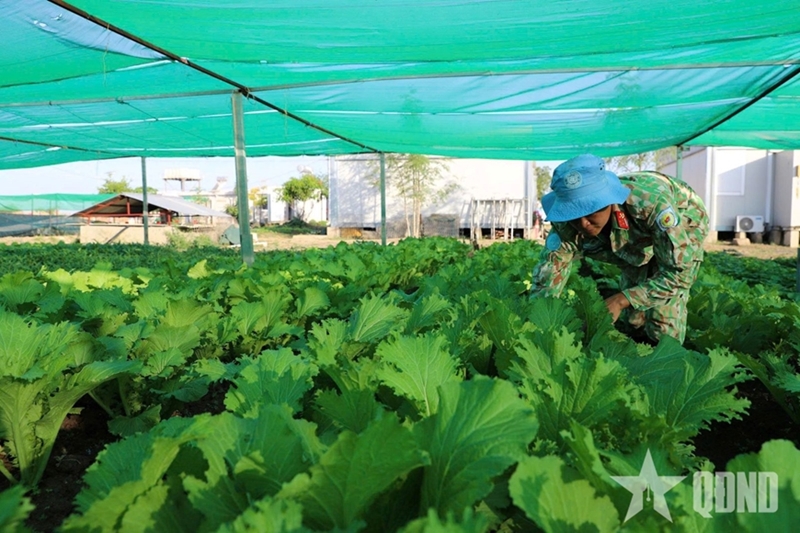
The self-sustaining farming area at Highway Camp not only supports logistics, but also reflects the spirit of self-reliance and resilience. |
By Hai Yen (from Abyei)
Translated by Tran Hoai