    |
 |
|
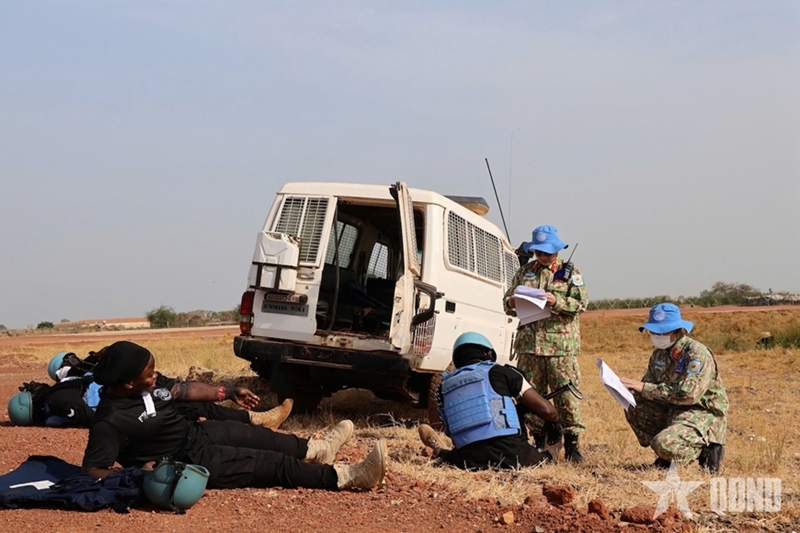
A simulated scenario of a mass-casualty incident |
|
|
 |
|
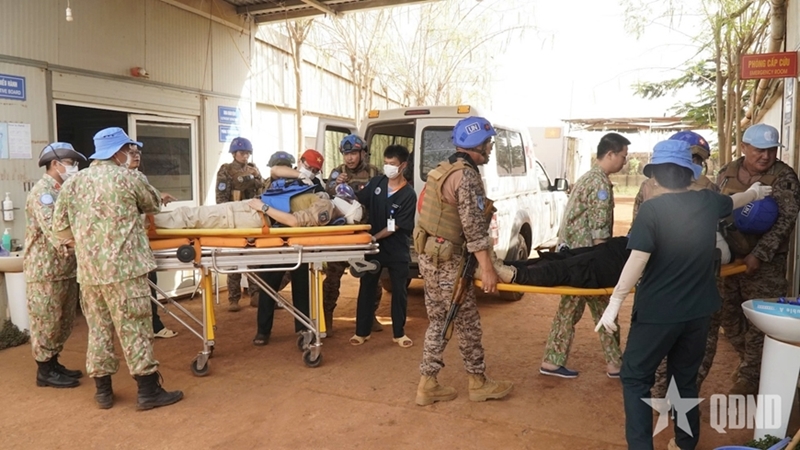
Practicing patient triage, first aid provision, and casualty evacuation |
The exercise aimed to enhance rapid response capability involving large numbers of casualties with diverse levels and types of injuries.
The simulated scenario was that while traveling along Guit Road that connected the U.N. Base in Bentiu and the IDP camp, an UNPOL patrol convoy encountered an explosive device. The blast caused injuries to 10 personnel with varying levels of severity. Upon receiving the initial report, the Field Integrated Operations Center (FIOC), in coordination with relevant agencies and the sector medical services agency, activated the MCI command mechanism and mobilized medical forces across the sector for emergency support and casualty evacuation.
|
|
 |
|
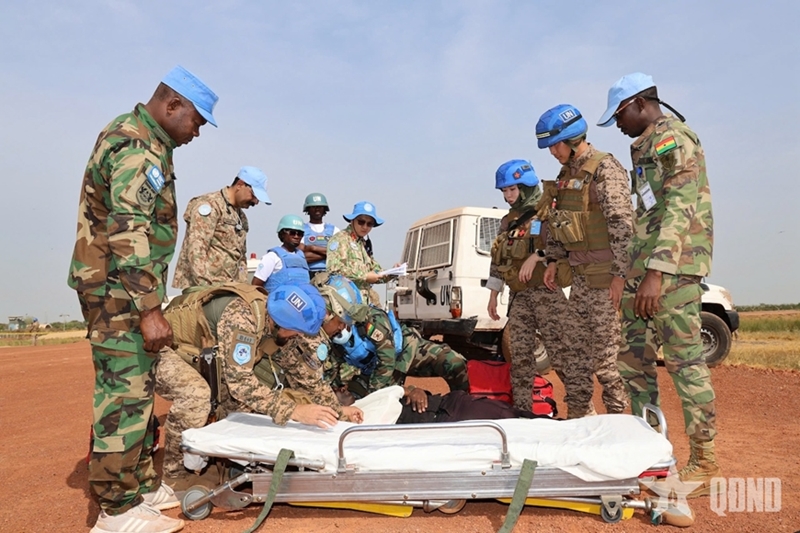
Medical staff of the level-1 hospitals from partner contingents participating in the exercise |
|
|
 |
|
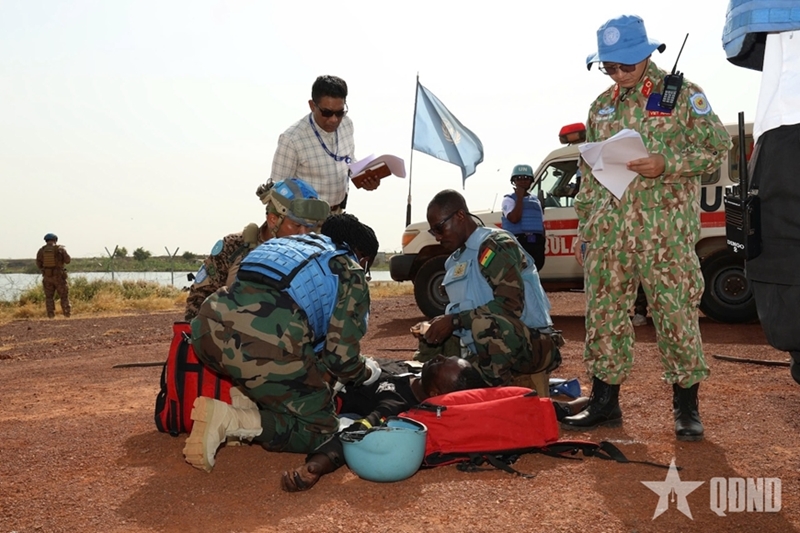
Doctors of the L2FH Rotation 7 observe and make assessment during the exercise. |
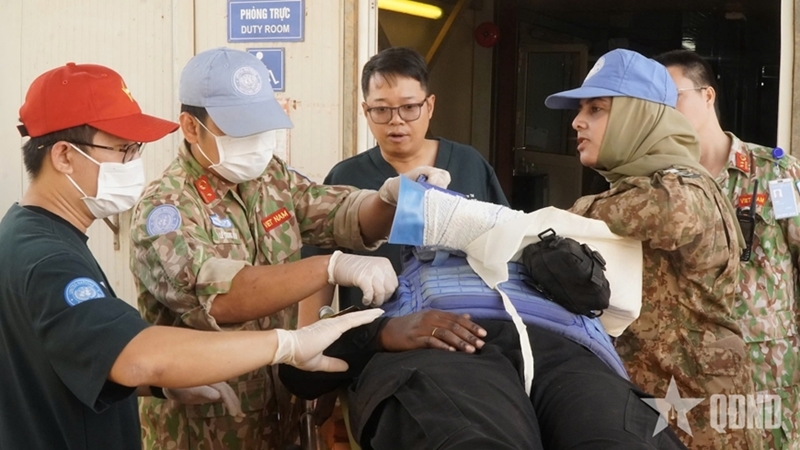
At the scene, level-1 hospitals from Mongolia, Pakistan, Ghana, and the Ghana FPU Police Unit conducted rapid triage following the START protocol, provided first aid, and transported the injured to the L2FH Rotation 7. Doctors from the Vietnamese field hospital acted as supervisors, medical advisers, and evaluators of the level-1 hospitals’ response skills under complex field-operational conditions.
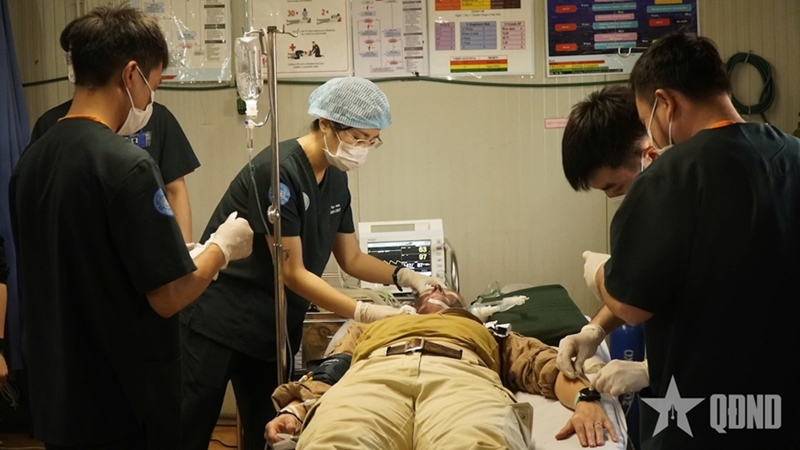
Receiving orders from the sector medical services agency, the L2FH Rotation 7 started its MCI response plan, preparing personnel, equipment, and reception areas corresponding to four priority groups, namely Red, Yellow, Green, and Black. Patients were triaged at the hospital gate and transferred to specialized treatment areas. Medical teams performed advanced triage using the SORT protocol, trauma resuscitation, and surgical indication in accordance with U.N. guidelines.
|
|
 |
|
The L2FH Rotation 7’s medical personnel receive severe emergency cases. |
|
|
 |
|
The Vietnamese field hospital implements the MCI response plan. |
The simulated injuries closely reflected real-world conditions. They included open chest wounds, open lower-limb fractures, facial and chest burns, multiple injuries caused by explosive fragments, traumatic brain injuries, and one fatality at the scene.
According to Director of the L2FH Rotation 7 Major Tran Duc Tai, the exercise’s results directly reflected the quality of pre-deployment training conducted by the Vietnamese peacekeeping force before undertaking the international mission. Most MCI training contents had been standardized domestically through the training plans of the Vietnam Department of Peacekeeping Operations.
After the exercise, the field hospital of Vietnam proposed some solutions to help improve internal training programs on START - SORT for level-1 hospitals in the coming time.
|
|
 |
|
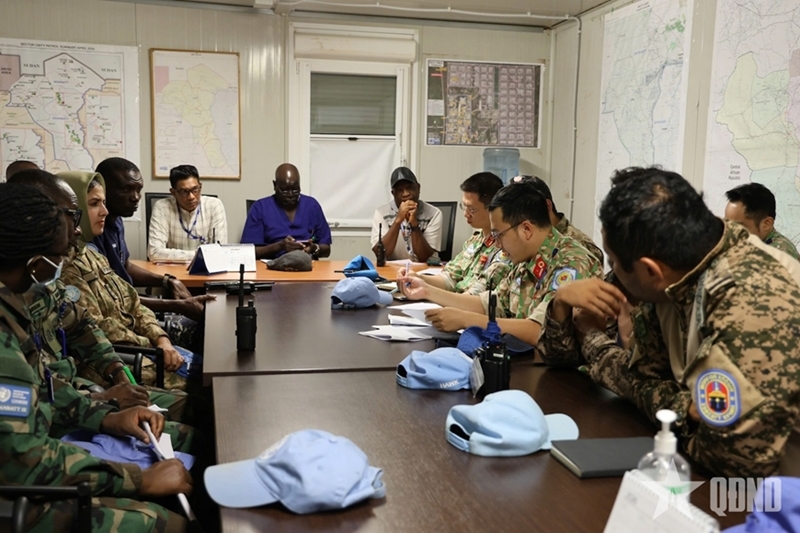
A briefing session to draw lessons after the exercise |
|
|
 |
|
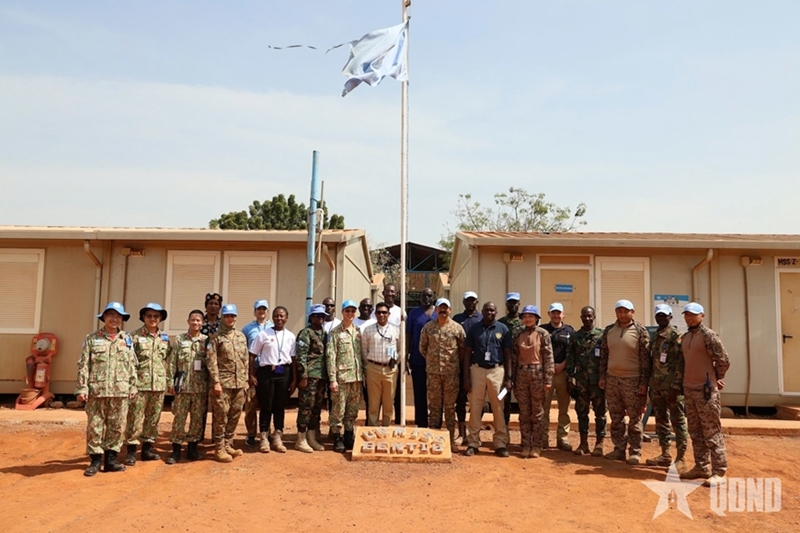
Participants pose for a group photo. |
The MCI exercise is essential for peacekeeping forces, helping improve command and coordination capabilities in a multinational framework, standardize field emergency procedures. It also underscored the role of the L2FH Rotation 7 in providing higher-level-echelon medical support for UNMISS. In addition, it contributed to promoting expertise, initiative, responsibility, and cooperation among medical units in Bentiu, laying an important foundation for protecting health of peacekeepers and local community.
By Tien Phuc and Tung Long (from South Sudan)
Translated by Mai Huong