Reporter: Israel is widely recognized as a global leader in agricultural innovation despite its limited natural resources. From your perspective, which Israeli technologies and development models hold the greatest potential for Viet Nam, and what key factors are essential to successfully adapt these innovations to Viet Nam's agricultural conditions rather than simply transferring the technology?
Ofer Fohrer: Israel’s agricultural innovation story was largely shaped by necessity. Limited water resources, an arid climate, challenging growing conditions, and relatively little arable land required Israel to find ways to produce more with fewer resources. As a result, many Israeli agricultural technologies have been developed, tested, and refined over decades under conditions of water scarcity, heat, and climatic stress.
    |
 |
|
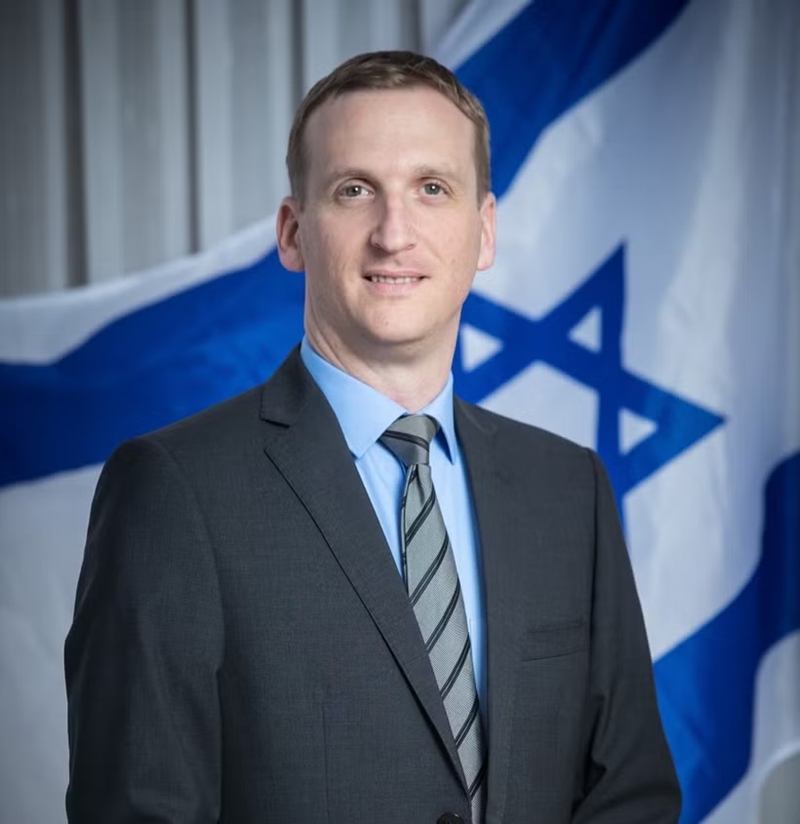
Ofer Fohrer, Head of Export and Investment Promotion of the Foreign Trade Administration at Israel’s Ministry of Economy and Industry |
This experience is becoming increasingly relevant as climate change creates similar challenges in agricultural regions around the world, including Viet Nam. Rising temperatures, changing rainfall patterns, drought, salinity intrusion, flooding, and extreme weather events are already influencing the way Viet Nam approaches agricultural resilience and food security. In this sense, Israel’s experience in desert and arid-zone agriculture offers not only individual technologies, but practical knowledge on how to maintain agricultural productivity under increasingly challenging environmental conditions.
The result is not only a strong agricultural technology sector, but an ecosystem connecting farmers, researchers, technology companies, government institutions, and investors.
For Viet Nam, I see particularly strong potential in several areas.
The first is smart irrigation, fertigation, and water management. While Viet Nam does not face the same overall water scarcity as Israel, its agricultural regions increasingly contend with drought, salinity intrusion, irregular rainfall, flooding, and growing pressure on water resources. Israeli expertise can therefore contribute not simply to saving water, but to managing water and agricultural inputs more precisely and strengthening resilience to climate change.
A second promising area is precision and data-driven agriculture: sensors, remote monitoring, AI-based decision-support systems, automated irrigation, satellite and drone technologies, and solutions for early detection of pests, diseases, and crop stress. These technologies can help farmers optimise inputs, improve productivity and consistency, and reduce unnecessary costs.
There is also considerable potential in protected and controlled-environment agriculture, livestock and dairy technologies, aquaculture, post-harvest solutions, agricultural biotechnology, and technologies that reduce food loss and waste.
However, one of the most important lessons Israel can contribute is not a specific technology, but a development model. Successful agricultural innovation requires close cooperation between technology providers, farmers, researchers, government, financing partners, and the market.
This approach is also central to the work of the Foreign Trade Administration at Israel’s Ministry of Economy and Industry and its network of Economic and Trade Missions worldwide. Our role is increasingly not simply to connect Israeli exporters with potential buyers, but to identify local challenges and build partnerships around them.
A good example is the cooperation developed by TradeIL Vietnam with Vingroup’s Kind Heart Foundation – Thien Tam Foundation to introduce Israeli agricultural technologies in Vietnamese provinces. The initiative brings together the Foundation, local stakeholders and farmers, Israeli technology providers, and our TradeIL office, with projects based on specific local agricultural needs.
Another concrete example is the demonstration farm for organic cucumber cultivation which we recently showcased in Hanoi, where Israeli agricultural technologies and know-how were implemented under actual Vietnamese farming conditions. The importance of such a project goes well beyond the crop itself. It allows stakeholders to evaluate performance locally, identify necessary adaptations, build farmers’ confidence, and create evidence before moving toward wider commercial implementation.
This is particularly important because Viet Nam is an extremely diverse agricultural market. Conditions in the Mekong Delta differ significantly from those in the Central Highlands or northern Viet Nam. Farm sizes, crops, soil, climate, infrastructure, financing capacity, and technological readiness all vary.
Technologies may need to be adapted in scale, pricing, hardware, maintenance requirements, and business model. A sophisticated solution that works technically but cannot demonstrate a clear return on investment for Vietnamese farmers will struggle to achieve meaningful adoption.
This is also where the local presence of TradeIL Vietnam creates value. We connect Israeli innovation with local needs, relevant partners, and decision-makers, while supporting companies as projects develop. In recent months alone, we have held business seminars in provinces including Gia Lai, Hai Phong, and Da Nang, recognising that each region has distinct agricultural conditions and priorities. This local engagement allows us to take a more targeted, needs-driven approach to promoting Israeli technologies.
Ultimately, the objective should be co-development rather than simply technology transfer. Israel brings technology, R&D capabilities, and experience solving difficult agricultural challenges. Viet Nam brings scale, agricultural diversity, local expertise, manufacturing capabilities, and access to the wider Southeast Asian market. The greatest value is created when these strengths are combined.
Reporter: Looking ahead over the next five to ten years, what do you see as the most promising opportunities for Viet Nam–Israel cooperation in high-tech agriculture? In your view, what practical steps should governments, research institutions, and businesses from both countries take to build a stronger innovation ecosystem and achieve long-term, sustainable partnerships?
Ofer Fohrer: Looking ahead five to ten years, I believe the greatest opportunity is for Viet Nam–Israel agricultural cooperation to evolve from technology trade toward joint innovation, adaptation, and commercialisation.
Climate change will increasingly shape agricultural investment. Technologies related to water efficiency and water treatment, salinity management, climate-resilient agriculture, precision farming, controlled-environment production, biological crop protection, and resource-efficient livestock and aquaculture will become increasingly important.
Digital agriculture will be another major area. AI, sensors, computer vision, robotics, satellite data, and farm-management platforms are rapidly changing agricultural decision-making. Increasingly, the strongest solutions will combine several capabilities, for example, weather information, soil monitoring, crop management at mega scale, disease detection, and yield prediction within integrated systems.
Viet Nam provides an especially interesting environment for this cooperation because it combines a major agricultural sector with significant regional diversity, growing technological capabilities, and an increasing focus on productivity, sustainability, and higher-value production.
There is also an opportunity to think beyond Viet Nam itself. Viet Nam can become an important platform for Israeli agricultural technologies in Southeast Asia, while Vietnamese companies can evolve from customers and distributors into manufacturing partners, investors, and co-developers of technologies adapted to tropical agriculture.
The Viet Nam–Israel Free Trade Agreement (VIFTA) provides an important framework for this next stage of cooperation. But an FTA creates opportunities, realising them requires active market development.
This is where the Foreign Trade Administration and TradeIL Vietnam can play an important role. Our continuous presence in the market allows us to identify opportunities that may not be immediately visible to an individual Israeli company and to connect Israeli businesses not only with importers and distributors, but also with government agencies, provinces, research institutions, major corporations, foundations, and other strategic partners.
Looking forward, I see four practical priorities.
First, governments should create the conditions for innovation and commercial cooperation by reducing regulatory barriers, supporting pilots and R&D cooperation, facilitating dialogue between relevant authorities, and helping reduce the risks involved in introducing new technologies.
Second, we need stronger research-to-market cooperation. Israeli and Vietnamese universities and research institutes should work together on applied projects addressing challenges identified by farmers and businesses, with commercialisation considered from the beginning.
Third, we should develop more demonstration farms and living laboratories across Viet Nam. These could address specific regional challenges such as water and salinity management in the Mekong Delta, expand growing areas of high-value crops in the Central Highlands, improve livestock and aquaculture farm infrastructure. These projects should generate measurable commercial evidence, not simply demonstrate that technology works, but show its impact on productivity, input costs, quality, and profitability.
Fourth, financing needs to become part of the model. One of the greatest barriers to agricultural technology adoption is often the initial investment. Foundations, banks, agricultural corporations, investors, and technology providers can develop co-financing, leasing, pay-per-use, and other mechanisms that make technologies accessible to more farmers.
Finally, we must continue investing in people and long-term relationships. Israel and Viet Nam already have a strong history of agricultural knowledge exchange and training. The next phase should expand toward entrepreneurship, commercialization, technology management, joint R&D, and local technical capabilities.
For me, success ten years from now should not simply be measured by how many Israeli technologies have been sold in Viet Nam. Success would mean seeing technologies that were tested here, adapted with Vietnamese partners, supported locally, scaled commercially, and potentially further developed or manufactured in Viet Nam for other Southeast Asian markets.
The Foreign Trade Administration and TradeIL Vietnam can serve as a bridge throughout this process, from identifying opportunities and introducing Israeli innovation to building partnerships and supporting their development over time.
The next step is to turn successful individual projects into a broader model of Viet Nam–Israel agricultural innovation, one that promotes Israeli exports while creating sustainable, long-term value for both economies.
Source: VNA