    |
 |
|
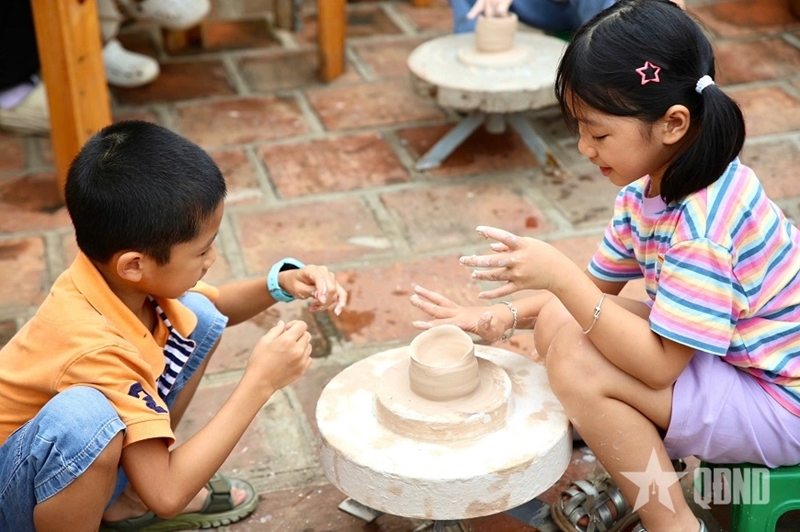
Children enjoy trying pottery making. |
On weekends, Bat Trang Pottery Village comes alive with visitors. Inside its workshops, children and adults alike learn to shape clay on potter’s wheels under the guidance of local artisans. The lively atmosphere extends beyond the workshops to nearby souvenir shops, cafés, and art spaces, all welcoming travelers eager to experience the village firsthand.
This transformation reflects a broader trend across Hanoi’s traditional craft villages. Rather than simply purchasing handmade products, visitors increasingly seek authentic experiences, opportunities to learn about traditional crafts, and meaningful interactions with local residents. In response, many villages have embraced experiential tourism as a way to preserve their heritage while creating sustainable economic opportunities.
|
|
 |
|
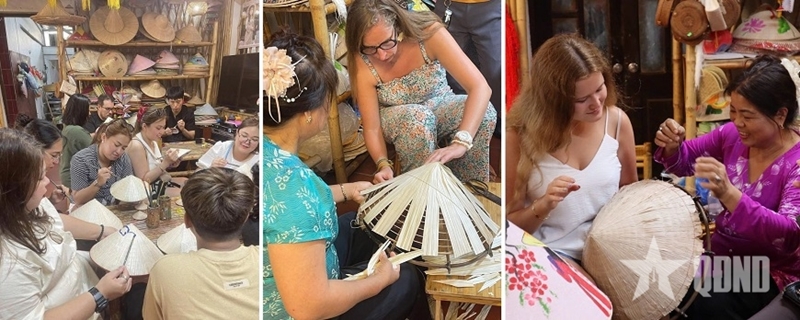
Visitors experience conical hat making in Chuong village. |
Despite their rich cultural legacy, Hanoi’s craft villages have faced mounting challenges from urbanization and shifting market demands. Declining product sales, the migration of young workers, and a shortage of successors have threatened the survival of many traditional trades. To address these challenges, local communities have opened their workshops to visitors, introduced demonstrations of traditional production methods, and organized hands-on craft activities, creating additional income while promoting the enduring value of Vietnamese handicrafts.
Dao Khanh Vi, a 20-year-old resident of Bat Trang, chose to continue her family’s pottery business after graduating from high school instead of seeking employment in the city. Using social media platforms, such as Facebook and TikTok, she promotes her family’s products while sharing videos and photos of the pottery-making process and daily life in the village.
|
|
 |
|
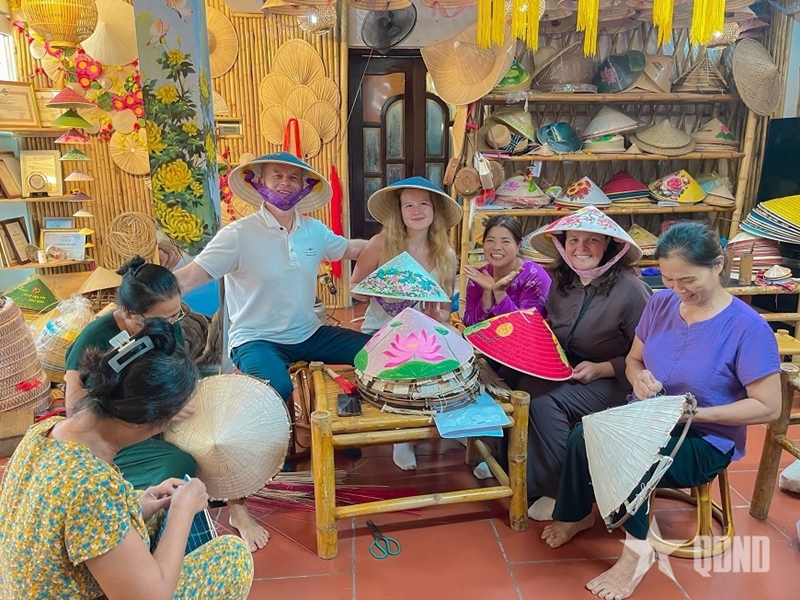
Artisan Ta Thu Huong (third from right) poses for a joint photo with visitors at her family’s experiential workshop. |
“Through social media, more people have discovered Bat Trang Pottery Village. The number of visitors coming to experience pottery making and purchase products at my family’s workshop has increased significantly,” she said.
In Bat Trang, many artisans have also become guides, teaching visitors how to mold clay, apply glaze, and learn about the village’s long history. Beyond handmade souvenirs, visitors leave with a greater appreciation for the craftsmanship and dedication behind each piece.
Chuong Village in Thanh Oai district has adopted a similar approach by showcasing its centuries-old conical hat-making tradition. Visitors can observe every stage of production, from selecting and preparing palm leaves to carefully stitching each hat. Many households now combine product sales with interactive experiences, transforming the iconic Vietnamese conical hat into a distinctive cultural product that reflects the identity of northern Vietnam’s countryside.
Ta Thu Huong, a 58-year-old artisan who has spent more than five decades making conical hats, said the craft has been passed down through three generations of her family.
|
|
 |
|
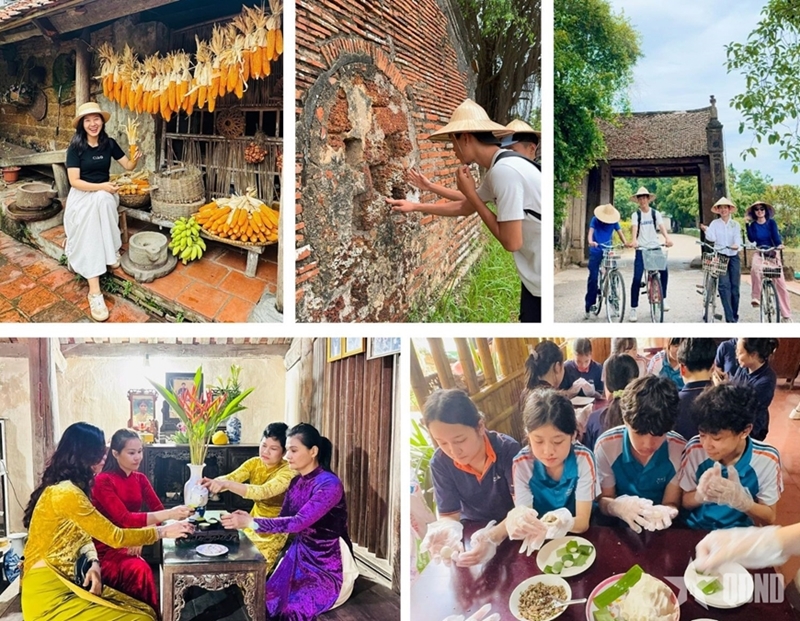
Visitors having immersive experiences at Duong Lam Ancient Village |
“Since childhood, I learned from my grandparents and parents how to build the frame, prepare the leaves, and stitch every hat. The more I practice this craft, the more I cherish it because it is not only my livelihood, but also part of my family’s and hometown’s memories. I hope more young people will continue this tradition so these cultural values will never fade,” she said.
Meanwhile, Duong Lam Ancient Village in Son Tay offers visitors a remarkably well-preserved example of a traditional Vietnamese village. Its laterite alleyways, village gates, communal wells, communal houses, and centuries-old houses remain part of everyday life. Local families welcome guests with traditional home-cooked meals, demonstrate how to make local specialties such as 'che lam' (nutty ginger sticky rice bars), ‘banh te’ (rice cake with minced pork, onions, wood ears fillings), and cassava cakes, and share stories about the history of the ancient Doai region. The village’s authenticity has become its greatest attraction.
“What I enjoyed most at Duong Lam Ancient Village was experiencing the daily life of local residents. I cycled through narrow alleyways, tasted traditional dishes, and talked with villagers. Those experiences helped me better understand Vietnamese culture and its people,” said Phitsamai Phounphommy, a visitor from Laos.
|
|
 |
|
Duong Lam Ancient Village offers numerous picturesque spots for visitors to take photographs. |
A common feature shared by these villages is a shift from simply selling products to offering experiences. Visitors can shape pottery, learn the first stitches of a conical hat, or immerse themselves in the daily life in an ancient village. These interactive activities enrich Hanoi’s tourism offerings while allowing traditional cultural values to be preserved and shared in a natural way.
As Hanoi continues to develop into a modern metropolis, its craft villages remain guardians of the cultural spirit of Thang Long - Hanoi. By combining heritage with experiential tourism, these communities are not only preserving their traditions but also giving them renewed vitality, making them increasingly attractive destinations for both domestic and international visitors.
Translated by Tran Hoai