A large-scale livestream campaign, "Touching Heritage - Urban Memories," has recently been launched in Ho Chi Minh City through cooperation among the municipal Department of Culture and Sports, the Vietnam Cultural Heritage Conservation Support Fund and TikTok Vietnam.
    |
 |
|
Viewers watch Thang Long Capital show featuring 3D mapping and digital experiential spaces. |
Running from June to July, the program takes viewers of the TikTok channel Di san Vietnam (Vietnam Heritage) on virtual journeys through Ben Thanh, Sai Gon and Cho Lon wards, showcasing landmarks, architectural works, cultural spaces and local cuisine. Destinations include the Independence Palace, Ben Thanh Market, Metro stations, the Vietnam Museum of Fine Arts, Notre Dame Cathedral, the Central Post Office, the Municipal Theatre and Hai Thuong Lan Ong Street.
Combining storytelling with immersive experiences, the livestreams present heritage in a more engaging and accessible way. The campaign is part of a series of activities under the "dLocals Ho Chi Minh City" initiative, which aims to bring local heritage closer to communities through digital platforms. The first two livestreams attracted millions of views and interactions, with many viewers expressing nostalgia while others said they were inspired to visit the sites themselves.
Across Vietnam, digital technology is increasingly being used to preserve and promote heritage. Examples include the night tour at the Temple of Literature in Hanoi featuring 3D mapping and multimedia projections, and the iMuseum VFA application at the Vietnam Fine Arts Museum, which offers navigation and multilingual audio guides.
Virtual exhibitions, online tours and 3D displays have also been introduced at the Imperial Citadel of Thang Long, the Complex of Hue Monuments, the National Museum of History and national archives, creating attractive cultural and tourism products.
|
|
 |
|
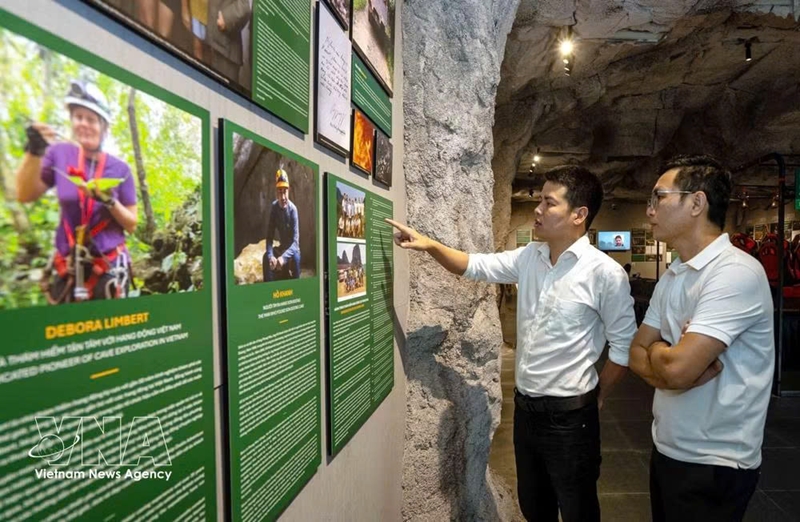
Visitors experience a virtual reality tour of Son Doong Cave. |
Turning heritage into a development resource
Vietnam possesses a wealth of tangible and intangible cultural heritage, with tens of thousands of historical and cultural sites nationwide. Experts believe that, supported by digital technologies, these resources can become a major driver of culture, tourism, education and creative industries.
This vision is reflected in the Politburo's Resolution No. 80-NQ/TW, which identifies cultural and human development as a key internal resource for sustainable national growth. The resolution calls for comprehensive standardization and digitization of cultural heritage, while Vietnam's strategy for cultural industries prioritizes building a national digital heritage database to support creative activities.
However, experts say challenges remain. In many cases, digitization is still regarded primarily as a conservation tool rather than a catalyst for innovation. Cooperation among artisans, local communities, technology firms and creative businesses remains limited, while the shortage of professionals in both heritage and digital technologies persists.
According to Director of the Cultural Heritage Department Le Thi Thu Hien, the immediate priority is building a synchronized national database with common standards that allow localities to connect and share information.
Dr. Phan Dinh Dung of Ho Chi Minh City University of Culture proposed establishing national standards for heritage digitization covering data formats, resolution, review procedures and security requirements compatible with international frameworks. He also called for a clearer legal framework on digital heritage copyright to facilitate public-private partnerships, along with specialized training in digital heritage management to address the shortage of skilled personnel.
Source: VNA