Quantum technology and cybersecurity have been designated among 10 national strategic technology pillars.
To turn that into reality, local authorities and leading academic institutions are working together to tackle the shortage of skilled workers, build research networks, and prepare the city's digital infrastructure for the transition to post-quantum security.
    |
 |
|
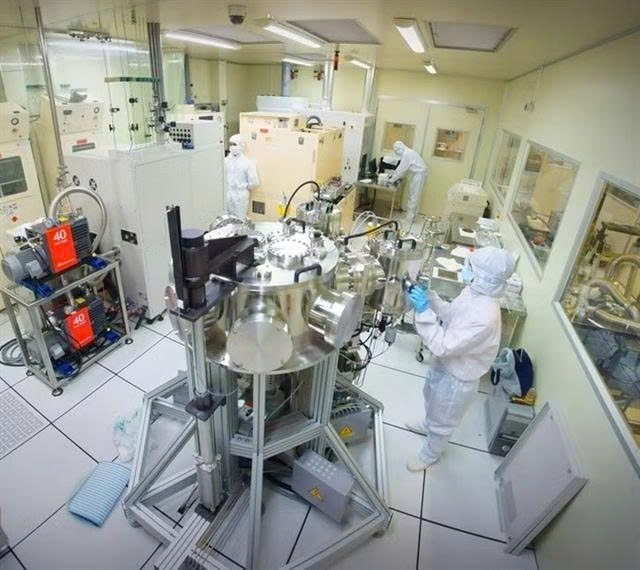
A key laboratory of the Vietnam National University-Ho Chi Minh City |
Experts agreed that the greatest obstacle to the development of quantum technology is not hardware, but human resources.
Because quantum science sits at the intersection of physics, mathematics, and computer science, the city is pursuing a comprehensive, multi-tiered training strategy rather than focusing solely on producing elite specialists.
Professor Do Phuc of the University of Information Technology, Vietnam National University-Ho Chi Minh City, proposed a four-tier training model:
Tier 1 (Awareness): Build a basic understanding of quantum technology among leaders, managers, and IT students so they can recognize both its opportunities and systemic risks.
Tier 2 (Application): Train engineers to use existing quantum tools and understand post-quantum cryptography.
Tier 3 (Education): Develop a strong cohort of lecturers capable of integrating quantum modules into university curriculums.
Tier 4 (Specialization): Cultivate elite research groups and centers of excellence to tackle highly complex, specialized problems.
Concurring with the approach, Associate Professor Dinh Trung Hoa, head of training at Vietnam Quantum Computing (VNQuantum), said preparing for the quantum era must begin with people.
"Many advanced nations did not begin with massive laboratory investments. Instead, they started by raising public awareness, training educators, and gradually embedding quantum concepts into the education system."
To build a long-term talent pipeline, he recommended introducing quantum education through high school STEM clubs and summer camps, followed by introductory university modules, professional certificates, postgraduate research, and, ultimately, a city-level quantum hub.
Rather than confining quantum science to research laboratories, the city aims to apply quantum computing to pressing urban challenges.
Dr. Tran Nguyen Lan, Head of QuantumLab at the University of Science, Vietnam National University–Ho Chi Minh City, said quantum computing could optimize logistics, traffic management, financial systems, and urban data management.
However, translating real-world problems into quantum models would require specialist expertise that is in short supply, he said.
"The city should focus on fostering a quantum mindset among technical personnel.
"It is vital to train engineers who can translate urban and logistics challenges into quantum optimization models, ensuring the city is ready to harness the technology when quantum computing matures."
Vietnam National University-Ho Chi Minh City has made quantum technology one of its core strategic priorities, alongside AI, semiconductors, and cybersecurity.
President of Vietnam National University–Ho Chi Minh City Professor Nguyen Thi Thanh Mai said attracting global talents would be crucial to accelerating the transition.
"A crucial approach is attracting high-level brainpower from around the world, particularly overseas Vietnamese experts and scientists who have studied and worked at major global technology hubs."
To strengthen the domestic talent pipeline, the university introduced a quantum computing specialization within its bachelor of physics program at the University of Science for the 2025 intake, she said.
It planned to launch a dedicated quantum technology degree at the University of Science and a quantum engineering degree at the University of Technology by 2027.
At the postgraduate level, programs would focus on practical applications in simulation, algorithms, post-quantum cryptography, machine learning, and systems optimization, she said.
By expanding its high-performance computing infrastructure and strengthening collaboration across universities, the institution aimed to become the hub linking academia and industry, laying the foundations for a sustainable quantum technology ecosystem in Southern Vietnam, she added.
Source: VNA