    |
 |
|
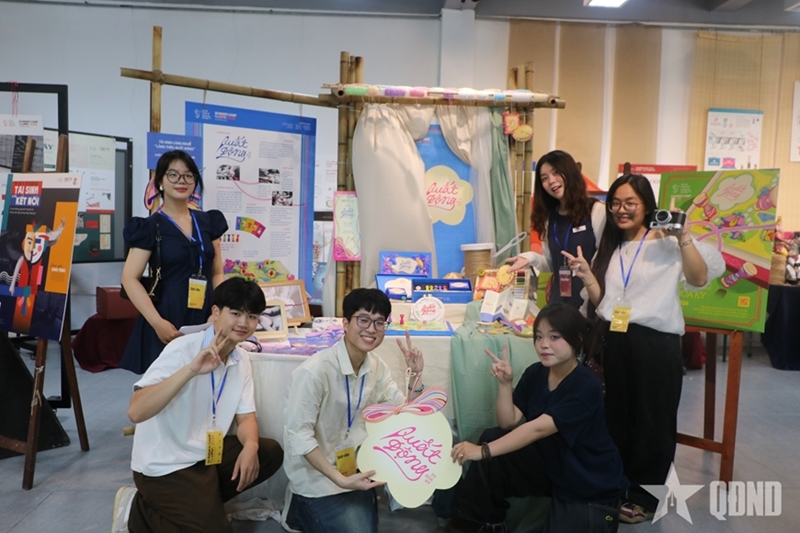
Students pose for a photo at the exhibition space. |
Combining field research with contemporary design and digital storytelling, the program connected local heritage with modern creative thinking while supporting Hanoi’s commitment as a UNESCO Creative City.
Held in Hanoi from July 6 to 13 as part of the Hanoi Creative Design Festival 2026, the workshop focused on five traditional craft villages, namely Ha Thai lacquerware, Kim Lan pottery, Dao Thuc water puppetry, Phu Vinh bamboo and rattan weaving, and Quat Dong embroidery. Through site visits, meetings with artisans, and studies of local culture and production processes, student teams transformed their research into creative projects that reflected each village’s distinctive identity.
The final exhibitions featured research posters, brand identity concepts, prototypes, models, and storytelling videos. Each project highlighted the unique materials, techniques, craftsmanship, and cultural heritage of its assigned village while presenting these traditional values through a contemporary design perspective.
|
|
 |
|
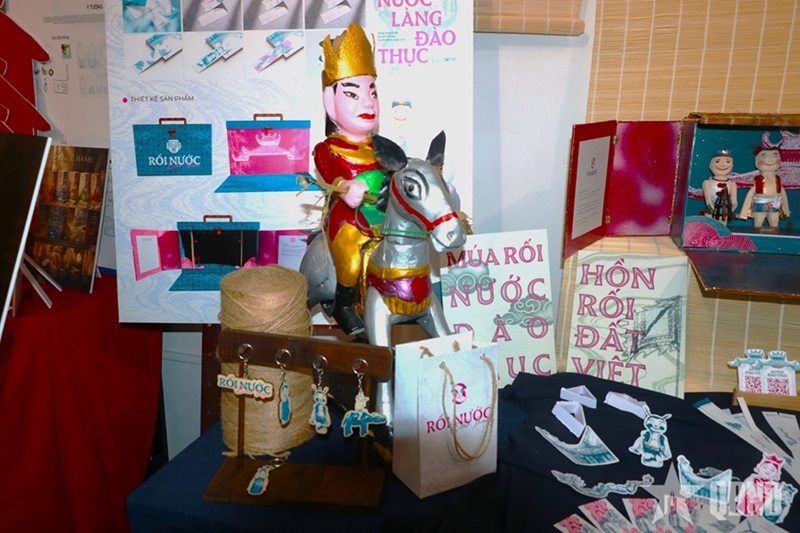
A product inspired by Dao Thuc water puppet village |
A key component of the workshop was the Re initiative, which encouraged students to tell stories of craft villages through digital media. Instead of simply introducing the villages, the teams focused on the artisans and the cultural values behind each craft. They wrote scripts, filmed, edited, and shared their videos on social media, helping bring Hanoi’s traditional craft villages closer to younger audiences.
Among the featured works was “One Stitch, A Thousand Years of Heritage,” produced by the Quat Dong 1 Team. The video follows the story of the village’s embroidery tradition through artisan Hoang Thi Khuong, portraying the dedication of generations who continue to preserve the craft. Another project, “Kim Lan: Where History Is Preserved in the Soul of Pottery,” highlights the enduring relationship between clay, fire, and generations of potters along the Red River, emphasizing the transmission of skills and traditions from one generation to the next.
Nguyen Minh Anh, a student from Hanoi Architectural University, said that the participants shared the same concern about the future of traditional crafts if younger generations no longer choose to preserve them. In Minh Anh’s view, heritage can remain alive only when people continue to remember it, tell stories about it, and safeguard it.
|
|
 |
|
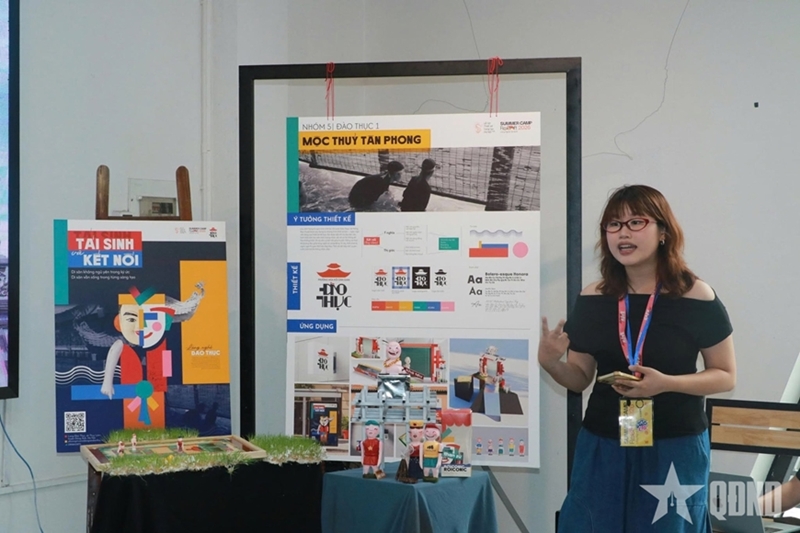
Students present their projects before the expert panel at the event. |
The workshop adopted an interdisciplinary approach, bringing together students majoring in architecture, fine arts, cultural studies, communications, design, and the creative economy. Beyond developing product designs under the Re theme, participants also created branding strategies, explored commercialization opportunities, and developed digital storytelling projects.
Concluding the program, each team presented a complete project that included design posters, prototypes or models, research documentation, a Re video, a design portfolio, and a presentation before an expert panel.
The workshop also generated strong engagement online. By the end of the program, the Re videos had attracted more than 310,000 views and over 10,000 interactions across the Hanoi Creative Design Festival’s media platforms, demonstrating that the stories of traditional craft villages can reach wider audiences when presented through the language of young people.
According to Bui Thi Thanh Huong, Editor-in-Chief of Architecture Magazine under the Vietnam Association of Architects, the workshop served as an open creative studio where artisans, designers, lecturers, and students collaborated through research, dialogue, and co-creation. She described the program as a practical educational initiative that contributed to fulfilling Hanoi’s commitment within UNESCO’s Creative Cities Network.
|
|
 |
|
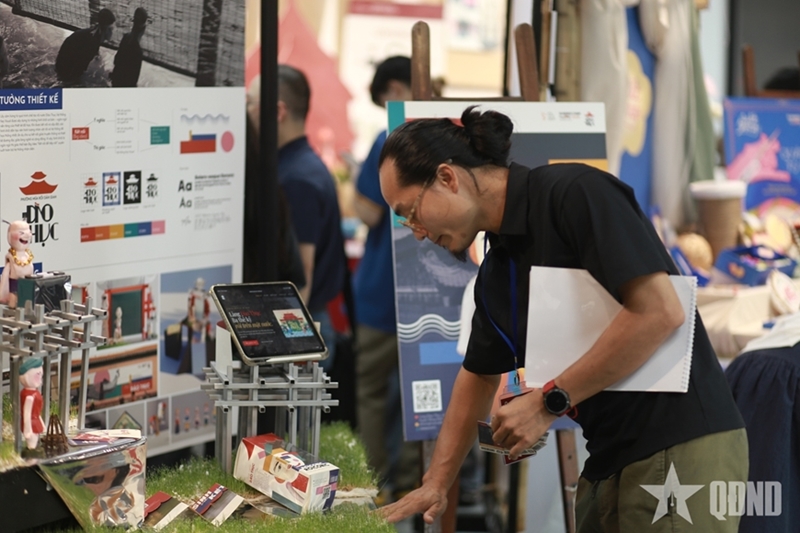
Design projects evaluated for their potential to be further refined, tested, and developed in the future |
At the closing ceremony on July 13, the organizing committee honored the teams with the most outstanding projects. Selected works will continue to be refined and showcased at the Hanoi Creative Design Festival 2026, creating opportunities for students’ ideas to be further developed and connected with the market.
Although the workshop has concluded, its efforts to preserve and promote Hanoi’s traditional craft villages continue. By exploring, reinterpreting, and sharing cultural heritage through the language of the digital age, young people are helping ensure that traditional values remain relevant and continue to thrive in contemporary society.
Translated by Tran Hoai