Held just ahead of Vietnam Tourism Day (July 9), the conference served not only as a tourism promotion event but also demonstrated Vietnam's determination to compete for one of the world's fastest-growing travel segments - the global Muslim tourism market.
Seizing opportunities in Halal tourism market
After achieving positive results in traditional source markets such as Northeast Asia, Europe, and North America, Vietnam is increasingly turning its attention to Muslim travelers, one of the fastest-growing segments of the global tourism industry.
    |
 |
|
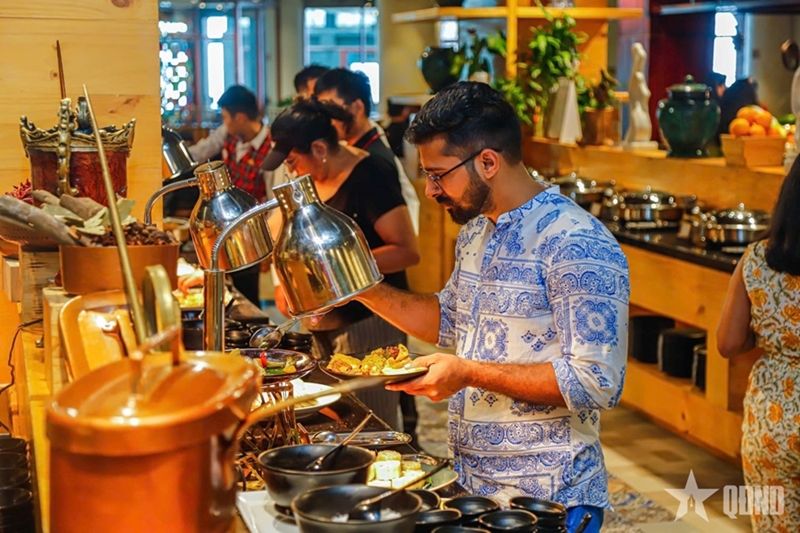
Muslim travelers at Sun World Ba Na Hill tourist site |
With a global Muslim population exceeding two billion and annual tourism spending amounting to hundreds of billions of USD, expected to continue rising in the coming years, the Halal tourism market presents significant opportunities. In 2025, Vietnam welcomed more than 21 million international visitors, yet Muslim travelers accounted for only around 600,000 arrivals, highlighting substantial room for growth.
The decision to host the Vietnam Halal Tourism Conference 2026 in Nha Trang, one of the country's premier coastal tourism destinations, represents a concrete step toward capitalizing on this growing market while supporting Vietnam's strategy to diversify international visitor sources and create new drivers of tourism growth.
Addressing the conference, Deputy Minister of Culture, Sports and Tourism Ho An Phong emphasized that Vietnam is presented with a major opportunity to participate more deeply in the global Halal market. This is not only an opportunity to expand international tourism but also a catalyst for transforming the tourism industry's growth model, improving service quality, promoting national cultural values, strengthening international integration, and contributing meaningfully to the country's socio-economic development.
According to Dr. Zuraimi Jumaat, Senior Advisor to Halal Hub Vietnam, this was a strategic opportunity for Vietnam. He estimated that successful implementation could generate between USD 400 million and USD 700 million in cumulative economic activity over the next five to ten years. More importantly, he noted, these initiatives would create opportunities for farmers, fishermen, manufacturers, entrepreneurs, and young people, while attracting investment, strengthening international partnerships, creating skilled jobs, and enhancing economic resilience.
From the business perspective, Chief Executive Officer of Zoul Corner Pte. Ltd. Azhar Mohamad Salleh shared that many Singaporean companies are seeking opportunities to expand internationally, and Vietnam is a highly promising destination for cooperation in food production, restaurant and hospitality services, logistics, tourism, and investment. “I believe stronger partnerships between Singaporean and Vietnamese businesses will create new opportunities, reinforce regional supply chains, and contribute to the development of the ASEAN Halal economy,” he said.
Opportunity to enhance Vietnam's tourism service quality
While market potential provides the necessary foundation, service quality will ultimately determine Vietnam's long-term competitiveness.
Vietnam enjoys significant advantages in natural attractions, cultural heritage, cuisine, and landscapes. However, for Muslim travelers, an attractive destination is measured not only by its scenery but also by its ability to accommodate religious and cultural requirements.
Shovgi Kamal Oglu Mehdizade, Ambassador of Azerbaijan to Vietnam, once observed that for Muslims, Islam is not merely a religion but also a way of life and interaction. Muslim travelers expect to be respected, welcomed, and provided with facilities that meet their needs for halal food, prayer, and religious practices while visiting Vietnam. If these needs are fulfilled, they will reciprocate by supporting and contributing to local communities many times over.
Certified Halal meals, hotels equipped with prayer facilities, separately prepared food, staff familiar with Islamic cultural practices, and information available in English or Arabic can all make a meaningful difference in visitors' overall experience.
This explains why countries such as Malaysia, Singapore, and Thailand have developed comprehensive Halal tourism ecosystems. In Thailand, for example, thousands of restaurants hold Halal certification, many airports provide prayer rooms, and tourist attractions offer dedicated information services for Muslim visitors.
Dr. Zuraimi Jumaat noted that Vietnam is globally recognized for its strengths in agriculture, seafood, food processing, manufacturing, and tourism. The question is no longer whether Vietnam can participate in the Halal economy, but how it can build a trusted and integrated ecosystem that enables it to compete successfully on the global stage.
Positive developments are already underway in Vietnam. Khanh Hoa province is building a network of Halal-certified restaurants while strengthening partnerships with businesses from Malaysia and the Middle East. Many hotels in Hanoi, Ho Chi Minh City, Da Nang, and Phu Quoc have introduced prayer facilities, expanded Halal menu options, or partnered with certified catering providers. Vietnam Airlines and several travel companies have also begun developing products specifically tailored to Muslim travelers.
Nevertheless, experts believe the greatest challenge lies not in tourism resources but in awareness and service delivery. Many businesses still assume that offering a few Halal dishes is sufficient, whereas Muslim travelers require a comprehensive service chain encompassing accommodation, dining, transportation, shopping, and cultural experiences.
Azhar Mohamad Salleh, who has extensive experience developing Halal food supply chains, operating central kitchens, and managing Indonesian restaurants, remarked that “success in the Halal industry depends on trust and quality. The tourism industry needs to shift from providing what it has to delivering what travelers truly need. This is not solely the responsibility of individual businesses. It requires coordinated efforts from government agencies, local authorities, educational institutions, and Halal certification bodies.”
The message of the Vietnam Halal Tourism Conference 2026 therefore extends beyond opening a promising new tourism market. More importantly, it underscores that, amidst increasingly intense global tourism competition, service quality, cultural understanding, and the ability to meet the specific needs of diverse visitor segments will be the key factors in enhancing Vietnam's position on the world tourism map.
Translated by Chung Anh