Teaching with patience and understanding
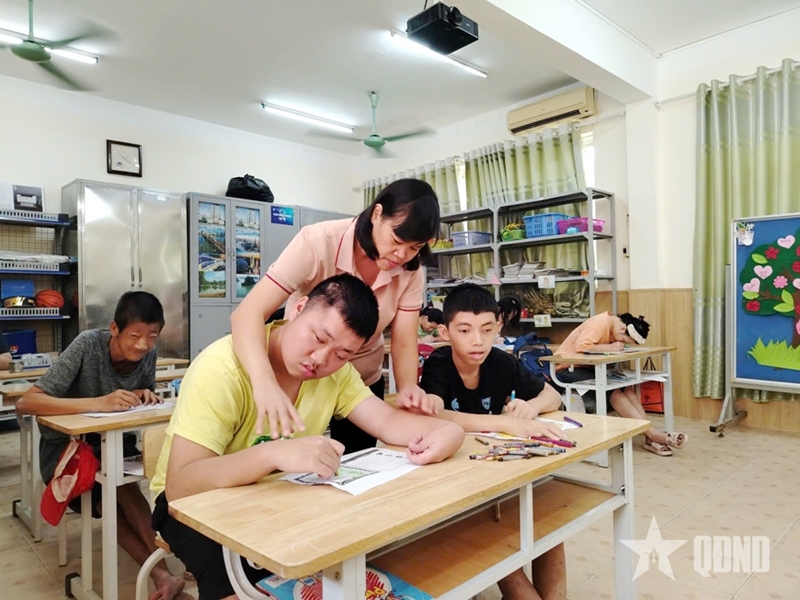
In Special Education Class 1, teacher Nguyen Thi Oanh guides students in practicing their handwriting. Among them is Nguyen Van Tuan, born in 1982, an AO victim with severe intellectual disabilities, chest deformities, and a right knee joint deformity. When he first joined the class, his cognitive abilities were very limited, and his knowledge and skills were fragmented.
    |
 |
|
Teacher Nguyen Thi Oanh patiently guides students who are AO victims. |
Today, however, Tuan can recognize some colors, numbers, letters, and familiar objects. He can color pictures according to patterns, water plants, clean the classroom, and tidy up after lessons. More importantly, he has become more cheerful and sociable, interacting with teachers and classmates and asking about friends who are absent.
For Oanh, a student's progress cannot be measured by conventional standards. A longer sentence, a spontaneous greeting, or the ability to put away learning materials after class can represent significant achievements after a long process of teaching and support.
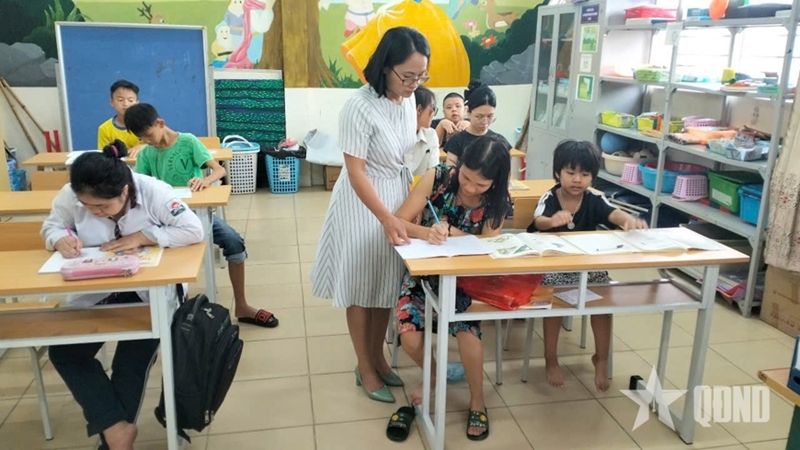
In Special Education Class 4, teacher Tran Thi Thu Ly works with nine students whose ages and cognitive abilities vary considerably. While some can study material equivalent to primary school curricula, others are still learning basic concepts. Therefore, she must adapt her teaching methods to each student's individual abilities.
One memory that Ly particularly cherishes is a handmade gift from her students. On November 20, which also coincided with her birthday, she returned to the classroom and found a drawing and congratulatory messages on the board. Although the drawing was imperfect and the handwriting was still shaky, she considered it a priceless gift. Helping students with limited cognitive abilities remember special occasions and express their affection requires patience, close attention, and dedication.
Vocational skills open up new opportunities
While Oanh's and Ly's classrooms focus on basic knowledge and life skills, another classroom at the center offers students opportunities to learn vocational skills.
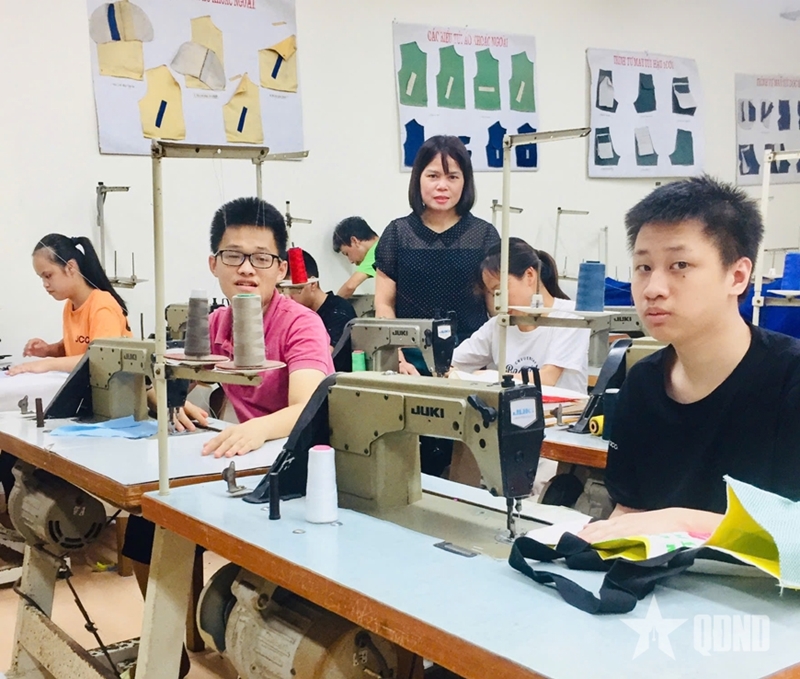
The steady sound of sewing machines fills the room as teacher Nguyen Thi Hong Hai guides students through each stitch. With 24 years of experience, Hai currently teaches two tailoring and weaving classes with 16 students. Her goal is to equip them with practical skills so that, after completing their training, those capable of mastering the skills can independently make certain products or work at garment workshops and production lines.
|
|
 |
|
Teacher Tran Thi Thu Ly with her students |
For these students, vocational training is more than learning a skill. It offers an opportunity to demonstrate their abilities, create products with their own hands, and potentially earn a living independently after integrating into the community.
Senior Colonel Nguyen Ngoc Dung, Director of the Viet Nam Friendship Village, said that caring for, educating, and providing vocational guidance to students with disabilities and AO victims is a specialized mission requiring professional expertise, responsibility, patience, and creativity from teachers.
As each student has different circumstances, levels of disability, and learning abilities, no single teaching method can be applied to everyone. The center therefore focuses on professional development and creates conditions for teachers to improve their capabilities to meet the requirements of education and vocational training.
|
|
 |
|
Teacher Nguyen Thi Hong Hai in the sewing classroom |
As the Vietnamese Teachers' Day on November 20 approaches, the dedication of teachers at the Viet Nam Friendship Village deserves recognition. Through their quiet and persistent efforts, they celebrate every letter written, every skill acquired, and every brighter smile. For these teachers, helping their students build confidence and gain opportunities for better lives is the greatest reward of their profession.
Translated by Tran Hoai