Deputy Prime Minister Pham Thi Thanh Tra on November 10 signed a decision approving a project to support children with disabilities in accessing protection, care and education services during the 2026-2030 period.
Accordingly, priority will be given to disabled children who are ethnic minorities and those from poor and near-poor households, mountainous and ethnic minority-inhabited areas and localities facing particularly difficult socio-economic conditions.
    |
 |
|
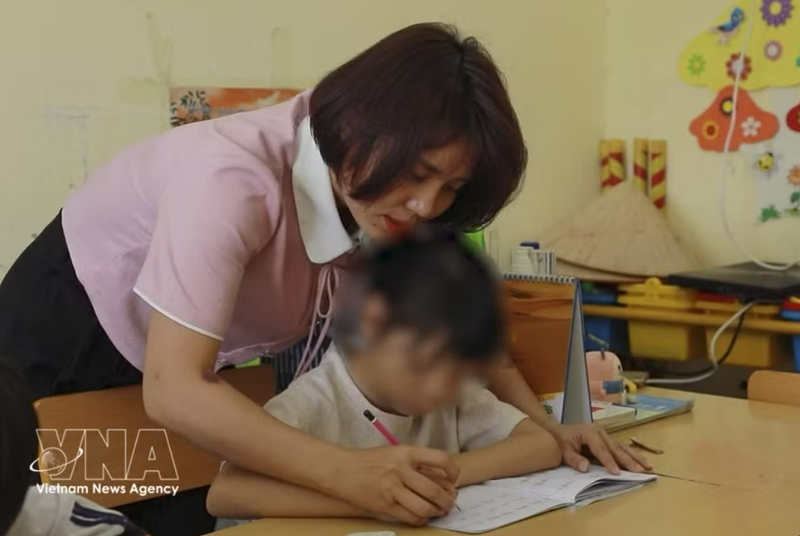
A teacher at the Dien Bien support center for the development of inclusive education guides a student with disabilities in writing practice. |
The project also seeks to remove social barriers, reduce stigma and discrimination, and enable children with disabilities to develop their full potential and integrate sustainably into the community.
By 2030, at least 80% of children aged from birth to six years old are expected to receive screening for early detection for congenital disabilities and developmental disorders, as well as early intervention services. Meanwhile, 90% of children with disabilities will be assessed, provided with intervention support plans based on their needs, and connected with appropriate services.
The project aims to ensure that 90% of disabled children of preschool and general education age have access to appropriate education. All children with disabilities studying in inclusive education settings will have individualized education plans developed, implemented, monitored and evaluated in accordance with regulations.
It also sets a target of providing timely and appropriate support and intervention to all children with disabilities who are identified as victims of abuse, violence, exploitation or abandonment.
All eligible children with disabilities will receive social allowances and health insurance, while 50% of existing public facilities, social assistance establishments, schools and healthcare facilities are set to have essential components renovated or upgraded to ensure accessibility for this group.
The project also focuses on communication activities and public awareness raising to reduce stigma and discrimination, while safeguarding the right of children with disabilities to participate in social activities and integrate into their communities.
By 2030, more than 90% of parents and caregivers of children with disabilities, officials at all levels, social organizations and organizations of persons with disabilities will be equipped with the knowledge and skills needed to help children access protection, care and education services effectively.
All provinces and cities are expected to consult disabled children when developing policies and programs concerning them.
More than 90% of staff at medical and educational establishments, social organizations providing relevant services, and collaborators supporting children with disabilities will receive training to enhance their capacity.
The project also targets having 90% of localities establish case management systems, service networks and inter-sectoral coordination mechanisms, while piloting care models for children with disabilities. All provinces and cities will operate a child management database system with a dedicated component for children with disabilities.
To achieve these goals, the project outlines five groups of tasks and solutions, including fine-tuning relevant laws, mechanisms, policies and guidelines; ensuring needs-based access to appropriate services; raising public awareness and reducing discrimination; applying information technology, digital transformation and innovative solutions; and strengthening the capacity of personnel supporting children with disabilities.
Source: VNA