The events were organized by Informa Markets Vietnam in collaboration with the Asia Pacific Urban Energy Association (APUEA), the Vietnam Internet Association (VIA), the Vietnam Cloud Computing and Data Center Club, and other partners.
Experts noted that Viet Nam is emerging as a regional bright spot for data infrastructure development, driven by growing demand for AI, cloud computing, 5G commercialization and digital transformation. However, they said the country needs coordinated preparations, including green power supplies, international submarine cable connectivity and operational capabilities meeting global standards.
    |
 |
|
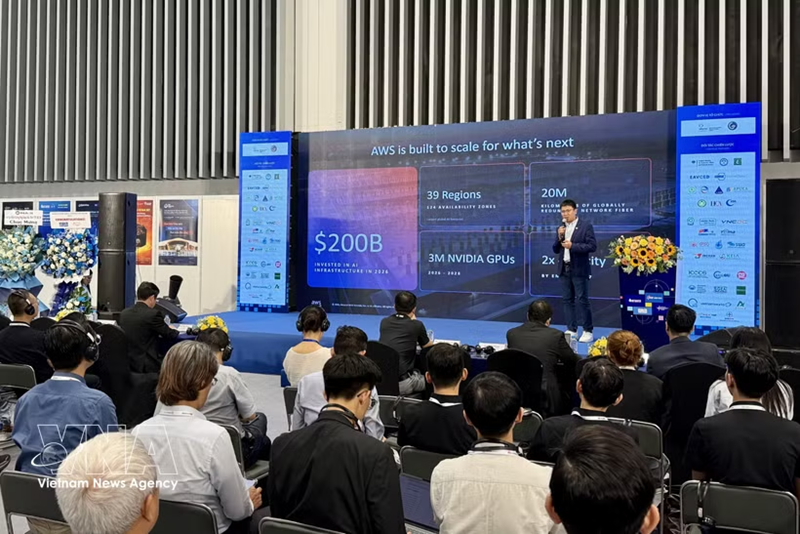
An overview of the seminar |
Tran Huu Dung, Director of Quang Trung Software City Development Company Limited and VIA's southern regional representative, said the AI boom is reshaping the global digital infrastructure landscape, increasing demand for computing power, data storage, connectivity, electricity and cooling solutions.
Global investment in computing infrastructure is projected to reach USD 6.7 trillion by 2030, including around USD 5.2 trillion for AI infrastructure. The International Energy Agency estimates that electricity consumption by data centers will nearly double to around 950 billion kWh by 2030, while power consumption by AI-dedicated data centers is expected to triple.
Viet Nam's Law on Telecommunications allows foreign investors to hold up to 100% ownership in data center and cloud computing service businesses, helping attract international technology, capital and management expertise. Meanwhile, the Law on Personal Data Protection, which took effect on January 1, 2026, sets clear requirements for data security and the responsibilities of data-processing organizations.
Nguyen Thi Phuong Yen, Deputy Director of the Energy Information and Electricity Market Development Center under the Electricity Authority of Viet Nam, said the global energy sector is undergoing major changes driven by the energy transition, emerging technologies and digital transformation.
In Viet Nam, energy remains fundamental to socio-economic development and national competitiveness. As demand rises, the challenge is not only to ensure adequate and stable supplies but also to build a modern and efficient energy system capable of adapting to technological and market changes, she said.
Yen stressed the need to improve institutions and infrastructure, promote innovation and technology applications, mobilize investment and strengthen public-private partnerships. Closer links among policies, technologies, markets and investment are essential to translate development orientations into practical solutions, she added.
Prof., Dr. Nguyen Van Phuoc, Chairman of the Ho Chi Minh City Union of Science and Technology Associations, said stronger connections among industrial networks will help businesses select integrated technological solutions that improve efficiency, reduce operating costs and enhance competitiveness.
He added that the union and the Ho Chi Minh City Association for Water and Environment are ready to work with domestic and international partners to promote technology adoption and human resource development.
Experts also highlighted growing links between the energy sector and manufacturing, cooling technologies, water management, digital infrastructure and data centers, reflecting an increasingly integrated development trend.
Energy efficiency and sustainability are no longer concerns exclusive to the energy sector but have become key factors shaping competitiveness across the economy, they said.
Source: VNA