Addressing the seminar entitled “Developing LNG Infrastructure in Viet Nam: International Experience and Policy Implications,” jointly organized by the Party Central Committee's Commission for Policy and Strategy, the U.S. Embassy and Excelerate Energy, Nguyen Van Phuong, vice chairman of the commission, said Resolution No.70-NQ/TW of the Politburo on ensuring national energy security through 2030, with a vision to 2045, calls for diversified energy supplies, synchronized infrastructure and regional energy centers.
Over the past time, Viet Nam has made significant progress in developing the LNG supply chain. However, compared with the requirements of the revised Power Development Plan VIII, these efforts are only at an initial stage, with many projects still facing implementation delays.
In practice, LNG infrastructure development faces three major challenges, including determining the appropriate scale of development amid market volatility and the demands of the national energy strategy, ensuring synchronization across the entire supply chain, and mobilizing capital while sharing risks, given the substantial investment requirements and long payback periods of LNG projects, which call for stable and predictable policy frameworks.
    |
 |
|
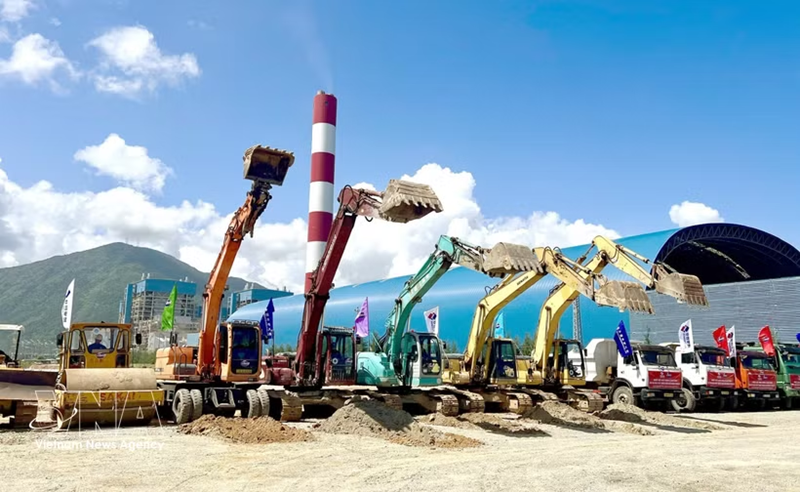
The groundbreaking of the Quang Trach II LNG-fired thermal power plant project, with a total investment of over VND 40 trillion, in Quang Tri province on October 20, 2026 |
U.S. Ambassador to Viet Nam Jennifer Wicks noted that Viet Nam had made notable progress through the revised Power Development Plan VIII and regulations currently being implemented. However, to realize the plan’s targets, Viet Nam needs to address several longstanding challenges openly highlighted by investors, lenders and project developers.
She stressed that U.S. companies, with advanced technologies, extensive operational experience and a long-term commitment to Viet Nam, are ready to invest in and supply energy to the country. However, amid intense global competition for investment, capital and business deals would favor markets with strong capabilities, high reliability and a regulatory framework conducive to project financing.
Balancing interests and sharing risks
To develop LNG infrastructure in Viet Nam in line with the requirement for energy infrastructure to stay ahead of demand, Phuong called for a shift from individual projects to an integrated LNG infrastructure system, backed by suitable investment models and a stable and transparent policy framework that balances the interests of the State, businesses, investors and consumers.
He stressed that investor selection, shared infrastructure, gas supply contracts, power purchase agreements and pricing mechanisms must be considered as a whole. Gas purchase commitments should be linked to actual electricity dispatch to facilitate project financing and avoid additional costs for the power system. Risks should be allocated transparently, while impacts on electricity prices and long-term financial obligations must be controlled.
Wicks also highlighted the strategic benefits of modern LNG infrastructure, including import terminals and floating storage and regasification units (FSRUs), which can diversify supplies, facilitate long-term contracts and strengthen energy security against supply shocks.
As Viet Nam expands renewable energy while maintaining power system reliability, LNG-fired power can serve as a valuable complementary source. However, investors need clear pricing and electricity dispatch mechanisms, transparent licensing procedures, standard contracts meeting international lenders' requirements, and long-term power purchase agreements to ensure projects are bankable, she said.
Deputy General Director of Petrovietnam Gas Joint Stock Corporation (PV GAS) Huynh Quang Hai proposed developing centralized LNG terminals and a main pipeline network linking storage facilities with power plants and other consumers to establish national LNG infrastructure and energy-industrial centers in line with Resolution No.70. He also called for regulations ensuring Qc-based power dispatch to underpin stable, continuous and competitively priced long-term LNG supplies, alongside supply diversification to reduce dependence on individual sources, toward ensuring national energy security.
Deputy Minister of Industry and Trade Nguyen Viet Son outlined five priorities: aligning infrastructure development with planning and actual demand; promoting shared infrastructure and appropriate LNG hubs; improving alignment between gas and electricity markets; diversifying supplies and strengthening risk management; and expanding international cooperation in investment, technology and finance.
The Ministry of Industry and Trade is working to improve the institutional framework. The 16th National Assembly is expected to pass the law amending and supplementing several articles of the Electricity Law during its current session, while the ministry plans to complete an update of the adjusted Power Development Plan VIII in November, Son said.
Viet Nam's LNG consumption demand is forecast to rise sharply from around 500,000 metric tons in 2025 to approximately 17 million metric tons by 2050, with the southern region accounting for about 65% of total demand.
Source: VNA