    |
 |
|
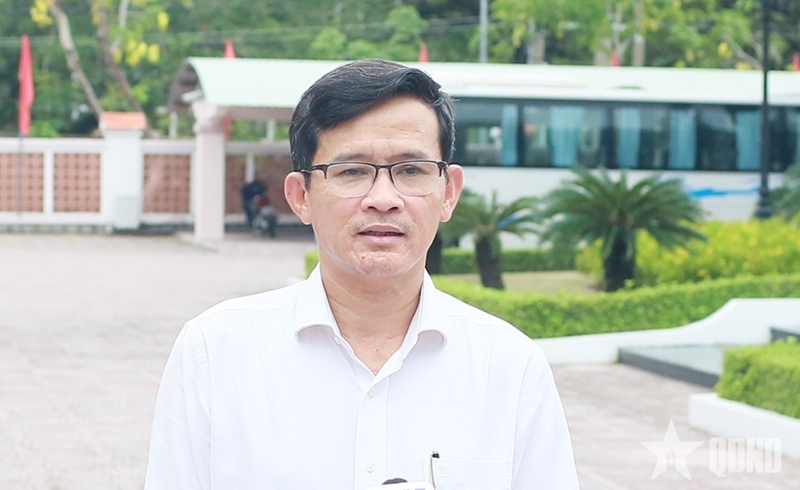
Chairman of the People’s Committee of Con Dao special zone Phan Trong Hien shares the locality’s vision for green transportation development. |
A stable and reliable electricity supply has created favorable conditions for replacing gasoline- and diesel-powered vehicles with electric alternatives, supporting the island’s long-term goals of sustainable development and environmental protection.
According to Chairman of the People’s Committee of Con Dao special zone Phan Trong Hien, Con Dao has been selected as one of Ho Chi Minh City’s leading localities in promoting green transformation.
“We are gradually replacing fossil fuel-powered vehicles with electric ones. This transition became feasible after Con Dao was connected to the national grid in September 2025. A stable and adequate power source is essential for us to invest in developing the infrastructure needed for green transportation,” he said.
|
|
 |
|
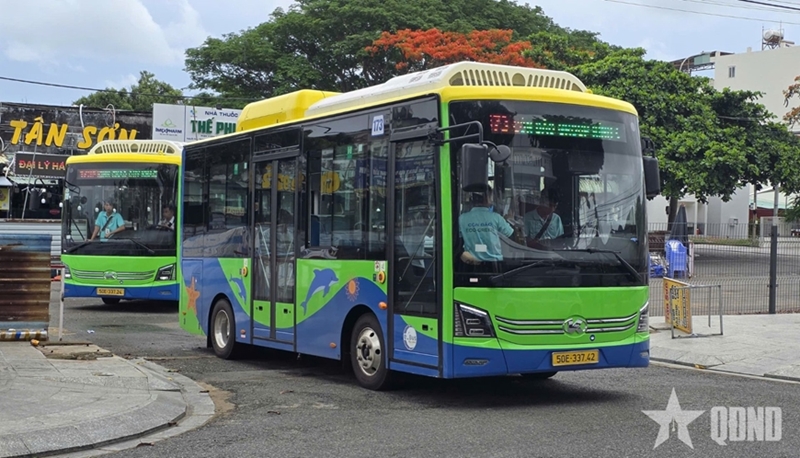
An electric bus route currently operating in Con Dao special zone |
To support the transition, local authorities are drafting policies to assist residents and businesses in converting from conventional vehicles to electric ones. The special zone is also planning charging station locations and coordinating with Ho Chi Minh City agencies to pilot electric bus services and expand public charging infrastructure.
The shift toward green mobility is gaining momentum among businesses and residents. Tourism operators and hotels increasingly view sustainability as a way to improve services and attract visitors.
Le Mong Thu, Deputy Director of Saigon Con Dao Hotel under Saigontourist, said the hotel plans to gradually replace its fuel-powered vehicles with electric ones as part of its environmental commitments, which also include eliminating single-use plastics and improving energy efficiency.
Large-scale green transportation projects have already begun operating on the island. Con Dao Group Joint Stock Company has invested in electric buses and charging infrastructure as part of the transition.
|
|
 |
|
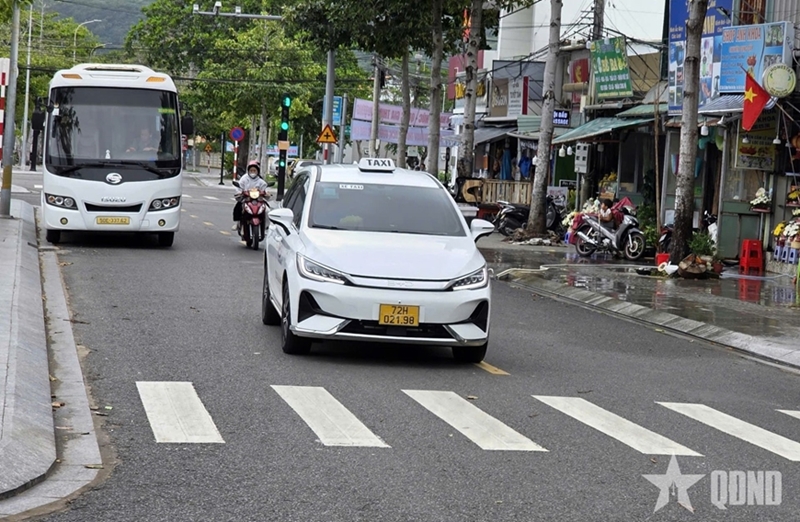
Many residents are also rapidly adopting electric vehicles thanks to their convenience and the availability of stable electricity from the national grid. |
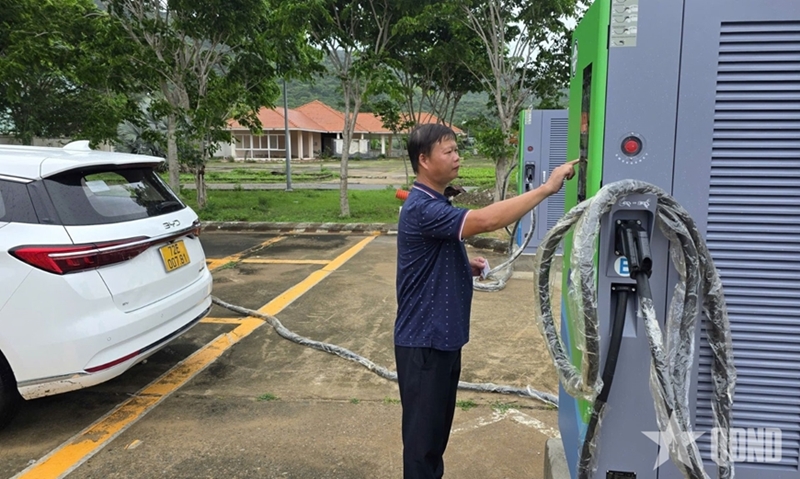
According to Nguyen Dang Khoa, Chairman and Chief Executive Officer of the company, six electric buses have been deployed on Route 173 during the first phase of the project. To support operations, the company invested in six 240kW charging stations and a dedicated 2,500kVA transformer substation.
“Although electric bus operations in Con Dao are not yet highly profitable, we remain committed to supporting the State’s green transition policy,” he said.
Khoa noted that electricity supplied through the national grid has reduced energy costs by 10 to 30 percent compared with the period when diesel generators were the primary power source.
Despite the progress, challenges remain. Infrastructure investment costs on the island are significantly higher than on the mainland. A 2,500kVA transformer station costing about VND 5 billion on the mainland can cost up to VND 10 billion in Con Dao, while each high-capacity charging unit costs nearly VND 1.6 billion.
Businesses are calling for practical support measures, including assistance with land allocation, simplified administrative procedures, and easier access to financing for charging infrastructure projects.
Nguyen Hoang Phuong, Director of Poulo Condor Travel, said his company is prepared to convert all 100 rental motorcycles to electric vehicles. However, he emphasized that the cost of a large-scale transition remains a major challenge for small businesses and household operators.
|
|
 |
|
High-capacity charging stations are being deployed by Con Dao Group Joint Stock Company. |
Businesses are therefore seeking a clear implementation roadmap along with financial support policies to facilitate the transition without disrupting operations.
Phuong also highlighted technical concerns related to Con Dao’s marine environment. Salt-laden air can accelerate corrosion and damage electronic components, while the area’s steep terrain requires electric vehicles with sufficient power and battery capacity. He added that expanding public charging infrastructure is essential to address safety concerns associated with home charging.
Backed by a stable power supply, strong government commitment, and growing business participation, Con Dao is steadily advancing toward a greener transportation future. The development of charging infrastructure and wider adoption of electric vehicles are expected to reduce emissions while strengthening the island’s reputation as a sustainable tourism destination.
Translated by Tran Hoai