    |
 |
|
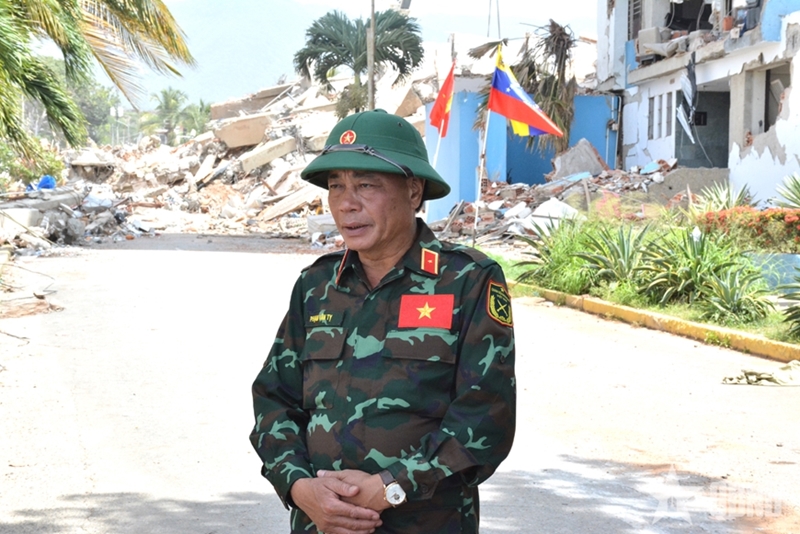
Maj. Gen. Pham Van Ty, Deputy Director of the Department of Search and Rescue under the General Staff |
According to Major General Pham Van Ty, the mission reinforced the importance of rapid deployment, effective coordination, scientific decision-making, and professional rescue capabilities in large-scale disaster response.
Following the directives of the Party, the State, the Central Military Commission, and the Ministry of National Defense, an 82-strong contingent was dispatched to Venezuela alongside a team from Vietnam's People's Public Security. Working closely with local authorities and international rescue teams, the Vietnamese contingent immediately began SAR operations upon arriving in La Guaira state.
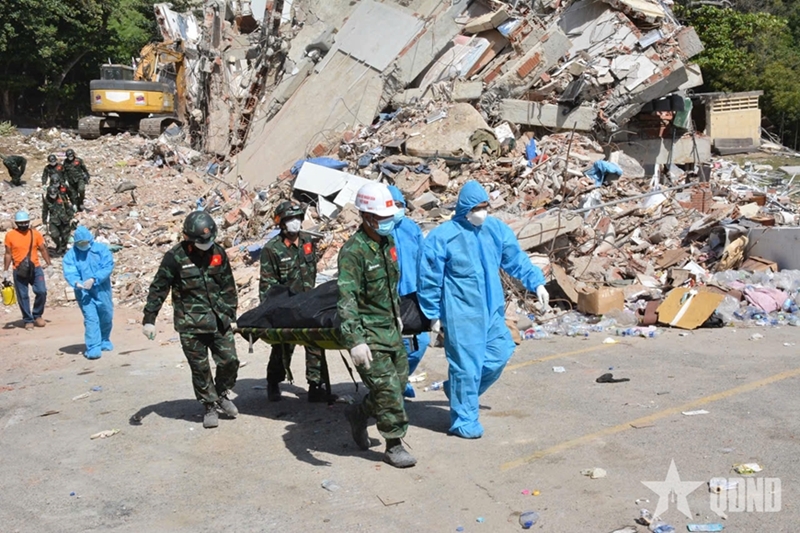
After conducting an initial assessment in the Playa Grande area, the contingent quickly deployed multiple teams. Personnel worked from early morning until late at night, extending operations through the night whenever there were indications that survivors might still be trapped beneath the rubble. Throughout the mission, the VPA, independently and in coordination with other rescue teams, recovered 57 victims from collapsed buildings and transferred them to local authorities and their families. The military medical team also provided free medical examinations and medicine to local residents. The delegation maintained strict discipline and ensured the safety of all personnel while earning the appreciation of the Venezuelan authorities and local communities.
Maj. Gen. Pham Van Ty said that the preparation for the mission began immediately after news of the earthquakes reached Vietnam. Despite the short preparation time, long travel distance, and large volume of equipment to be transported, the deployment was organized with urgency and precision. The delegation included command personnel, combat engineers specializing in collapsed-structure rescue, military medical staff, dog handlers with service dogs, and logistical support personnel. Many members had previously participated in international rescue operations in Türkiye and Myanmar, providing valuable field experience.
|
|
 |
|
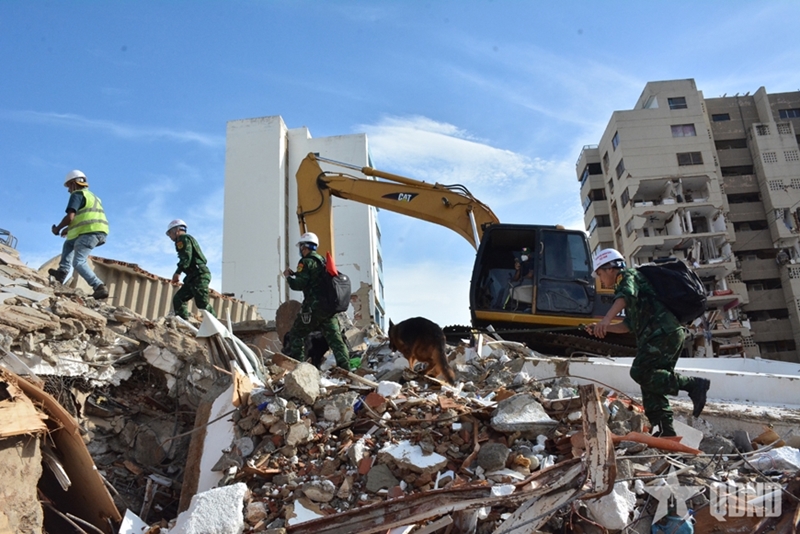
Vietnam People's Army personnel search for victims buried beneath the rubble in Playa Grande. |
The team brought advanced search equipment, including through-wall radar, imaging and acoustic detection systems, drilling and cutting tools, hydraulic rescue equipment, lifting devices, protective gear, and medical supplies. The first transport flight delivered dozens of tons of rescue equipment and humanitarian aid, enabling the contingent to begin operations immediately after establishing its base.
According to General Ty, the mission in Playa Grande presented significant operational challenges. The area contained numerous high-rise buildings constructed on steep slopes, many of which had completely collapsed during the earthquakes. Massive piles of concrete and twisted steel created an extremely dangerous environment, with a constant risk of secondary collapse.
To maximize efficiency, the Vietnamese contingent established five search teams covering approximately 2.2 square kilometers. Search priorities were determined by combining information from local authorities and victims' relatives with alerts from service dogs, data collected by through-wall radar and acoustic detection equipment, and assessments of structural stability and accessibility. Service dogs were used to identify potential target areas, technical equipment verified the findings, and combat engineers selected the safest and most effective access routes.
|
|
 |
|
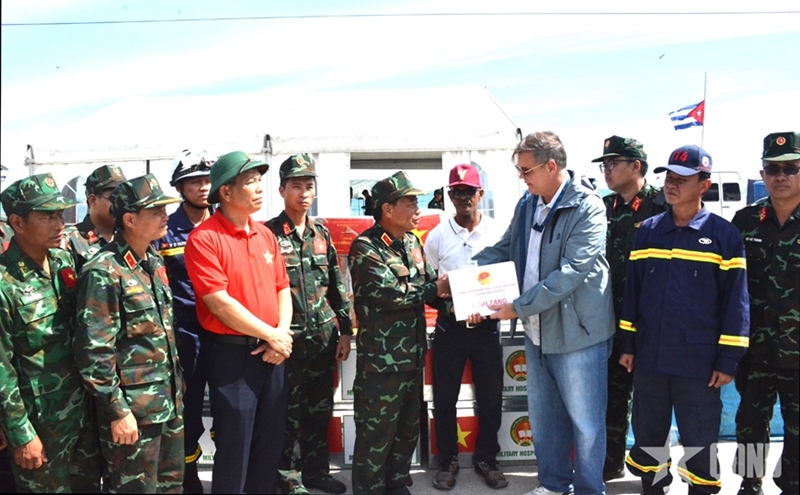
The Vietnamese contingent donates their mission allowances to support the Venezuelan people. |
Even under heavy rain, Vietnamese personnel continued working alongside international rescue teams throughout the night. However, commanders consistently emphasized the need for calm, disciplined operations, recognizing that the determination to locate victims must always be balanced with scientific assessment and strict safety procedures.
Major General Pham Van Ty described Venezuela as the most challenging rescue environment the VPA has encountered, surpassing previous international missions in Türkiye and Myanmar. Collapsed high-rise buildings created unstable piles of debris, while aftershocks continued to threaten rescuers. Any inaccurate drilling or cutting could trigger secondary collapses, placing rescue personnel at immediate risk.
The harsh weather further complicated operations. High temperatures accelerated the decomposition of victims' bodies, creating extremely difficult working conditions. Rescue personnel often wore three layers of face masks and applied medicated oil to reduce the impact of the odor, yet many could only remain at the scene for 10 to 15 minutes before rotating out. Some experienced dizziness and had to be moved to well-ventilated areas for recovery.
|
|
 |
|
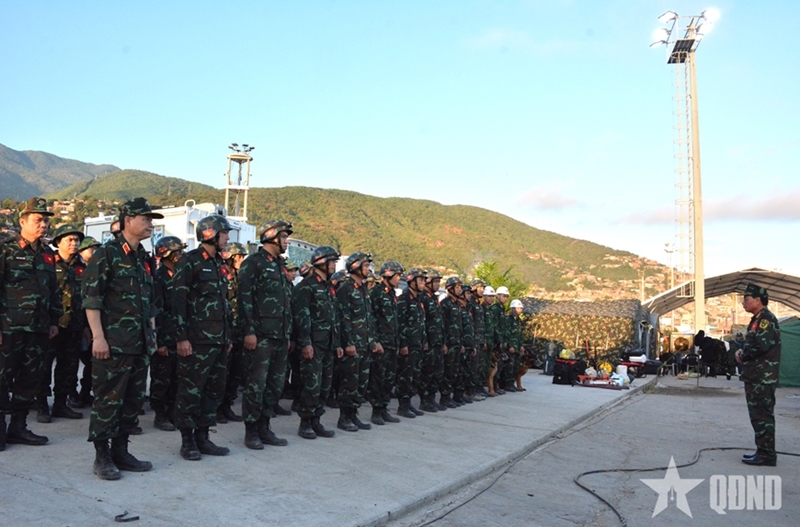
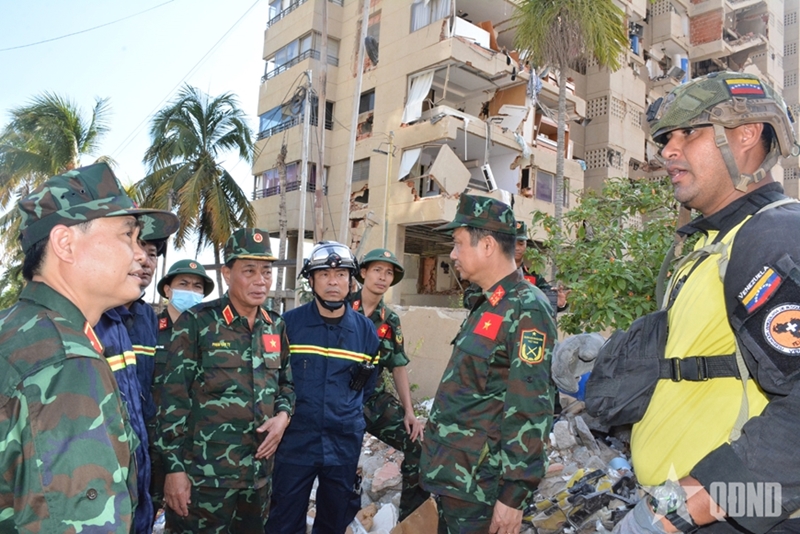
Maj. Gen. Pham Van Ty briefs officers and soldiers before carrying out their mission in La Guaira. |
|
|
 |
|
Maj. Gen. Pham Van Ty meets with Venezuela's SAR force. |
Under such conditions, every operation required careful reconnaissance, structural assessment, clearly identified entry and exit routes, designated safety observers, and standardized emergency warning procedures. Rescue teams maintained constant communication, rotated personnel appropriately, and strictly followed command instructions. While recovering victims remained the highest priority, commanders emphasized that ensuring the safety of rescue personnel was essential to accomplish the mission successfully.
Drawing on the experience gained in Venezuela, Maj. Gen. Pham Van Ty stressed that effective SAR operations require close coordination among engineers, service dogs, advanced detection equipment, and military medical personnel. Modern technology plays a critical role, but equipment alone cannot ensure success. Commanding officers and rescue teams must possess the expertise to interpret technical data, assess structural conditions, evaluate risks, and determine the safest and most effective rescue methods.
Looking ahead, he emphasized the need for continued investment in advanced detection systems, rescue equipment, lifting devices, communications systems, and protective gear. Equally important is the development of highly specialized rescue forces whose members are proficient in operating modern equipment, possess advanced technical skills, and can work seamlessly together under demanding conditions.
The mission also demonstrated how lessons learned from previous deployments in Türkiye and Myanmar had strengthened the VPA's international disaster response capabilities. Those earlier experiences highlighted the importance of maintaining rapidly deployable specialized units, using compact and standardized equipment suitable for long-distance transport, and ensuring comprehensive logistical, medical, and psychological support for deployed personnel.
|
|
 |
|
VPA personnel recover victims' bodies from the rubble. |
These lessons were successfully applied in Venezuela through the selection of experienced personnel, the deployment of service dogs and advanced detection equipment, and the organization of multiple independent search teams. At the same time, the mission underscored new challenges associated with operating in collapsed high-rise buildings on steep terrain, working for extended periods in heavily contaminated environments, and coordinating with numerous international rescue organizations.
According to Maj. Gen. Pham Van Ty, these practical experiences should be incorporated into future training programs and field exercises while further strengthening specialized foreign language proficiency, interagency command capabilities, and international coordination skills for Vietnam's dedicated search and rescue forces.
Translated by Tran Hoai