Since the beginning of this year, the Standing Board has led Military Region 9’s affiliates to effectively accomplish key tasks. The region’s armed forces have proactively followed situational developments, observed combat readiness regulations, provided strategic advice to the Central Military Commission and the Ministry of National Defense, and played a core role in strengthening the all-people defense posture coupled with the people’s security posture.
    |
 |
|
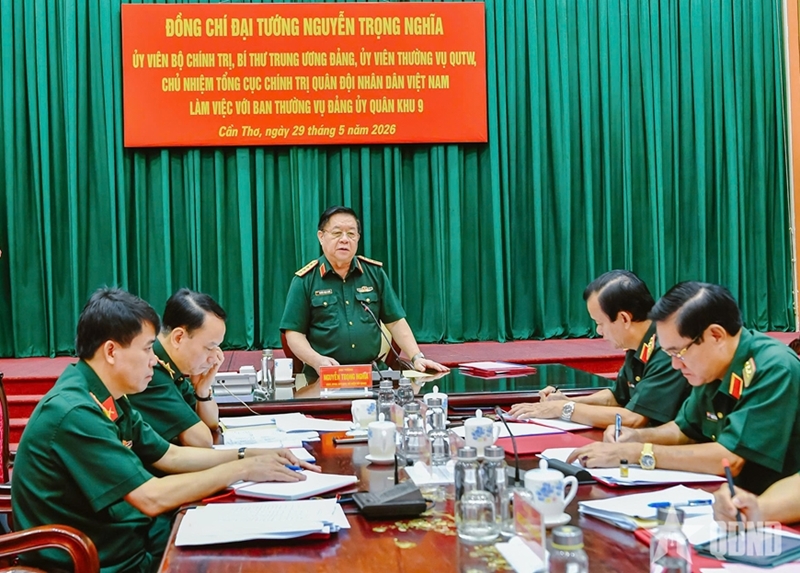
General Nguyen Trong Nghia speaks at the working session. |
The Party and political work has been implemented comprehensively, while political education and thought management have been renovated. Emulation movements, policy work, mass mobilization activities, and cadre development have continued to achieve positive results, contributing to stronger military-civilian bonds and a solid people’s heart posture.
Commending its achievements, General Nghia called on the Standing Board to take more decisive and effective measures to address existing shortcomings and achieve better results in the coming period.
He stressed that 2026 is the first year of the new term to implement major policies based on renewed thinking, vision, methods, and actions, posing high requirements for military building in the new situation. Therefore, Military Region 9 should continue thoroughly implementing Party and Central Military Commission’s directives on military and defense tasks, while focusing on building a strong Party organization in terms of politics, ideology, ethics, organization, and personnel.
|
|
 |
|
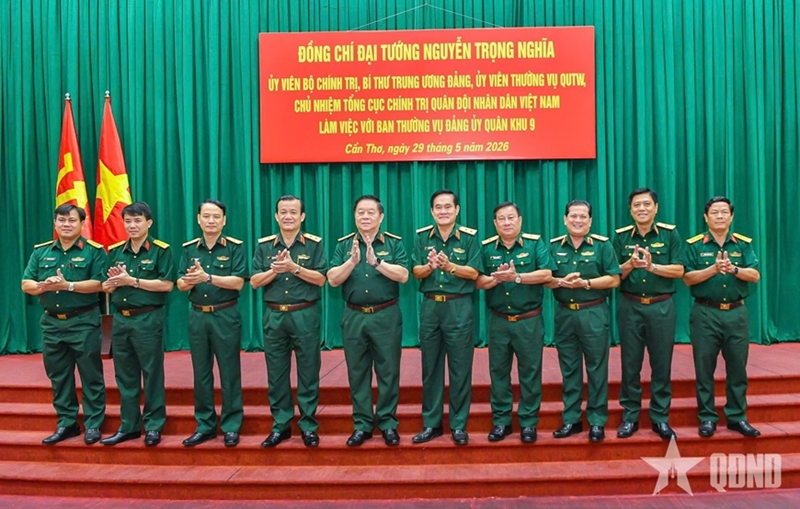
General Nguyen Trong Nghia (sixth from right) and key cadres of Military Region 9 in a group photo |
He also urged Military Region 9 to enhance forecasting and advisory work; strengthen the role of the armed forces in building the all-people defense posture and the people’s security posture, particularly in border, sea, and island areas; effectively implement policies for troops and their families; promote mass mobilization movements; and remain ready to assist local communities in responding to natural disasters, epidemics, drought, and saltwater intrusion.
In addition, he emphasized the effective implementation of the 500-day campaign on martyrs’ remains collection and identification, the organization of new recruit oath-taking ceremonies and training assessments; and the continued promotion of defense diplomacy.
He also underlined the training and fostering of cadres to enable them to develop their capabilities and meet mission requirements in the new situation.
Translated by Mai Huong