The mission was carried out amidst an influx of refugees from South Sudan into Abyei, a development that heightened risks of insecurity and a looming humanitarian crisis.
In early March 2026, Abiemnhom area of South Sudan was rocked by intense outbreaks of violence.
    |
 |
|
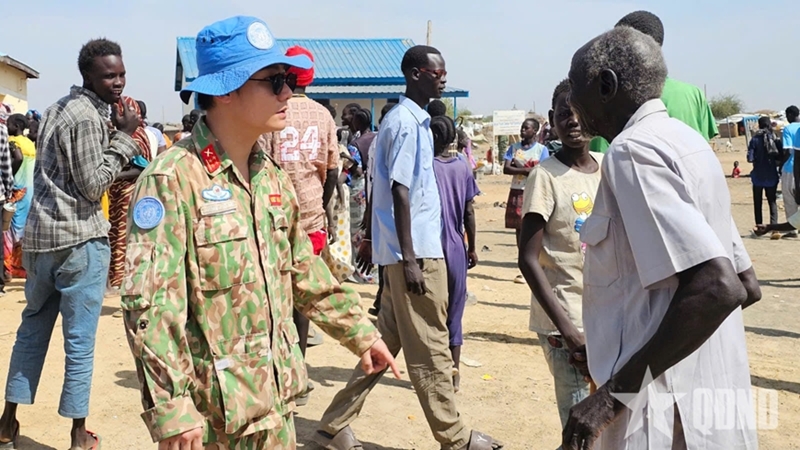
Cap. Hai directly participates in field operations. |
|
|
 |
|
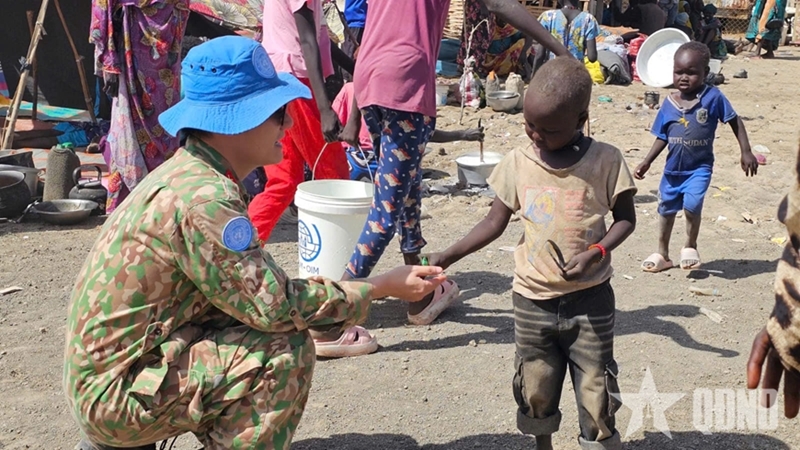
Cap. Hai inquires after refugees. |
According to initial reports from local authorities and international humanitarian agencies, the attacks left nearly 180 people dead and dozens injured, including many women and children from both Nuer and Dinka ethnic groups.
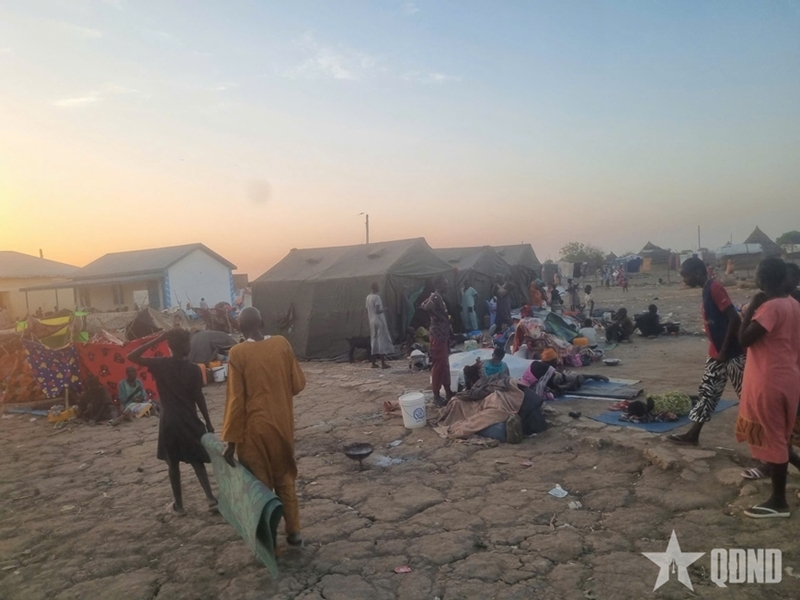
The surge in violence forced thousands of civilians to flee their homes under extremely harsh conditions. More than 4,000 people moved toward Abyei in search of safety, triggering a localized humanitarian crisis in a region already strained by limited infrastructure and scarce relief resources.
In response to the situation, the UNISFA’s peacekeeping forces promptly activated emergency response mechanisms, swiftly implementing measures to ensure security and deliver humanitarian assistance, while facilitating refugees’ access to essential needs necessary for their survival.
Upon receiving reports of the refugee influx from Abiemnhom, the U9 Section quickly established a coordination mechanism among the mission’s military forces, U.N. humanitarian agencies, and local authorities.
UNISFA troops also intensified patrols to ensure security in areas hosting large numbers of displaced people, while supporting the protection of humanitarian convoys delivering aid to affected communities.
|
|
 |
|
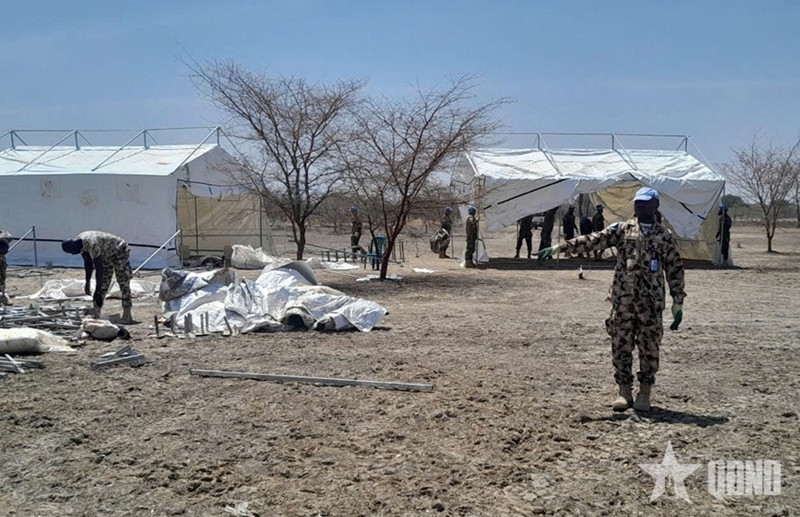
A civilian protection site with a capacity of 2,000 people is being urgently completed by the U9 Section to accommodate the growing influx of refugees into Abyei. |
At inter-agency coordination meetings, Capt. Hai maintains constant engagement with representatives of U.N. humanitarian organizations, local authorities, and military units within the mission. Alongside his colleagues, he serves as a vital link between peacekeeping forces and humanitarian actors in the area, while also working directly on the ground. He joined CIMIC teams to conduct field assessments at refugee sites, rapidly evaluating the need for food, clean water, shelter, and medical services.
Hai shared that during crises, the most critical factor is effective coordination between peacekeeping forces and humanitarian organizations to ensure refugees receive timely assistance. This is essential to guarantee that those arriving in Abyei receive humane treatment and care.
According to him, the reception and support of South Sudanese refugees currently conducted by UNISFA is an exceptionally complex task.
Thanks to close coordination between the agencies, emergency relief operations were rapidly deployed, enabling thousands of civilians to access food, clean water, and essential medical services.
|
|
 |
|
Thousands of refugees from Abiemnhom gather at a temporary reception site before being relocated to the UNISFA’s civilian protection areas. |
In an international working environment, Vietnamese peacekeepers have actively upheld the spirit of “serving the people” and the tradition of the Vietnam People’s Army in fulfilling their mission. Built on a foundation of trust with local communities, the UNISFA’s assistance activities have been implemented more smoothly and effectively.
Abyei remains far from stable. The influx of refugees continues, while civilian protection sites are being urgently expanded to accommodate thousands more arrivals. Amidst this complex situation, blue beret officers at UNISFA, including Sr. Cap. Pham Phu Hai, continue to shoulder demanding responsibilities. Their work has contributed to delivering tangible results in peacekeeping operations by staying closely connected to people.
Hai, along with many other Vietnamese officers at UNISFA, is steadily reinforcing the image of the Vietnam People’s Army in an international environment.
Translated by Quynh Oanh