The U.N. ORA inspection team was led by Colonel Nergui Sodnom, Head of the Mission’s Medical Section, and included representatives of relevant functional offices from UNMISS Headquarters and the UNITY Sector.
    |
 |
|
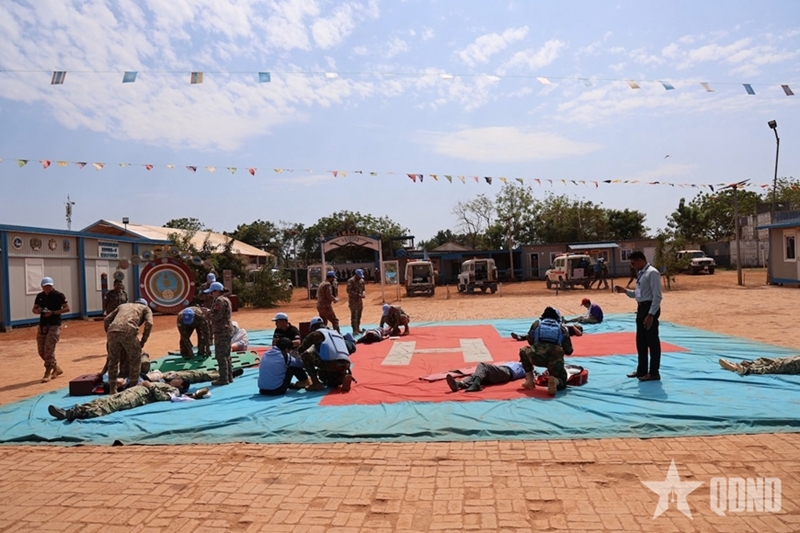
The hospital’s personnel handling a mass casualty emergency scenario |
|
|
 |
|
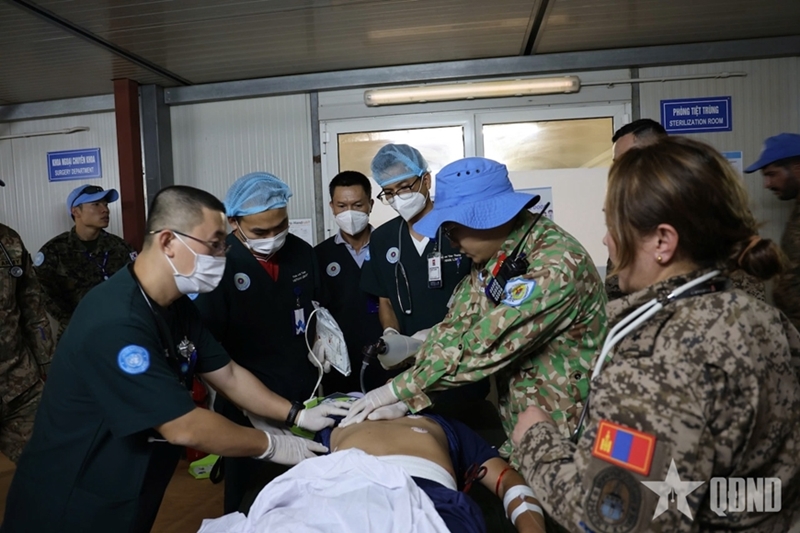
Managing a “Code Blue” cardiopulmonary arrest scenario unexpectedly introduced by the inspection team leader |
|
|
 |
|
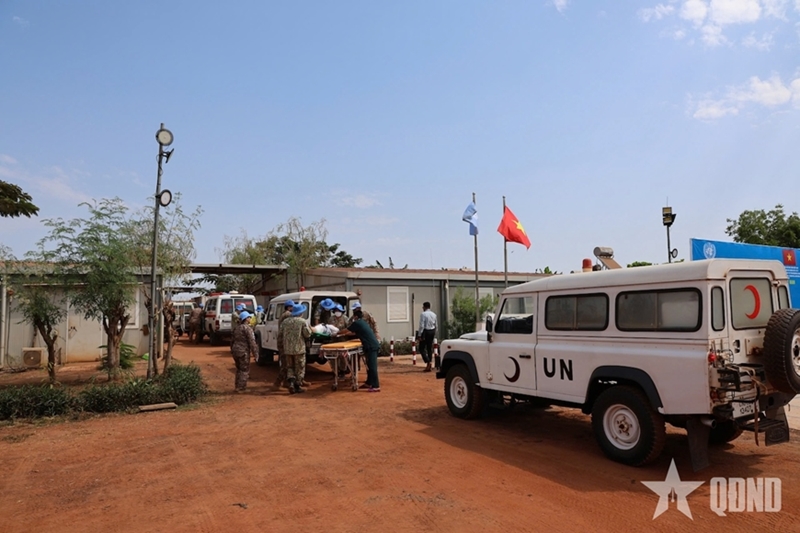
Severely injured casualties in the simulated situation are transported to Vietnam’s L2FH. |
The ORA is a periodic assessment conducted to comprehensively evaluate the readiness of military units, including medical contingents participating in U.N. peacekeeping operations, to carry out their mandated tasks.
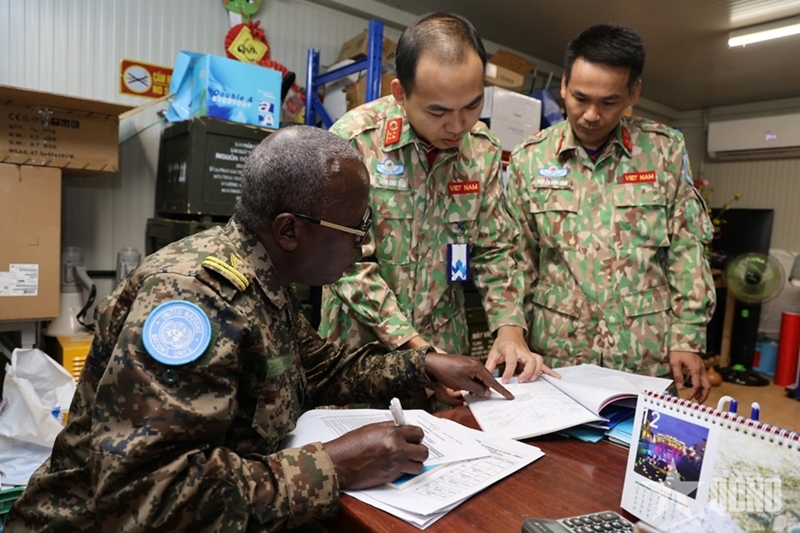
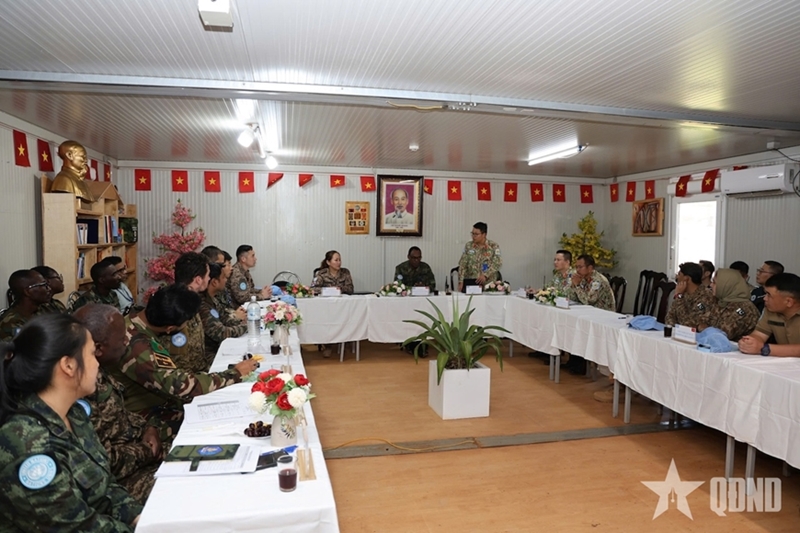
During the assessment, the inspection team conducted a thorough and detailed evaluation of all aspects of medical units operating within the sector, with Vietnam’s L2FH Rotation 7 identified as one of the key parts.
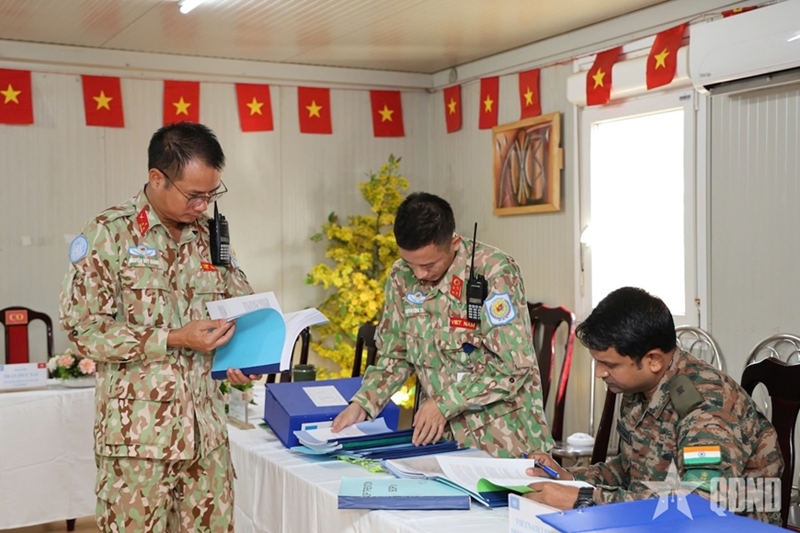
Inspection criteria focused on command and control; organizational structure and personnel management; military and professional medical training; logistics and technical support; standard operating procedures and contingency plans; safety and environmental hygiene; communications; civilian-military coordination; as well as compliance with discipline and the U.N. code of conduct.
As part of the ORA, L2FH Rotation 7 coordinated with Level-1 field hospitals in the sector to conduct a mass casualty response exercise. This was a critical component of the assessment, closely reflecting operational realities and medical support requirements in a mission environment marked by complex security challenges.
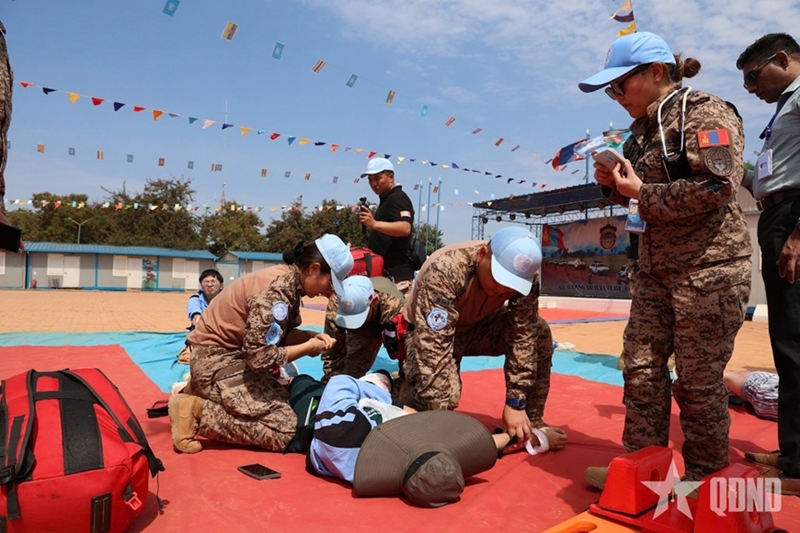
The exercise scenario was kept fully confidential until just before execution and involved 10 casualties with varying degrees of severity, causes, and types of injuries. Under the assigned plan, Level-1 field hospitals conducted on-site triage and initial treatment before evacuating casualties to Vietnam’s L2FH for further triage and further treatment in accordance with U.N. procedures.
The exercise was conducted under significant pressure in terms of time and resources, as a number of officers and staff of the L2FH Rotation 7 were on scheduled leave. Notably, the decision to randomly assign 10 personnel to serve as role-playing patients for the exercise was made immediately before the scenario was announced, resulting in a considerable reduction in available manpower for mission support.
Nevertheless, through a strong sense of responsibility, pro-activeness, and flexibility in command, and close coordination among departments, the L2FH Rotation 7 successfully completed all exercise requirements, ensuring absolute safety for patients and full compliance with U.N. procedures and standards.
Notably, the unit effectively handled a “Code Blue” scenario, cardiopulmonary arrest, unexpectedly introduced by the inspection team leader. This demonstrated the composure, rapid response capability, and solid professional competence of the Vietnamese military medical personnel.
|
|
 |
|
Level-1 field hospitals from partner units also participate in the assessment. |
|
|
 |
|
Inspection items focus on command and control, organizational structure, and personnel management |
|
|
 |
|
The assessment also covers logistics and technical support, standard operating procedures, and contingency planning. |
In concluding the assessment, Colonel Nergui Sodnom acknowledged that the evaluated units met ORA requirements and provided recommendations for further capacity enhancement. These included standardizing first-aid equipment, strengthening tactical combat casualty care training for Level-1 field hospitals, and improving coordination and interoperability between Level-1 and Level-2 hospitals.
Regarding Vietnam’s L2FH, the inspection team leader highly commended its cooperative spirit, professional conduct, marked progress in medical expertise, and effective communication skills. He also encouraged the unit to continue consolidating and further improving its operational readiness in the time ahead.
|
|
 |
|
The ORA inspection team working with Vietnam’s L2FH |
Major Tran Duc Tai, Director of Vietnam’s L2FH Rotation 7, stated that at the time of the assessment the unit was experiencing an objective shortage of personnel. Despite this, all staff members made their utmost efforts, fostering solidarity and continuously learning from partner units, while maintaining close coordination with Level-1 field hospitals and strictly complying with all regulations on security, communications, and professional medical standards.
At the closing of the assessment, Colonel Emmanuel Kanoba, Deputy Sector Commander, recognized the inspection team’s serious and objective working spirit, and praised Vietnam’s L2FH for clearly demonstrating responsibility, discipline, and professional competence throughout the mission.
By Tien Phuc (from South Sudan)
Translated by Tran Hoai