According to the professor, the most important strategic orientation to be defined by the 14th National Party Congress is a qualitative transformation of Vietnam’s growth model. The country needs to gradually move beyond a development model heavily reliant on foreign direct investment and exports, toward one centered on productivity, technology, and the endogenous capacity of domestic enterprises, thereby upgrading its position in regional and global value chains.
    |
 |
|
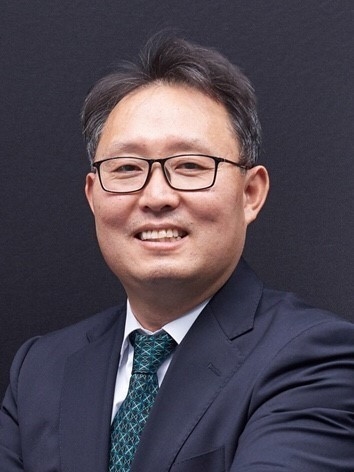
Professor, Doctor of Literature Park Yeon Gwan at Hankuk University of Foreign Studies |
Amid increasingly fierce strategic competition among major powers and a rapidly changing international economic security environment, Vietnam needs to enhance the resilience of supply chains in key sectors such as industry, energy, food and technology. While maintaining an open-door policy remains essential, it should be accompanied by stronger national-level strategic autonomy, avoiding excessive dependence on any single market or partner, Park stressed.
He also pointed out that infrastructure and implementation capacity remain major bottlenecks hindering the country’s development. Therefore, it needs a fundamental reconstruction of its national development space, transport and logistics systems, viewing them as the material foundation for a long-term development strategy. Beyond economic factors, reforms in the socio-cultural sphere and the enhancement of public awareness regarding law observance, public responsibility, safety and environmental protection are also seen as key conditions for ensuring sustainable development in the new phase.
On foreign affairs, Park noted that Vietnam will continue to pursue its foreign policy of independence, self-reliance, multilateralization and diversification of external relations. However, he predicted the 14th National Party Congress may mark an important refinement toward a more proactive and strategic approach. Rather than merely maintaining a balance among major powers, Vietnam is expected to adopt a more differentiated, sector- and issue-based approach to cooperation, placing national interests and development strategy at the core to disperse risks and enhance strategic autonomy.
At the regional level, the country needs to play a more proactive role within the Association of Southeast Asian Nations (ASEAN), particularly in shaping norms and cooperation frameworks in emerging areas such as Mekong subregional development, digital transformation, green growth and non-traditional security.
Within this context, the RoK stands out as a key strategic partner closely aligned with Vietnam’s industrial upgrading goals. Park expressed the view that following the congress, Vietnam - RoK cooperation will move beyond the traditional investment–trade framework toward a more structural partnership in areas such as supply chain stability, technology transfer and high-quality human resources development.
He added that the congress can become a milestone shifting bilateral collaboration from a phase of expansion to one of greater depth, with a stronger focus on strategic sectors including semiconductors, batteries, digital industries, supply chain resilience, energy transition and workforce training, thereby contributing substantively to Vietnam’s industrial upgrading and the consolidation of a sustainable growth foundation.
Source: VNA