After two years of strong recovery, Vietnam is entering the implementation process of the 2026-2030 five-year plan, with improved macroeconomic stability, contained inflation, broadly secured major balances and gradually strengthening market confidence. According to Mariam J. Sherman, World Bank Division Director for Vietnam, Cambodia and Laos, the country’s advantages lie in its strategic location at the heart of Asian trade routes, a strong industrial base, an extensive network of free trade agreements, and a cost-competitive and increasingly qualified workforce. These factors continue to place Vietnam among ASEAN’s most dynamic economies in 2026 outlook reports.
    |
 |
|
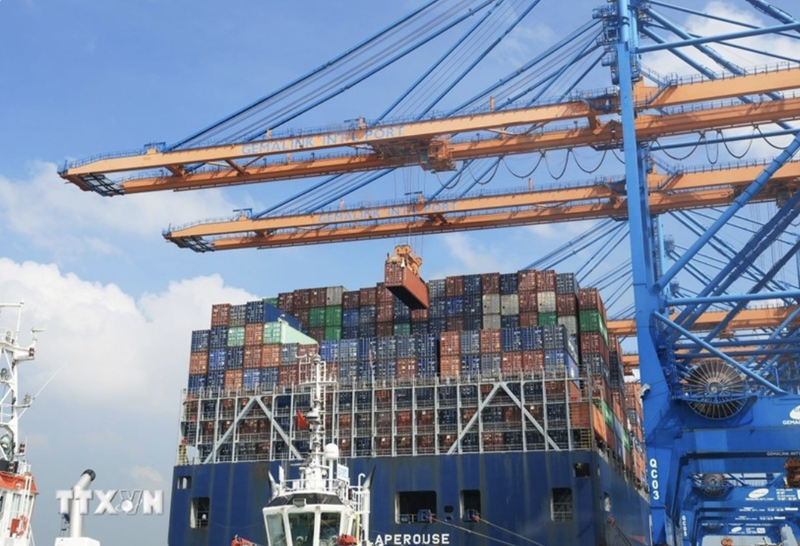
The United Overseas Bank (UOB), Citigroup and Standard Chartered forecast Vietnam's GDP growth of 7.2–8% this year. (Photo for illustration) |
International financial institutions have generally taken a positive view of the nation’s growth trajectory. United Overseas Bank (UOB), Citigroup and Standard Chartered forecast its gross domestic product (GDP) growth of 7.2–8% this year, building on robust expansion in 2025 and sustained inflows of foreign direct investment (FDI), particularly in high technology, semiconductors and renewable energy. As several large-scale projects move into commercial operation, industrial output is expected to gain fresh momentum. At the same time, a strong rebound in domestic consumption and international tourism continues to provide additional impetus, especially as supportive fiscal and monetary policies implemented in previous years generate spillover effects across the business sector.
More cautious projections from the Asian Development Bank (ADB), the International Monetary Fund (IMF) and the Organization for Economic Co-operation and Development (OECD) place growth in the range of 6–6.5%. Even under this scenario, however, Vietnam would significantly outperform the global average. Differences in forecasts largely reflect prudence in light of external headwinds, but they do not change the overall assessment that Vietnam's economy has significantly improved its resilience to shocks.
A notable shift in this year’s reports concerns the drivers of growth. While exports and FDI were once viewed as the near-exclusive pillars of expansion, several institutions, including Citi Research, now underscore the rising role of the domestic market. With GDP per capita projected to surpass 5,000 USD in 2026, Vietnam is edging closer to upper-middle-income status and witnessing the expansion of a more affluent middle class. A larger domestic market not only provides greater space for local enterprises, but also enhances the country’s appeal to investors pursuing “production-for-market” strategies.
FDI inflows are likewise evolving in quality. Rather than relying primarily on low labor costs, new projects increasingly focus on high technology, smart manufacturing and renewable energy. Vietnam is gradually being recognized not merely as an export-oriented manufacturing base, but as an integral link in regional production ecosystems. This trend opens opportunities for the formation of industrial clusters, technology transfer and a stronger position within global value chains.
At the same time, international organizations stress that sustaining high growth and achieving a breakthrough will require deeper structural reforms. The OECD and IMF note that growth driven by capital accumulation and labor expansion is narrowing in scope, while productivity and innovation will prove decisive over the medium and long term. Improving the business environment, streamlining administrative procedures, developing transparent capital markets and establishing regulatory sandboxes for emerging economic models are seen as critical steps to unlock a new wave of investment and innovation.
Strengthening linkages between the FDI sector and domestic enterprises is another key recommendation. As multinational corporations expand operations in Vietnam, opportunities for technology diffusion and improved governance standards are substantial. Enabling local firms to upgrade production standards, risk management and access to finance will be essential to deepen their participation in supply chains, raise local value added and reinforce sustainable growth.
Green transition and digital transformation are also imperative. Stricter environmental standards in major export markets require greater investment in energy-efficient technologies and renewable energy. Long-term investment in green infrastructure, modern logistics and the digital economy is widely viewed as vital to maintaining competitiveness and aligning with Vietnam’s innovation-driven, green growth strategy.
On macroeconomic stability, the overall assessment remains reassuring. Exchange rate and interest rate pressures are acknowledged but considered manageable, provided fiscal and monetary policies continue to be flexibly coordinated and credit is directed toward productive sectors. Maintaining fiscal discipline and consolidating market confidence will be crucial to preserving a stable investment climate amid ongoing external volatility.
In sum, 2026 is not merely about achieving growth above the global average. It marks the beginning of a new phase of development anchored in quality and depth. International confidence in Vietnam rests not only on numerical forecasts, but on the conviction that the country is well-positioned to translate macroeconomic stability into a powerful engine of reform and innovation.
Source: VNA