From 2026 to 2030, the Northern port city will reinforce its role as an industrial and logistics hub and a gateway for import-export activities, while expanding economic ties with ASEAN member nations and enhancing business participation in regional supply chains and production networks.
    |
 |
|
Hai Phong continuously improves its investment environment to attract highly skilled foreign laborers. |
The city’s deeper integration has driven labor mobility. As a major industrial center, seaport and important gateway for international trade in Northern Viet Nam, Hai Phong has seen a growing number of foreigners coming to live, work and invest in the city.
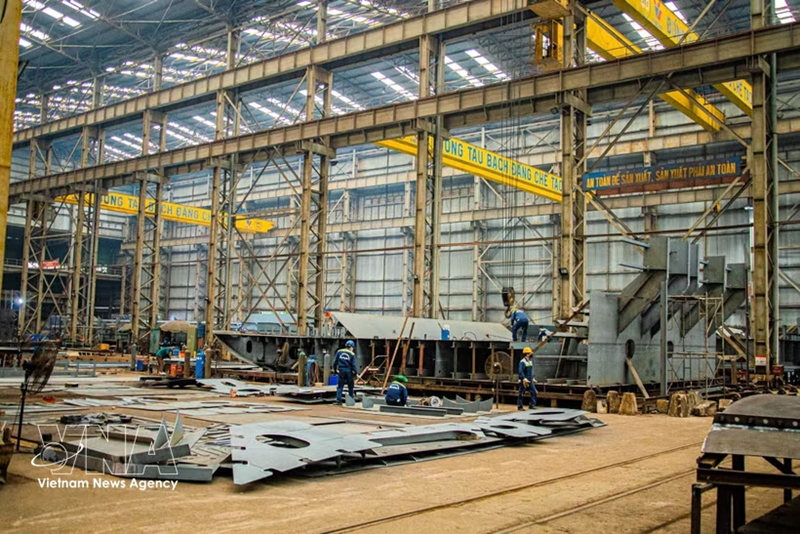
Hai Phong currently has 50 industrial parks covering nearly 14,000 hectares and three economic zones spanning 47,540 hectares, which are home to major technology and manufacturing groups such as LG, SK and Pegatron, along with hundreds of supporting FDI enterprises, attracting nearly USD 50 billion.
In the first nine months of 2026, Hai Phong attracted more than USD 3.6 billion in FDI, up 64.4% year on year, including over USD 3.3 billion in its industrial parks and economic zones. The city maintains trade links with more than 130 countries and territories, and friendship and twinning ties with 31 localities abroad. Nearly 60 international organizations and foreign non-governmental organizations implement programs, projects and non-project activities in the city.
Bui Quoc Trinh, Deputy Director of the municipal Department of Home Affairs, said the city has approximately 19,700 foreign workers, including around 10,300 in industrial parks and economic zones.
Hai Phong has introduced regulations on managing foreign workers and handling incidents involving foreigners. The municipal Department of Home Affairs oversees work permits and exemptions outside industrial parks and economic zones, while the Hai Phong Economic Zone Authority performs these functions within those areas.
Relevant agencies, including the police, border guards, tax authorities and social insurance, finance, justice, health, and foreign affairs bodies, coordinate to disseminate legal requirements on employment, entry and exit, residence and work. Authorities also strengthen inspections and enforcement to address violations involving foreign workers and public security and order.
The municipal authorities provide guidance to employers on recruitment and the use of foreign workers, while making administrative procedures publicly available and processing them electronically to reduce time and costs and improve transparency.
The city also organizes dialogues with FDI enterprises and foreign business associations to disseminate regulations and resolve difficulties. Recently, Hai Phong Economic Zone Authority and the municipal tax authority held a conference to provide legal guidance and address tax-related questions from FDI businesses and foreign workers.
During 2026-2030, Hai Phong plans to develop around 15,000 rental homes, prioritizing worker accommodation in industrial parks. It aims to complete 3,924 apartments for workers and experts in the expanded Dai An Industrial Park’s service-functional area and at An Phat I Industrial Park.
The city aims to become a modern, civilized, ecological and livable industrial port city. Strengthening foreign worker management while facilitating their employment and living conditions will help protect the legitimate rights and interests of businesses and laborers and improve state management amid deeper international integration.
Source: VNA