In an interview with Viet Nam News Agency correspondents in Hong Kong (China) on October 21, following the conclusion of the 33rd APEC Finance Ministers’ Meeting, Minister of Finance Ngo Van Tuan highlighted the meeting’s key outcomes, Vietnam’s economic performance and strategic orientations for APEC Year 2027, which Viet Nam will host.
Assessing the meeting’s overall results, Tuan said the 2026 gathering achieved significant strategic and practical outcomes. Participating economies adopted a joint statement reaffirming their strong commitment to building an open, dynamic, resilient and peaceful Asia-Pacific community by 2040. They also reached broad consensus on maintaining flexible and credible fiscal and monetary policies to safeguard regional financial stability.
    |
 |
|
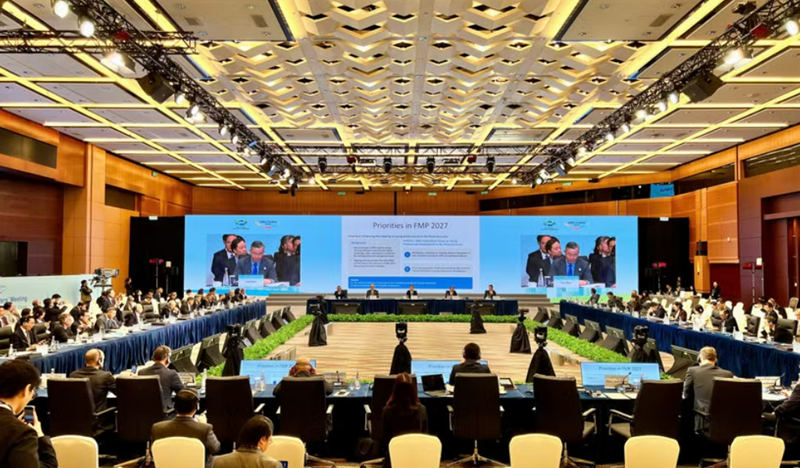
In its capacity as the host economy for APEC 2027, Minister Ngo Van Tuan announced Viet Nam’s proposed four priority topics for the 2027 Finance Ministers’ Process (FMP). (Photo: Organizing Pannel) |
At the macro-economic session, the Vietnamese representative delivered a keynote speech highlighting the country’s economic achievements. Viet Nam’s GDP expanded by 9.01% in the first nine months of 2026, with growth reaching 9.95% in the third quarter.
Viet Nam’s entry into the upper-middle-income country group, the upgrading of its stock market to emerging-market status and its first investment-grade rating from a reputable global credit rating agency have further strengthened the country’s international standing, the minister said.
A key highlight of the meeting was Viet Nam’s official announcement of four priority topics for the APEC Finance Ministers’ Process in 2027, which it assumed the chairmanship of on October 21.
The priorities are strengthening capital markets to mobilize private capital for innovative businesses, promoting data-driven finance to improve access to capital for micro-, small- and medium-sized enterprises (MSMEs), diversifying financial resources for development, and enhancing the capacity of young people in the financial sector.
Tuan stressed that these priorities were fully aligned with the Incheon Plan for 2026–2030 and Viet Nam’s major development orientations.
Discussions on these topics are expected to help refine domestic financial mechanisms and policies in support of the Party and State’s development agenda for 2026–2030. They are closely tied to major Politburo resolutions, such as Resolution No.57-NQ/TW on breakthroughs in science and technology, innovation, and national digital transformation; Resolution No.59-NQ/TW on international integration in the new context; and Resolution No.68-NQ/TW on promoting private-sector growth.
The priorities also align with Viet Nam’s Financial Strategy to 2030 and the country’s development goals for 2026–2030, as well as its vision towards 2045, as outlined in documents of the 14th National Party Congress.
On the sidelines of the meeting, the Vietnamese Ministry of Finance delegation held a series of bilateral meetings with key partners, including those from China, the U.S., Thailand, and the World Bank.
International partners expressed strong support and pledged close cooperation with the ministry, laying a solid foundation for the successful hosting of APEC Year 2027.
Source: VNA