Festive atmosphere filled Khmer pagoda
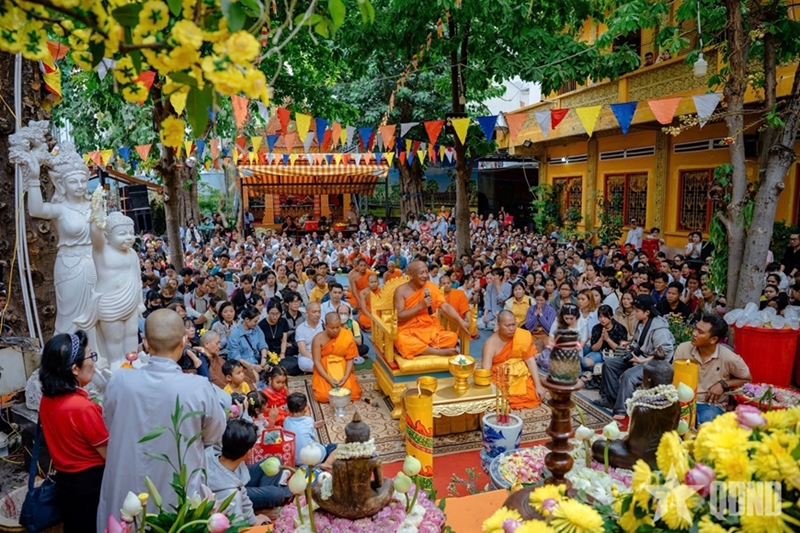
Since early morning, the campus of Candaransi Pagoda (Xuan Hoa ward, Ho Chi Minh City) was bustling with people. Lines of devotees carrying offerings, fruits, and food entered the main hall in solemnity and reverence. The pagoda space seemed awakened by the rhythmic chanting of sutras, blending with the gentle scent of incense to create an atmosphere that was both sacred and intimate.
    |
 |
|
The event attracts a large number of participants. |
Buddhist flags fluttering in the wind and respectfully arranged Buddha statues formed a solemn and meticulous scene. Amidst the pagoda’s warm yellow background were the brilliant colors of traditional Khmer costumes. The striking multi-colored dresses brightened up the pagoda yard.
“Chol Chnam Thmay,” as called by the Khmer people, means “entering the new year.” The festival usually takes place in mid-April, marking the transition between the dry and rainy seasons. As plants turn green again, the Khmer view it as a sign of a New Year. The Chol Chnam Thmay festival was thus born, associated with the desire for the dry season to pass quickly, making way for a favorable new crop.
Venerable Chau Hoai Thai, Deputy Abbot of Candaransi Pagoda, noted that the Chol Chnam Thmay festival is the transitional moment between the old and new years, holding profound spiritual significance for the Khmer people. It is an occasion for them to return to the pagoda to offer food, chant sutras for peace, remember their ancestors, and participate in community cultural activities.
At Candaransi Pagoda, the rituals are conducted according to the Khmer Theravada Buddhist tradition. Ceremonies ranging from welcoming the new year, praying for peace, and delivering sermons to building sand mountains, praying for the deceased, and bathing the Buddha are all solemnly organized.
According to Venerable Chau Hoai Thai, the meticulous organization of these rituals aims not only to preserve but also to introduce typical cultural features for the public. Through mass media and social networks, younger generations will gain a clearer understanding of these traditional values.
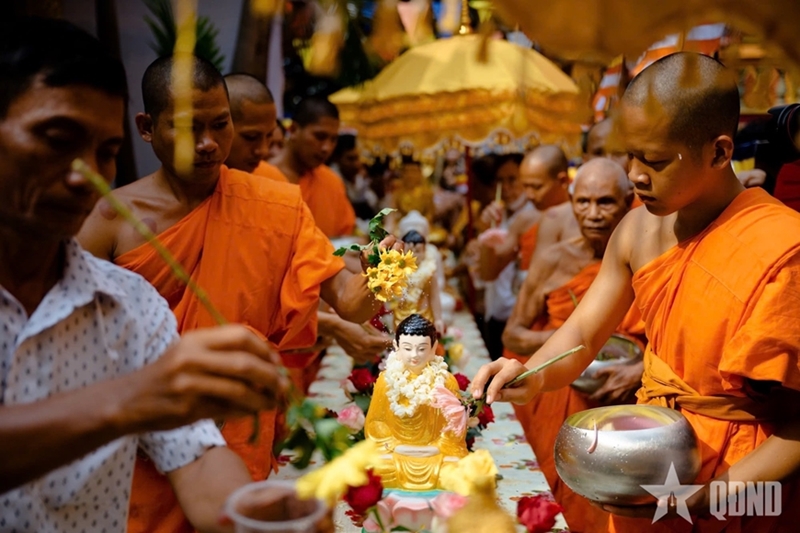
One of the ceremonies attracting a large number of Buddhist followers is the Buddha bathing ritual. Following the peace-praying chanting, individuals step forward to gently pour fragrant water over the Buddha statue amidst echoing sutras, conveying wishes for peace to every family. Subsequently, the monks sprinkle fragrant water to bless everyone.
Beyond the rituals, the pagoda serves as a place for community connection. After the ceremony, many followers listen to Buddhist teachings, chat, and inquire about each other’s lives, adding warmth to the urban setting.
Festival of community cohesion
On this occasion, the pagoda also hosts musical programs to celebrate the new year. Traditional singing and dancing performances by youths bring a bustling and joyful atmosphere. Consequently, the pagoda is not only a place for religious practices, but also a rendezvous for expatriates to meet and share the joy of the new year, regardless of age or how long they have lived away from home.
|
|
 |
|
Rituals solemnly conducted |
Among the attendees, student Thach Thi Mai (from Ho Chi Minh City University of Education, native to Vinh Long province) confided that living far from home makes every New Year more special. She always feels proud of her roots, strives to preserve the ethnic language and script, and actively spreads the unique cultural features of her people to everyone.
Not far away, Lam Hoang Khanh (from Can Tho city), still in his office attire right after his shift, quickly joined the bustling crowd. He shared that he always tries to visit the pagoda to celebrate with monks and the community, thereby easing his homesickness while working in Ho Chi Minh City.
The festive atmosphere also attracts people from various other ethnic groups, creating a multi-colored picture of cultural life in Ho Chi Minh City. Most Venerable Danh Lung, Member of the Secretariat of the Executive Council and Deputy Head of the Executive Board of the Vietnam Buddhist Sangha in Ho Chi Minh City, and Abbot of Candaransi Pagoda, observed that Chol Chnam Thmay has now become a shared cultural exchange space for the Kinh, Hoa, Cham, and others. Thus, the festival contributes to spreading the spirit of solidarity, removing barriers, and strengthening cohesion among ethnic groups.
Amidst the fast-paced life, the Khmer pagoda crowded with visitors not only helps preserve cultural identity but, also enriches the city’s spiritual life. The Chol Chnam Thmay festival has transcended the Khmer community, becoming a bond that connects people through sharing, faith, and enduring cultural values over time.
Translated by Minh Anh