In his remarks, Chinh said the annual event provided ethnic communities with an opportunity to meet, exchange and strengthen solidarity in the warm atmosphere of the new spring. It served as a vivid symbol of the great national solidarity bloc, inspiring pride in national roots, love for the homeland and aspirations for a strong and prosperous Vietnam in a new era of development.
    |
 |
|
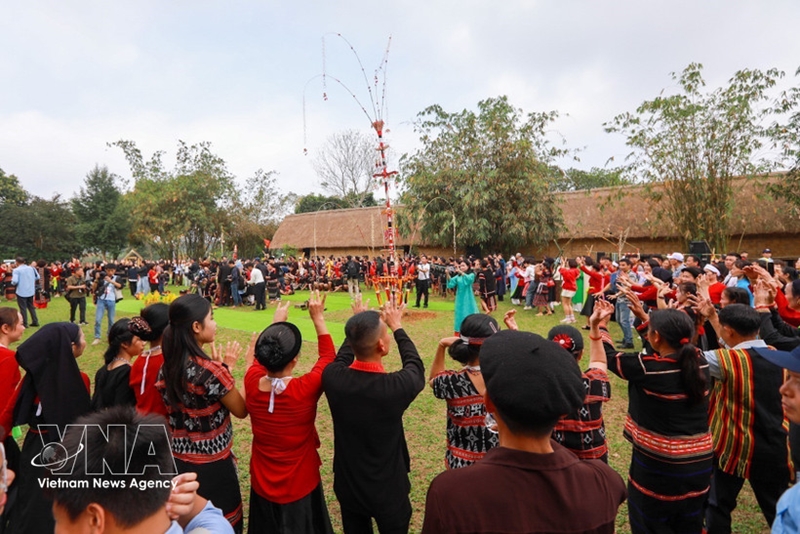
The "Colors of Spring across the Nation" event draws the participation of a large number of people. |
He stressed that culture is an internal source of strength and a firm spiritual foundation that has enabled the nation to overcome all challenges throughout its history of construction and defence, as well as during renewal, integration and development.
The documents of the 14th National Party Congress reaffirm culture as a pillar of sustainable development, stressing the building of an advanced Vietnamese culture deeply imbued with national identity, along with comprehensive human development to meet the requirements of industrialization, modernization and deep international integration. The Politburo’s Resolution No.80-NQ/TW on developing Vietnamese culture also underscores culture as the crystallization of the nation’s finest values and an important internal resource shaping the intellect, soul, mettle and resilience of the Vietnamese people.
According to the Deputy PM, these orientations not only help address limitations in awareness and action, but also seize opportunities and tackle challenges to turn culture into a solid foundation and intrinsic strength of the nation, aiming to affirm the position and stature of Vietnamese culture worthy of a socialist-oriented nation that contributes to the common civilization of humanity.
He noted that in recent years, efforts to preserve and promote traditional cultural values have achieved encouraging results, generating widespread social impact. At the Vietnam National Village for Ethnic Culture and Tourism, thousands of festivals and cultural activities have been organized, attracting large numbers of domestic and foreign visitors and testifying to the enduring vitality of national culture amid integration and development.
To effectively implement the Resolution of 14th National Party Congress and Resolution 80, Chinh urged authorities to further integrate culture into social life and transform it into a powerful driver of development. He called for greater attention to ethnic minority, remote, border and insular areas through concrete measures, including digital transformation in heritage preservation, technological support for artisans, developing industries and community-based tourism to create sustainable livelihoods, and expanding cultural exchanges to promote Vietnam’s image abroad.
This year’s program brought together more than 300 artisans representing 33 ethnic communities from 15 provinces and cities nationwide. They reenacted distinctive rituals and festivals and honored artisans, village elders and reputable community members who play a key role in safeguarding and transmitting cultural heritage to younger generations.
Minister of Culture, Sports and Tourism Nguyen Van Hung said the presence of representatives from ethnic groups across the country at the village, the “common home” of the 54 ethnic groups, demonstrates efforts to translate Party resolutions into action, affirming that cultural and human development remains a key foundation, internal resource and driving force for fast and sustainable national development.
On the occasion, delegates joined the Tevada procession of the Khmer people, offered incense at a Khmer pagoda, extended New Year greetings to ethnic communities, planted commemorative trees, and took part in rituals praying for favorable weather, peace and prosperity, as well as a Central Highlands village festival.
Source: VNA