The initiative is part of broader efforts to strengthen the city’s cultural and entertainment sectors, which are currently constrained by the lack of large-scale venues for events, performances and film production.
Under a directive issued by the municipal People’s Committee on April 2, the Department of Culture and Sports has been tasked with leading the development of major projects. These include the proposed film studio complex, the establishment of a Vietnam Music Museum applying artificial intelligence and digital transformation technologies, and the implementation of the “school theatre” project aimed at cultivating young audiences and promoting aesthetic education in schools.
    |
 |
|
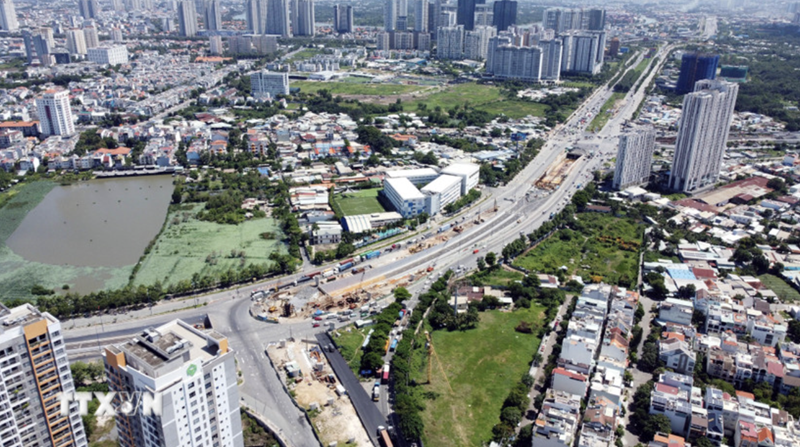
A corner of Ho Chi Minh City (Photo for illustration) |
The department will also strengthen enforcement of intellectual property rights and copyright protection in the cultural industry, while coordinating with relevant agencies to strictly handle violations and foster a healthy creative environment for artists, authors and businesses in the city.
Meanwhile, the Department of Finance will work with other agencies to study and propose mechanisms and policies to facilitate investment by businesses through improved access to capital, land funds and administrative procedures. The department is required to ensure fairness and transparency among different types of enterprises to build a healthy business environment.
It will also review public land and property to propose effective plans for developing cultural facilities, creative spaces and large-scale performing arts venues. In addition, the department is studying the possibility of establishing a Cultural Industry Development Fund based on a venture capital model to support start-ups and innovation projects in the cultural sector.
According to the city’s Department of Culture and Sports, Ho Chi Minh City has the largest cultural industry workforce in Vietnam, with about 97,000 workers and more than 17,670 enterprises operating in related sectors. The city’s cultural industry development plan by 2030 identifies film, performing arts, advertising, cultural tourism, fine arts–photography–exhibitions, fashion, broadcasting–television and digital content as priority sectors.
Ho Chi Minh City has also been recognized by UNESCO as a Creative City of Film – the first in Southeast Asia – providing a foundation to further harness its strengths in culture and cinema and turn cultural industries into a new driver of socio-economic growth.
At a meeting between city leaders and businesses and artists in the cultural and entertainment sectors in early February 2026, many participants noted that Vietnam’s entertainment industry faces major infrastructure challenges, particularly the shortage of venues meeting international standards for large-scale performances and events. Currently, there are few facilities capable of hosting events for tens of thousands of spectators, and none suitable for programs with audiences of 50,000 or more.
Speaking at the meeting, Secretary of the Ho Chi Minh City Party Committee Tran Luu Quang said the city has a strong cultural tradition and significant potential to further develop its cultural industries.
He noted that the city currently has favorable conditions for such development, including a considerable amount of public assets available following administrative restructuring, as well as newly renovated parks and areas converted from vacant land or long-delayed projects.
Source: VNA