In remote and disadvantaged areas, village elders, heads of hamlets and other reputable individuals play a pivotal role in bridging Party guidelines and State laws and policies with local residents.
    |
 |
|
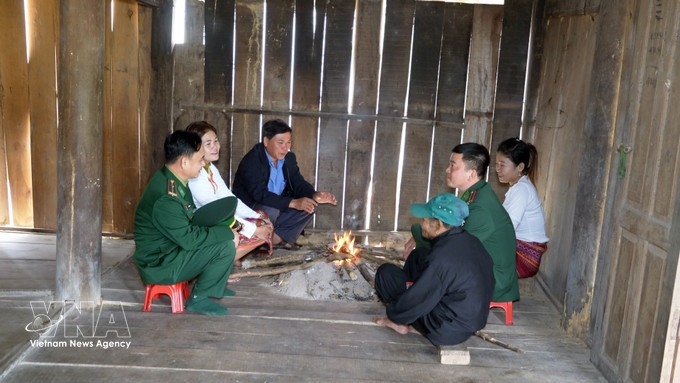
Border guard officers, together with village elders and hamlet leaders, visit Chut people's households in Rao Tre hamlet, Ha Tinh province, to conduct outreach on the upcoming election. |
In Rao Tre hamlet, Phuc Trach commune, preparations for the general election are underway with growing enthusiasm. Nestled at the foot of Ka Day Mountain in the Truong Son range, the hamlet faces socio-economic challenges and uneven access to information. For many households, the electoral process remains unfamiliar without clear and direct guidance.
Recognizing this, hamlet head Ho Thi Kien, together with elders and reputable individuals, has coordinated closely with the local Party cell, mass organizations and border guard forces to conduct regular outreach sessions. Communication efforts are tailored to local conditions, using concise and accessible language to explain voters’ rights and obligations, voting procedures and how to cast valid ballots. As a result, most residents now have a clear understanding of the process and are ready to take part in what is widely regarded as a national festival of democracy.
Beyond community meetings, they have adopted a “door-to-door” approach to ensure no voter is left behind. According to Nguyen Xuan Man, Secretary of the Rao Tre Party cell, officials visit each household to explain legal provisions and encourage timely and safe participation on election day.
In border areas, the Border Guard force serves as a core pillar in public engagement. Working alongside village elders and respected individuals, officers remain close to communities, providing timely support and helping local authorities implement election-related tasks in accordance with regulations.
An officer of Ban Giang Border Post noted that while the vast terrain and limited infrastructure pose challenges, leveraging the influence of trusted community leaders has significantly enhanced outreach effectiveness. Their familiarity with local customs and languages fosters trust and encourages active participation.
Source: VNA