From gong music to village stories
The Central Highlands Sculpture Garden came alive with the sounds of conversations, footsteps, and the daily activities of a miniature village. Women worked at looms while men wove baskets. Nearby, artisans prepared their instruments and adjusted their traditional costumes before the performances.
    |
 |
|
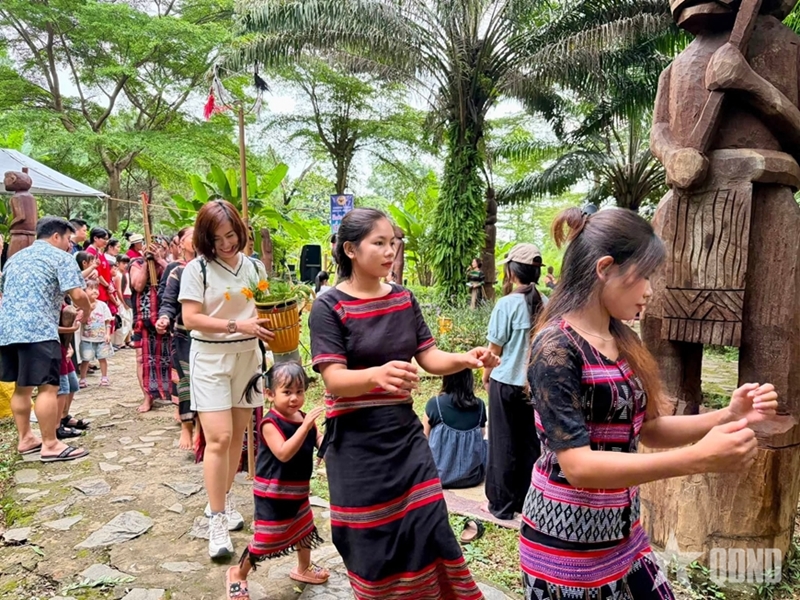
Visitors join folk dances performed by ethnic communities at the “Villages tell stories” folk music and dance program. |
When the gongs rang out, “Buon Lang Ke Chuyen” program began. Groups from the Raglai, Ede, Gia Rai, Co Tu, Ta Oi, and Xo Dang ethnic communities presented traditional songs, dances, and cultural practices. Artisans from the Ba Na and Gia Rai communities performed gong music and xoang dances, highlighting cultural practices associated with the Central Highlands gong cultural space, which has been inscribed by UNESCO.
Without a stage separating performers from spectators, dancers moved together in circles as the gongs set the rhythm. Traditional costumes in striking red and black added color to the performances, while the interaction between performers and visitors created an intimate atmosphere.
Other performances, including “Gong Night,” “Co Tu Dance,” and “Raglai Vitality,” showcased different aspects of the communities’ cultural life. Ta Oi performers presented songs and duets about their homeland, the country, and collective memories.
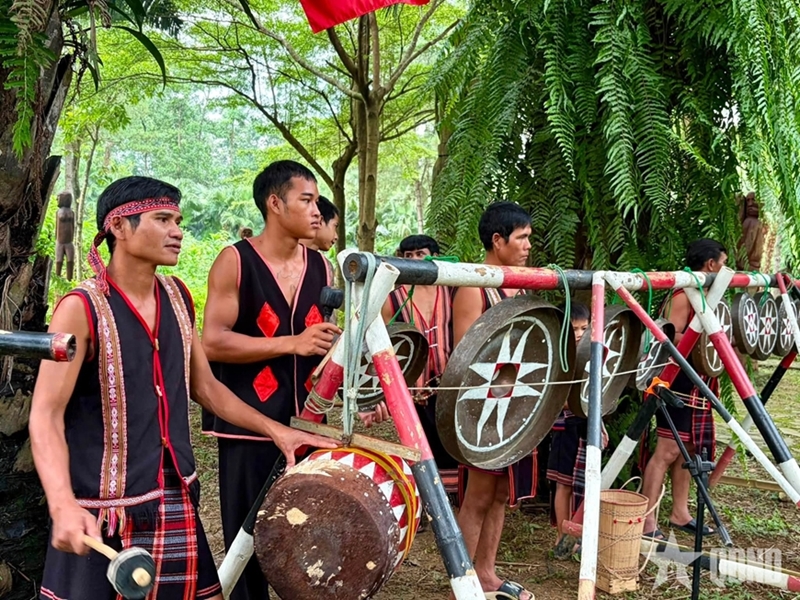
Music also came from traditional instrument. Meritorious Artisan Y Sinh of the Xo Dang ethnic group performed the T’rung in “The Village in Festive Time.” The Dinh Pang of the Ede people and the Ma La of the Raglai people were also featured, each producing distinctive sounds associated with its cultural tradition.
|
|
 |
|
Various musical instrument performed at the program |
Pham Kieu Anh, born in 1998 and living in Ngoc Ha ward, Ha Noi, said she particularly enjoyed the lively and intimate atmosphere of the performances, which made her feel as though she were stepping into a real village.
Exploring culture through hands-on experiences
The cultural experience continued beyond the performances. Visitors learned about traditional weaving, from spinning thread and setting up the loom to creating distinctive patterns and color combinations. They could also try weaving themselves under the guidance of traditional craft practitioners.
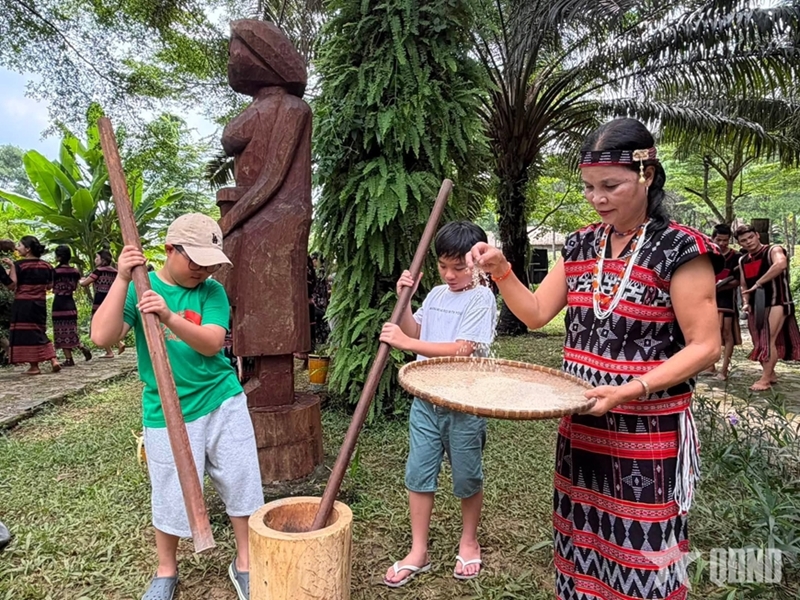
Rice pounding and winnowing were particularly popular with children. Although their movements were sometimes clumsy and their rhythm uneven, the activities gave them a hands-on introduction to the daily life and culture of Central Highlands ethnic communities.
Visitors could also sample Central Highlands specialties, including bamboo-tube rice, grilled meat, and coffee. The aroma of the specialties added another dimension to the cultural experience.
Nguyen Hoang Quan, born in 1980 and living in Hai Ba Trung ward, Ha Noi, said he appreciated the opportunity to participate directly in cultural activities. Trying weaving, pounding rice, and tasting traditional food, he said, made cultural stories more familiar and memorable, particularly for children.
|
|
 |
|
Children enthusiastically take part in rice-pounding and rice-winnowing activities. |
For intangible cultural heritage, such hands-on activities help keep traditional values alive. Gong music, dances, weaving techniques, and culinary practices can be preserved only when they continue to be practiced and passed down through generations.
“Buon Lang Ke Chuyen” is, therefore, more than just a performance. Through gong music, weaving, rice pounding, bamboo-tube rice, and coffee, members of ethnic communities share their cultural stories through their own way of life. By listening, participating, and experiencing these traditions firsthand, visitors help keep the heritage alive in the present.
Translated by Tran Hoai