    |
 |
|
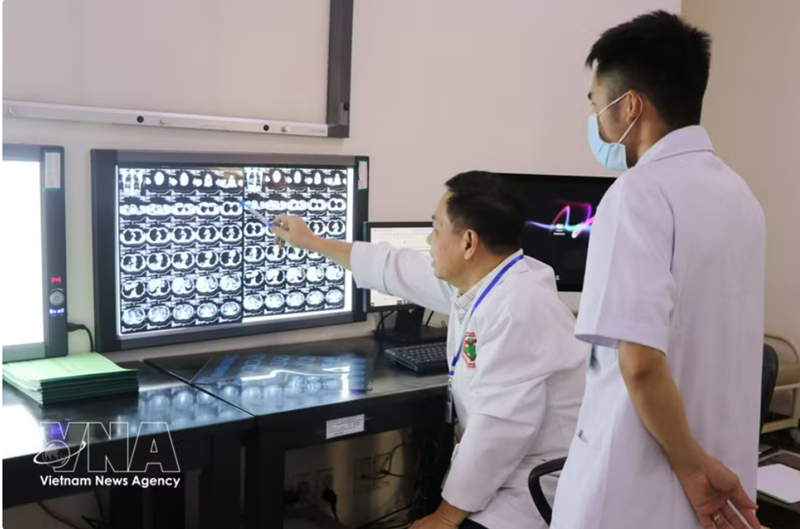
The application of nuclear medicine techniques is helping improve the quality of medical examination and treatment in Dong Nai city, enabling early detection of various diseases, particularly in cancer treatment. |
The figures was unveiled by Tran Chi Thanh, Director of the Viet Nam Atomic Energy Institute under the Ministry of Science and Technology (MST), at the ministry’s monthly regular press briefing on September 30, in response to questions from reporters about preparations for human resources in the atomic energy sector, particularly nuclear power.
Human resources for atomic energy applications are needed across a wide range of fields, including State management, nuclear safety and security regulatory bodies, research and development, technical support, training, nuclear medicine, radiation technology, radioactive waste management, incident response and environmental monitoring, as well as applications in healthcare, agriculture, industry and the environment.
At present, human resources in the atomic energy sector remain limited, while the shortage of personnel for Viet Nam’s nuclear power development is particularly acute.
Under the plan, the Ninh Thuan 1 and Ninh Thuan 2 nuclear power plants will require around 4,000 personnel for direct operations by 2030, including 700 who will need to receive advanced training overseas.
Regarding human resources for State management and nuclear safety and security regulatory bodies, Deputy Director of the Viet Nam Agency for Radiation and Nuclear Safety (VARANS) under the MST Tran Quang Tuan said that human resource development is one of the key factors in ensuring the progress and effectiveness of Viet Nam’s nuclear power program in the coming period.
Accordingly, the VARANS is focusing on implementing Prime Minister’s Decision No. 624/QD-TTg approving a project to strengthen the capacity of the agency to serve nuclear power development through 2035.
The project aims to ensure that the agency has sufficient capacity and resources, along with an appropriate organizational structure, to perform State management functions in radiation safety, nuclear safety and nuclear security in a centralized and unified manner at the central level. It also seeks to enhance strategic autonomy in management and coordination capacity in radiation and nuclear safety and nuclear security in line with guidelines of the International Atomic Energy Agency (IAEA) and requirements under international treaties to which Viet Nam is a member.
Source: VNA