During the meetings, Vietnamese intellectuals in both countries expressed a desire to contribute not only through consultations, but also through specific projects, tasks and cooperation mechanisms.
    |
 |
|
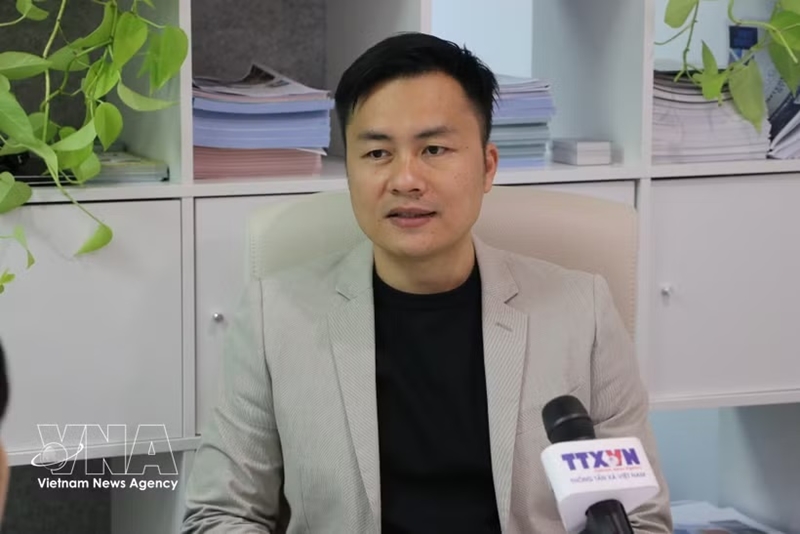
Nguyen Tuan Nghia, Chairman of the New South Wales chapter of Viet Nam-Australia Scholars & Experts Association |
Speaking to Viet Nam News Agency reporters in Sydney, Dr. Nguyen Tuan Nghia, an artificial intelligence (AI) expert and Chairman of the New South Wales chapter of Viet Nam-Australia Scholars & Experts Association (VASEA), said many Vietnamese experts are working directly in leading science and technology ecosystems around the world.
The challenge, he said, is to create mechanisms that connect these resources with specific needs in Viet Nam.
He proposed moving from general calls for contributions to a system of “targeted commissioning,” under which each science and technology task would clearly identify the problem to be addressed, the lead organization, resources, timeline and expected results. With such information available, overseas experts could quickly determine whether they could contribute and whom they should work with.
A similar approach was suggested by Huynh Tan Dat, Chairman of the Vietnamese Students Association in Australia (SVAU). He said a clear focal point was needed to connect overseas intellectual resources with partners in Viet Nam, from identifying needs to developing cooperation.
Deputy Chairman of the State Committee for Overseas Vietnamese under the Ministry of Foreign Affairs Ngo Trinh Ha said Resolution No. 23-NQ/TW, issued by the Politburo on August 2, 2026, represents a new development in the approach to overseas Vietnamese affairs. The resolution identifies overseas Vietnamese not only as a community to be mobilized and supported, but also as those directly participating in national development. It highlights OV resources including knowledge, science and technology, education, culture, management experience and international networks.
According to Ha, experts and intellectuals do not necessarily have to return to live permanently in Viet Nam to contribute. They can participate from their countries of residence through research, consultancy, technology transfer and professional networks.
Nghia noted that most Vietnamese experts overseas have already established careers and families, making prolonged or frequent returns to Viet Nam difficult. He therefore called for more flexible forms of engagement, such as visiting professorships, co-leading research projects, serving in expert councils or working as project-based advisers. He also highlighted the need to reduce administrative barriers involving contracts, cross-border payments, recognition of qualifications, taxation and intellectual property.
From New Zealand, Prof. Dr. Nguyen Hoang Minh, Vice Chairman of the Vietnamese Knowledge Network in New Zealand, said effective cooperation depends on connecting “the right people at the right time”. Each initiative, he said, should clearly identify who is responsible, when it will be implemented and how results will be measured.
In science and technology, he said, Vietnamese universities and businesses need to bring specific challenges to the right research groups, technologies and international partners. Overseas Vietnamese intellectual networks can serve as bridges in this process.
He suggested measuring success not simply by the number of seminars organized or agreements signed, but by the number of people trained, technologies put into use and long-term partnerships established. He also stressed the importance of placing young people at the center of cooperation, with training focused on practical problem-solving skills and international professional networks.
Dat pointed to a technology competition organized by Vietnamese students in New South Wales in September, where about two-thirds of the judges were second-generation Vietnamese working for major Australian companies.
Although some spoke little Vietnamese, they actively provided mentoring and support to students.
He suggested studying the establishment of a network or association for young people of Vietnamese origin in Australia, with activities in English or bilingually and a focus on career guidance, student mentoring, professional networking, science and technology, and culture.
Another proposal is an official information system providing research and employment opportunities in Viet Nam. Young Vietnamese researchers graduating from Australian universities often lack comprehensive information about positions, selection criteria, research conditions and remuneration in Viet Nam.
The views from Australia and New Zealand show strong interest among overseas Vietnamese intellectuals in contributing to the homeland. Resolution No. 23-NQ/TW provides a framework for making greater use of overseas Vietnamese resources. The next step, experts said, is to translate this approach into clear focal points, specific tasks and flexible forms of cooperation, so that geographical distance becomes less of a barrier to contributing to national development.
Source: VNA