    |
 |
|
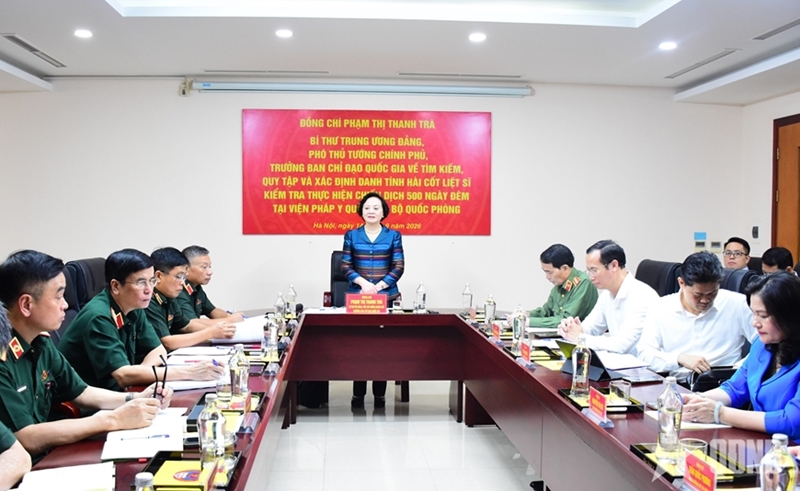
Deputy Prime Minister Pham Thi Thanh Tra chairs the inspection at the Military Forensic Institute. |
|
|
 |
|
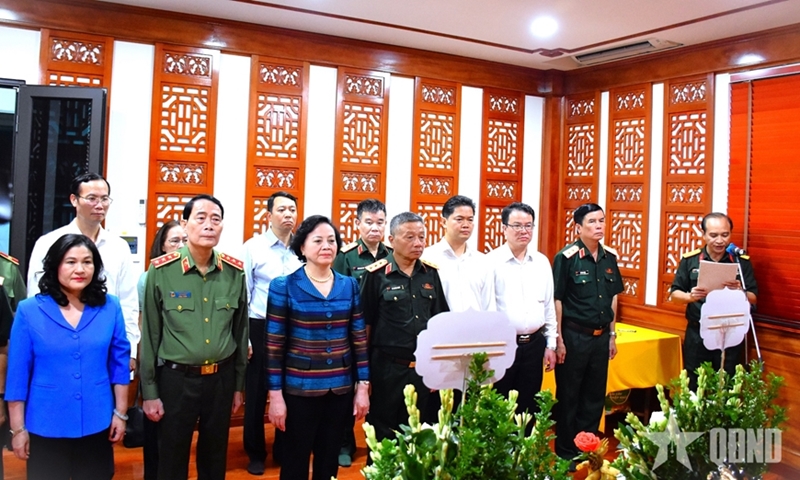
Deputy PM Pham Thi Thanh Tra and delegates offer incense in tribute to fallen soldiers. |
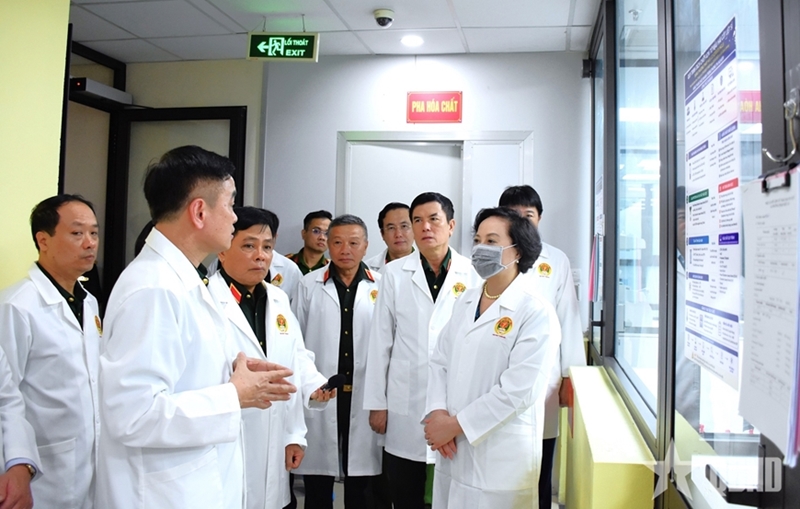
Deputy PM Pham Thi Thanh Tra, who is also Head of the National Steering Committee for the Search, Collection and Identification of Martyrs' Remains, visited the facility for receiving, preserving and storing martyrs’ remains samples and inspected the task of receiving, managing, preserving and storing the samples. She also inspected the DNA testing system at the Military Forensic Institute, reviewed its testing capacity and sample-processing procedures, and examined the application of DNA testing techniques in identifying martyrs’ remains.
As reported, the Department of Military Medicine has resolutely implemented directives issued by leaders and chains-of-command at all levels regarding DNA identification of martyrs’ remains. It has directed the Military Forensic Institute to complete the renovation and upgrading of its infrastructure, add equipment, and optimize procedures to increase the capacity of its DNA testing system. The department also advised the Ministry of National Defense to issue a document to the Viet Nam Academy of Science and Technology on arranging the deployment of two DNA testing systems using next-generation gene sequencing technology.
|
|
 |
|
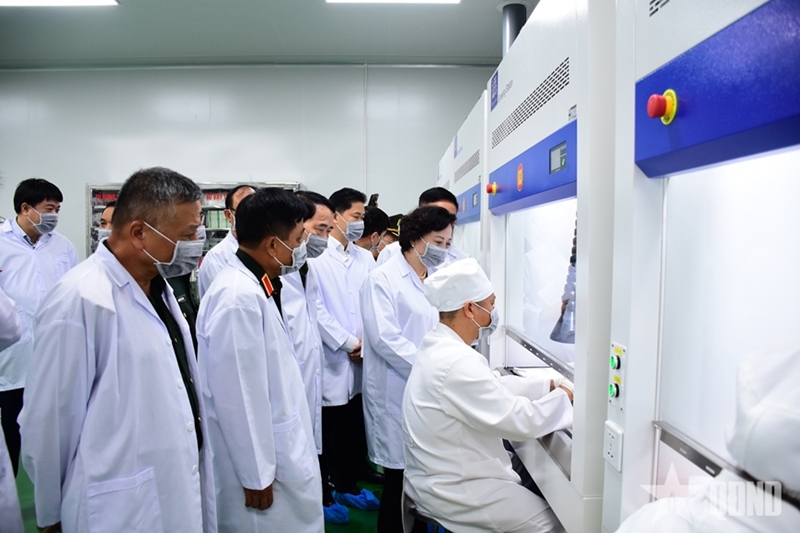
Inspecting the task of receiving, managing, preserving and storing samples of martyrs’ remains |
As of September 11, the Military Forensic Institute has received 35,776 samples of martyrs’ remains and conducted DNA testing in accordance with established procedures. From March 15 to date, the institute has extracted DNA from 243 samples, obtaining 48 mitochondrial DNA sequences. It has also conducted comparisons to identify the remains and delivered DNA test results to the relatives of two martyrs.
In her remarks, Deputy PM Pham Thi Thanh Tra highly appreciated the efforts of military medical personnel, particularly those of the Military Forensic Institute. The forces have carried out a number of major and urgent tasks, achieving positive and effective results. To date, they have basically completed the construction and expansion of facilities for preserving and storing samples of martyrs’ remains.
The inspection revealed that the warehouse had been professionally and modernly designed and built. Efforts are continuing to invest in and construct a large storage facility with a capacity of approximately 300,000 samples.
Having identified existing difficulties and obstacles, the Deputy PM pointed out several bottlenecks, including the shortage of human resources for DNA identification. If efforts are not urgently made to strengthen the workforce, while providing training and professional development, it will be difficult to meet work requirements, particularly when new-generation technologies are introduced. At present, the data system remains incomplete. This is a major task that requires focused efforts to build an integrated data system compatible with existing databases, facilitating the matching and comparison of data.
|
|
 |
|
Checking the DNA testing system at the Military Forensic Institute |
Regarding tasks in the coming period, the Deputy PM requested the Department of Military Medicine, in coordination with relevant agencies, to urgently review, supplement and strengthen human resources; accelerate the progress in completing infrastructure and facilities
At present, the infrastructure of Depot No.4 is relatively well developed. For Depot No.3, the target is to complete the construction by April 30, 2027. Funding should be secured, and coordination in investment and infrastructure completion should be strengthened.
For facilities that only require repairs or renovations, units should proactively coordinate to accelerate the work and ensure that machinery and equipment can be installed and put into operation immediately once delivered to facilities that meet all necessary conditions.
Translated by Quynh Oanh