The initiative is regarded as a significant political mission aimed at honoring those who sacrificed their lives for the nation while helping fulfil the long-standing wishes of their families across Vietnam.
The Ben Luc War Cemetery is the resting place of 1,779 fallen soldiers, including 665 graves whose identities have yet to be determined and require sampling for DNA testing. At the Duong Minh Chau War Cemetery, 394 out of 406 graves remain unidentified, making the two localities among the largest sample-collection sites in Tay Ninh.
    |
 |
|
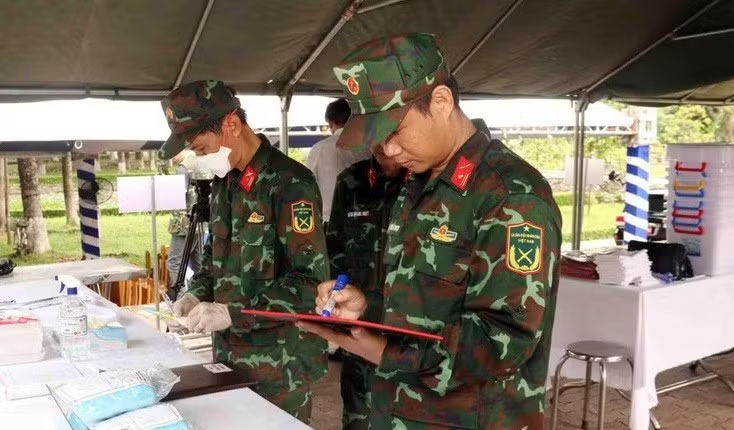
The process of collecting remains of unidentified martyrs is carried out rigorously, scientifically, and with absolute safety. |
The implementation process faces a number of challenges, including incomplete archival records, inconsistencies in grave maps and burial information accumulated over different periods, and the fact that many graves have undergone relocation or restoration over the years. As a result, identifying appropriate sampling locations requires careful and precise procedures.
To ensure compliance with technical and scientific standards, local authorities have strictly followed guidance issued by the National Steering Committee for the search for, recovery and identification of fallen soldiers’ remains, Military Region 7, and Tay Ninh province. Necessary equipment, excavation tools, storage facilities, and sample-management systems have been fully prepared, while public awareness campaigns have been intensified to promote understanding of the program’s objectives and significance.
In Ben Luc, local authorities have mobilized 74 personnel and established two specialized teams responsible for excavation, sample collection, data digitization, logistics, communications, and security. The commune aims to complete sampling for all 665 unidentified graves by November 30.
Meanwhile, the excavation and collection of samples for DNA testing at the Duong Minh Chau War Cemetery is scheduled to be carried out from now until July 27.
Source: VNA