    |
 |
|
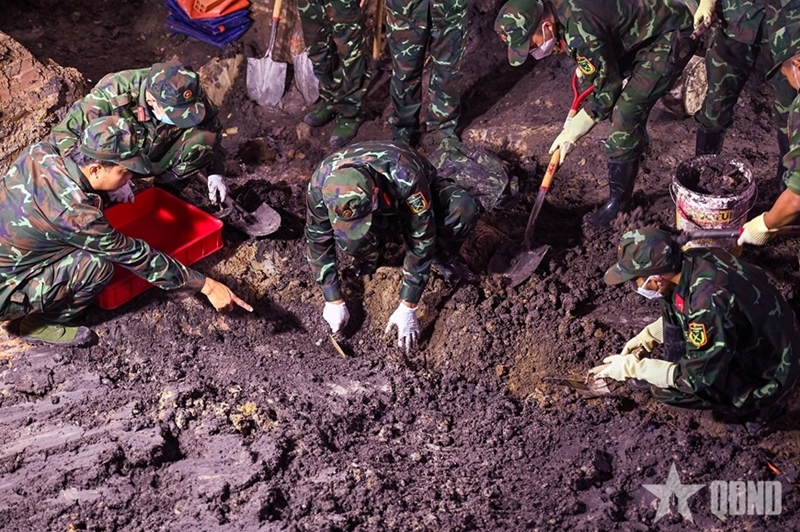
Artifacts discovered during the search for and recovery of fallen soldiers’ remains provide important information for identifying the fallen. |
More than half a century after the war, tens of thousands of fallen soldiers’ remains have yet to be found, while hundreds of thousands of graves remain unidentified. In the ongoing effort to find comrades left behind on former battlefields, artifacts recovered alongside the remains are also collected, preserved and examined. A piece of paper, a handwritten line, a unit marking or a personal belonging may contain information about a fallen soldier. This poses a paramount requirement for museum work: all remaining traces of these soldiers must be preserved so that their information is not lost over time.
Artifacts preserve valuable information about fallen soldiers
More than half a century after national reunification, over one million sets of fallen soldiers’ remains have been recovered nationwide. However, approximately 175,000 fallen soldiers remain missing, and nearly 300,000 graves have yet to be identified. In response to the need to accelerate efforts for gratitude activities, the 500-day campaign has been launched nationwide. The campaign mobilizes multiple forces and combines search and recovery efforts with DNA testing, the digitization of records and the examination of historical sources.
|
|
 |
|
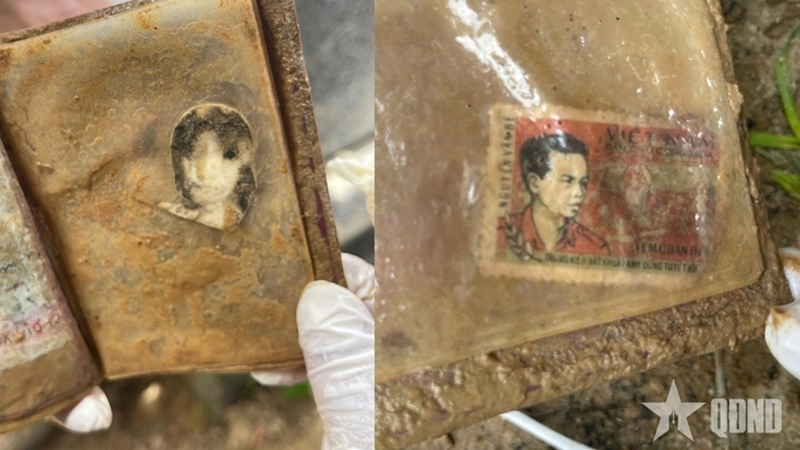
Artifacts recovered by authorities during excavations to collect samples from fallen soldiers’ remains. |
Among the various sources of information used to identify fallen soldiers, artifacts discovered alongside their remains hold a distinctive place. Unlike biological samples used for DNA testing, artifacts may bear identifying marks directly linked to an individual or military unit, including names, hometowns, unit markings, handwriting, photographs, documents and personal belongings. These items can provide important leads for further verification, particularly in cases dating back several decades for which records remain incomplete.
During the search for fallen soldiers at Le Thi Rieng Park in Ho Chi Minh City, search and collection teams recovered hundreds of sets of remains along with numerous artifacts, including military identification papers, combs, wallets, pens, medicated oil bottles and other personal belongings. In Dong Nai Province, searches of mass graves also found pens engraved with names, combs bearing carved inscriptions, leather wallets containing portrait photographs and faded group photos. These artifacts have been collected and preserved for further examination and identification efforts.
|
|
 |
|
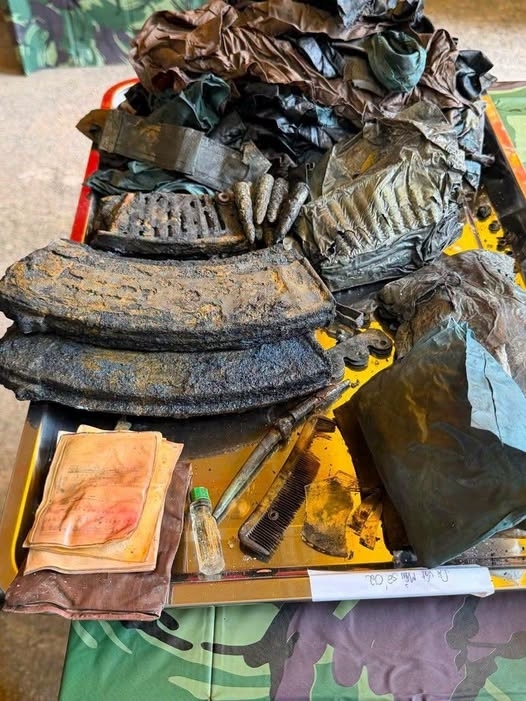
An artifact discovered alongside remains believed to belong to fallen soldier Huynh Van Quen. |
One case that has recently attracted public attention is the identification of fallen soldier Huynh Van Quen. A piece of paper bearing his name, together with the unit designation 962, was found alongside his remains. Authorities subsequently traced archival records, verified information about his relatives and cross-checked multiple sources, clarifying discrepancies between the information on his death notification and his certificate of recognition as a fallen soldier. After nearly 60 years, his identity was confirmed, and the artifacts found with his remains were returned to his family.
These cases demonstrate that every artifact discovered during the search for and recovery and identification of fallen soldiers’ remains must be treated as a valuable source of information. Therefore, the work does not end when remains are discovered. Accompanying artifacts must also be collected, classified and preserved, with complete records of where and under what circumstances they were found. If an inscription is lost, a document deteriorates or an artifact’s origin is not properly recorded, part of the information it contains may disappear forever. Conversely, when these traces are properly preserved, they can be examined further as additional records, witnesses or information from relatives become available.
From soldiers’ artifacts to museum resources
Artifacts discovered during the search for and recovery of fallen soldiers’ remains are also directly connected to museum work. At a recovery site, a scrap of paper, a notebook, a photograph or a personal belonging may provide a lead for identifying a fallen soldier. Once transferred to a museum, these objects continue to be preserved, researched and supplemented with additional information to ensure that the surviving records of soldiers’ lives are not lost over time.
|
|
 |
|
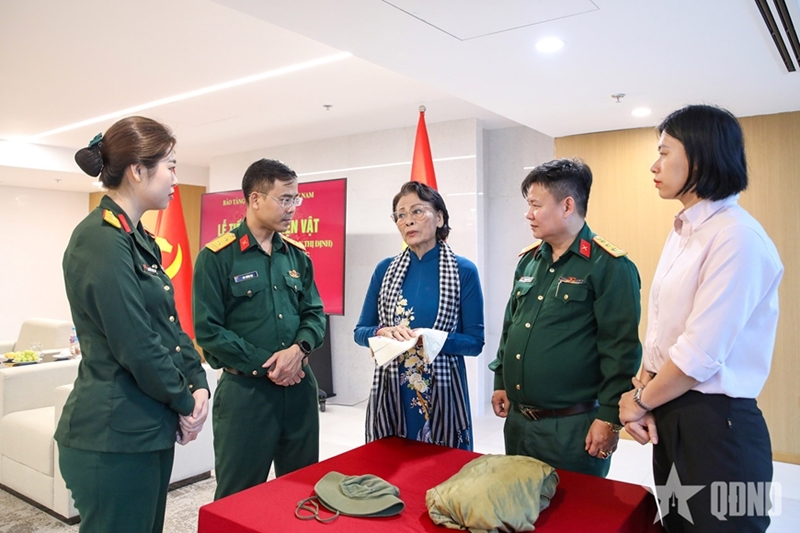
The Viet Nam Military History Museum receives artifacts. (Photo taken at a ceremony in March 2026 to receive artifacts from former Con Dao prisoner Phan Thi Be Tu.) |
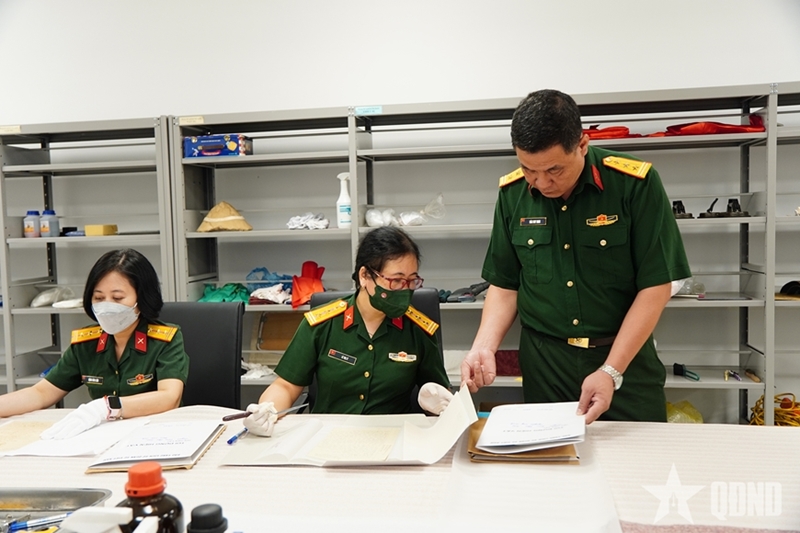
For museum professionals, receiving an artifact does not mean that its story has been fully told. The next steps are to identify and document the object, clarify the information it contains and preserve its physical features for future research. An artifact may not immediately reveal its owner’s identity, military unit or circumstances of death, but the information it carries must be safeguarded so that it can be examined further when additional sources become available.
Each artifact may shed light on soldiers’ daily lives and combat experiences in different periods, while preserving clues about individuals, military units, areas of operation and historical circumstances. Such information is studied, verified and supplemented through research into relevant sources. This work is particularly significant for artifacts associated with fallen soldiers’ remains. Behind an apparently insignificant personal belonging may lie information about a soldier whose family has waited decades for answers. It may offer a lead to a unit that once fought in a particular area or provide a detail that helps clarify a historical event.
|
|
 |
|
Artifacts continue to be carefully preserved by the museum. |
Artifacts found alongside fallen soldiers’ remains preserve part of the information about those who sacrificed their lives. Collecting, preserving and studying these traces is therefore not a supporting task in the search and recovery process. It is essential to ensuring that the surviving information about these soldiers is retained in full and safeguarded for the long term. When properly preserved, a scrap of paper, a photograph, a personal belonging or a marking on an artifact can still serve as a source of information for confirming identities, supplementing records and clarifying gaps in the historical record.
Translated by Quynh Oanh