With solid infrastructure, the station has become a vital healthcare lifeline for ethnic minority communities. It also stands as a vivid symbol of the close bond between troops and people along the border.
    |
 |
|
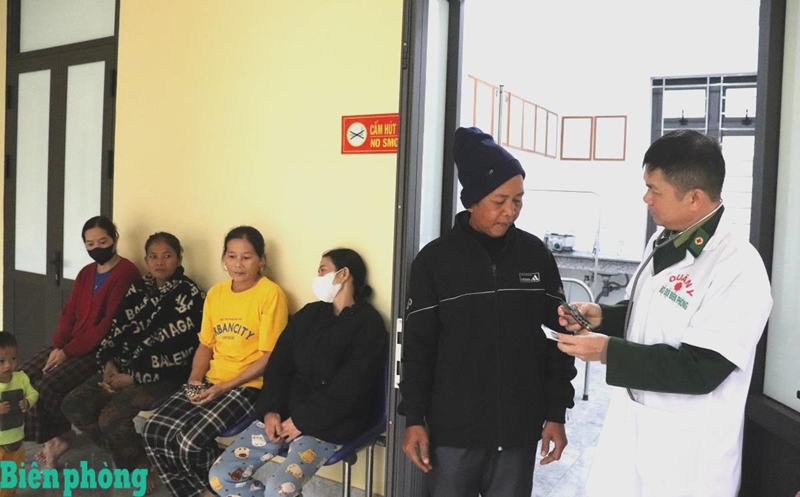
Military medical staff instruct local residents on how to use medicines. |
The villages of Ka Ai, Cha Lo, Bai Dinh, and Oc in Dan Hoa commune, Quang Tri province, are located far from the administrative center and are mainly inhabited by the Chut ethnic minority group. Living conditions remain difficult, while awareness of healthcare issues is still limited. Some outdated customs persist, and the risk of disease outbreaks remains a concern. From this reality, many years ago, the border guard force invested in building the Bai Dinh military–civilian medical station to care for people’s health while contributing to the maintenance of security and order in the area. The station is tasked with providing initial medical examinations, basic treatment, and free medicine for local residents. Generations of military medical personnel working here have consistently shown a strong sense of responsibility, overcoming hardships to care for people’s health.
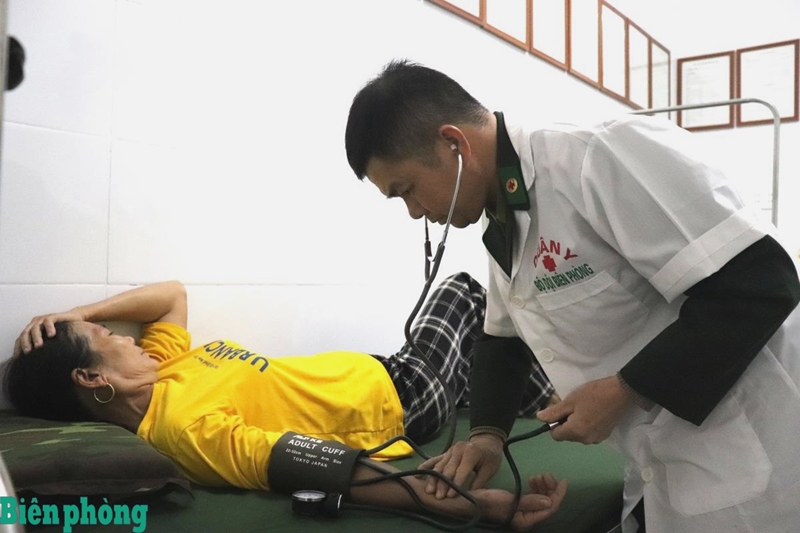
Lieutenant Colonel Phan Anh Tuan, a physician of Bai Dinh military–civilian medical station, has been working in this border area for four years. To local residents, he is not only a healthcare worker but also like a member of their families. He shared that the area is vast, the population scattered, and travel conditions difficult, making medical care challenging. However, clearly aware of the mission of a border guard military medical staff, he and his colleagues always do their utmost, regardless of day or night, rain or shine. On average, each month the Bai Dinh military–civilian medical station examines and provides medicine for about 150 to 200 people. Beyond working at the station, Lt. Col. Tuan frequently carries his medical kit through forests and across streams to reach villages and households, examining elderly people, children, and pregnant women who cannot travel.
Among local residents, the story of local Ho Thi Van is often recalled as a vivid example of the dedication of the military doctor. While collecting bamboo shoots in the forest, she was attacked by dozens of hornets, causing severe swelling and breathing difficulties. In a critical condition, her family urgently brought her to the medical facility. Facing the emergency, Col. Tuan promptly administered first aid, injected anti-shock medication, and closely monitored her condition for many hours. Thanks to the timely treatment, she survived the danger and gradually recovered. Van said that without the prompt intervention of the medical staff from the border guard, she might not have survived, and her family and villagers remain deeply grateful.
Over the years, Lt. Col. Phan Anh Tuan has handled many cases of occupational accidents, poisoning, high fever, and acute diarrhea, helping local people overcome life-threatening moments. According to residents, before the establishment of the station, people often relied on rituals when ill and rarely sought medical care due to long distances and difficult travel. Since the station began operating and border guard troops regularly visit villages, people have gained a better understanding of diseases and proper medication use, leading to noticeable improvements in health.
In addition to treating illnesses, Lt. Col. Tuan also provides guidance on hygienic living practices and disease prevention, including malaria, diarrhea, and respiratory infections. He encourages parents to ensure children receive full vaccinations and advises pregnant women to attend regular check-ups. His clear explanations and practical example have earned the trust of local people, who are willing to follow his advice.
|
|
 |
|
Locals having their health checked |
Alongside its mission to firmly protect national border sovereignty and security, Cha Lo International Border Gate Border Post considers military–civilian medical work one of its important political tasks. Through healthcare activities, border guard officers and soldiers have helped strengthen trust among ethnic communities in the Party, the State, and the military, contributing to building a solid “people’s heart posture” along the border.
According to Colonel Ngo Van Binh, Political Commissar of Cha Lo International Border Gate Border Post, the unit regularly encourages medical staff at the Bai Dinh station to uphold their sense of responsibility, actively coordinate with local health authorities, provide free medical examinations and medicines, and raise public awareness of disease prevention. In addition to routine activities, the unit also organizes mobile health examination activities and community support programs, offering free medicine and assistance to poor households and policy families.
In the remote borderland still facing many hardships, Bai Dinh military–civilian medical station carries profound significance. Here, border guard soldiers not only safeguard the border but also quietly care for the health, lives, and trust of the people, exemplifying the enduring qualities of “Uncle Ho’s Soldiers” in the new era.
Translated by Tran Hoai