The border post is responsible for managing and protecting more than 16 kilometers of border in Na Hy commune, which includes 13 villages and one residential cluster, four of them located along the border. The area has 1,394 households with 7,494 residents from eight ethnic groups, with the H’mong community accounting for over 88%. The vast terrain, geographical fragmentation, and uneven levels of education present challenges for management and public outreach.
    |
 |
|
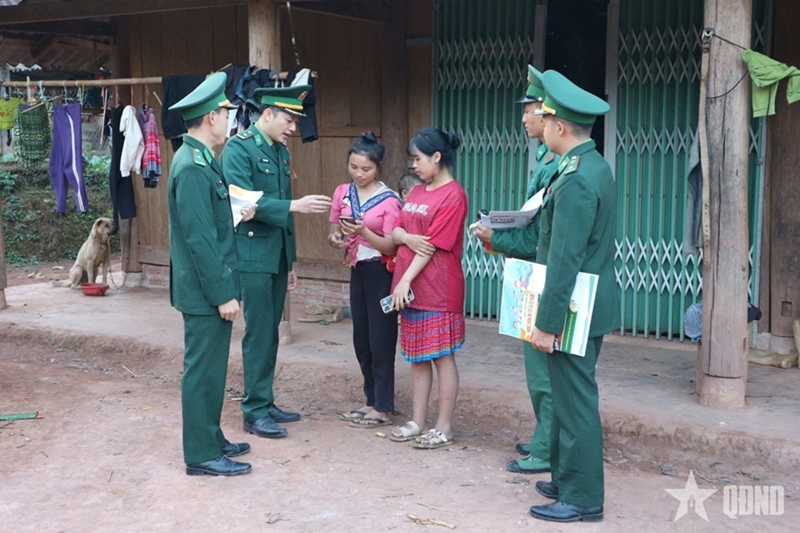
Officers of Nam Nhu Border Post disseminate information and educate local people on legal regulations. |
The area currently has more than 5,000 religious followers. While religious activities are generally stable, some small-scale, spontaneous, and unauthorized gatherings have occurred. These tend to involve individuals with limited legal awareness, making them more vulnerable to misleading information. In some cases, religion has been exploited to spread unlawful propaganda and attract people to unauthorized practices, posing potential risks to security and public order.
According to Major Do Xuan Diem, Political Commissar of the border post, hostile forces may exploit religious activities to undermine national unity and weaken public trust in local authorities. Such influences can lead to internal instability within communities and create conditions for further incitement, affecting the protection of national sovereignty and border security.
Recognizing the importance of prevention, communication, and public mobilization, the unit has identified these tasks as central to its mission. It has pro-actively advised local authorities and implemented measures suited to local conditions and specific groups. A key focus has been strengthening legal education, particularly on the Law on Vietnam Border Guard, the Law on Belief and Religion, and related regulations.
Communications efforts are delivered through village meetings, household visits, and oral dissemination in ethnic minority languages to ensure accessibility and understanding. Officers and Party members are assigned to specific areas and households, maintaining close contact with residents to understand their concerns and provide targeted, flexible outreach.
In parallel, the border post works closely with the Vietnam Fatherland Front, socio-political organizations, village elders, and other respected community figures to encourage compliance with Party guidelines and State laws. These efforts are linked with initiatives to support economic development, poverty reduction, and social welfare, helping build trust and consensus among local people.
Local authorities also coordinate with the unit in conducting outreach and practical support activities, including free medical check-ups, environmental sanitation, and assistance with livelihood development such as fish farming and coffee cultivation. These activities help strengthen the bond between the military and the people, reinforcing public confidence in the Party, the State, and the Border Guard force.
As a result of consistent, flexible, and methodical implementation, unauthorized religious activities in the area have gradually been brought under control, with no emerging hotspots. Currently, 938 households with 5,340 people participate in 23 religious groups belonging to four Protestant denominations. These groups generally comply with Party guidelines and State laws, contributing to maintaining security and public order in the border area.
Translated by Tran Hoai