Held from June 13 to 22, the course aims to equip the Aeromedical Evacuation Team (AMET) of Level-2 Field Hospital Rotation 8 and related forces with fundamental aeromedical evacuation knowledge and skills. The training ensures the personnel are fully prepared for their upcoming deployment to the U.N. Mission in South Sudan (UNMISS).
    |
 |
|
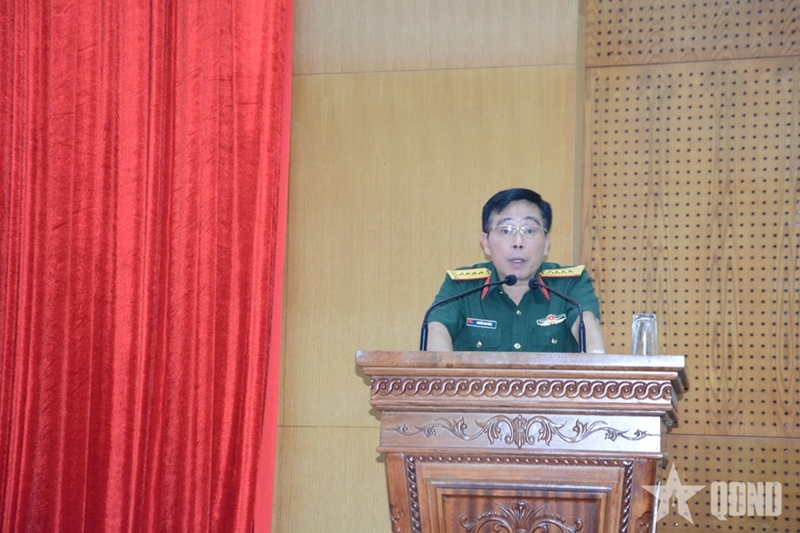
Senior Colonel Nguyen Nhu Canh, VNDPKO Deputy Director, addresses the event. |
Trainees are equipped with comprehensive knowledge aligned with international and U.N. standards. The curriculum covers operational principles, safety procedures, first aid, initial treatment, communications, record processing, and patient transfers, alongside command and control in aeromedical evacuation operations.
Practical training includes field exercises on casualty transfers and loading or unloading patients from helicopters. Simulation exercises utilize a stationary Mi-17 helicopter with running rotors, ambulances, and aeromedical emergency kits. Furthermore, instructors share practical experiences drawn directly from operations at UNMISS.
|
|
 |
|
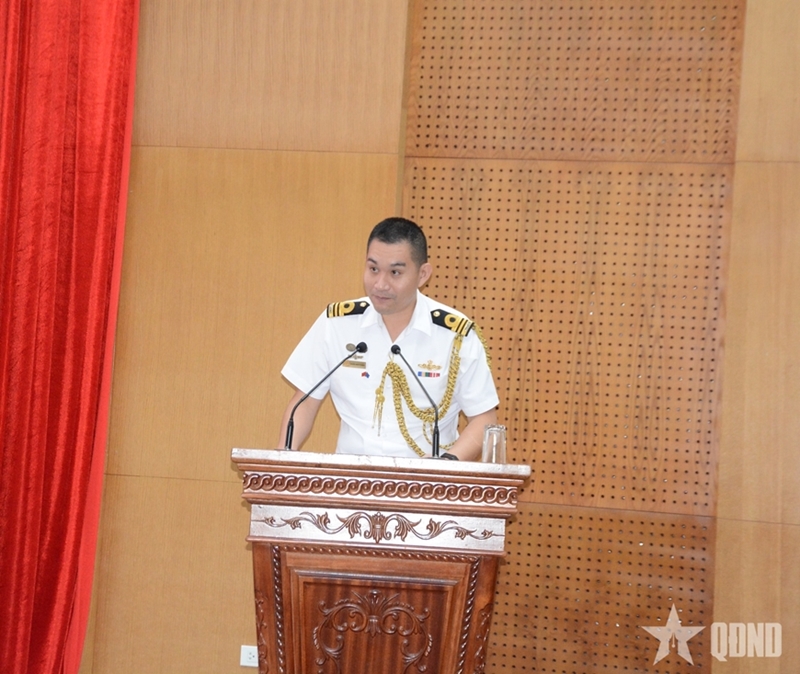
Major David NgoThanh, Australian Deputy Defense Attaché, speaks at the event. |
Senior Colonel Nguyen Nhu Canh, VNDPKO Deputy Director, noted that instructors includes six experts from the Australian Army Health School, along with Vietnamese instructors who previously served in AMETs during earlier field hospital rotations. The 32 trainees are drawn from Level-2 Field Hospital Rotation 8, the Level-1 Field Hospital of Engineering Unit Rotation 5, and the AMETs of the Military Central Hospital 108 and the Military Hospital 175. Notably, this marks the first time 10 peacekeeping officers from the Ministry of Public Security have participated in the training.
|
|
 |
|
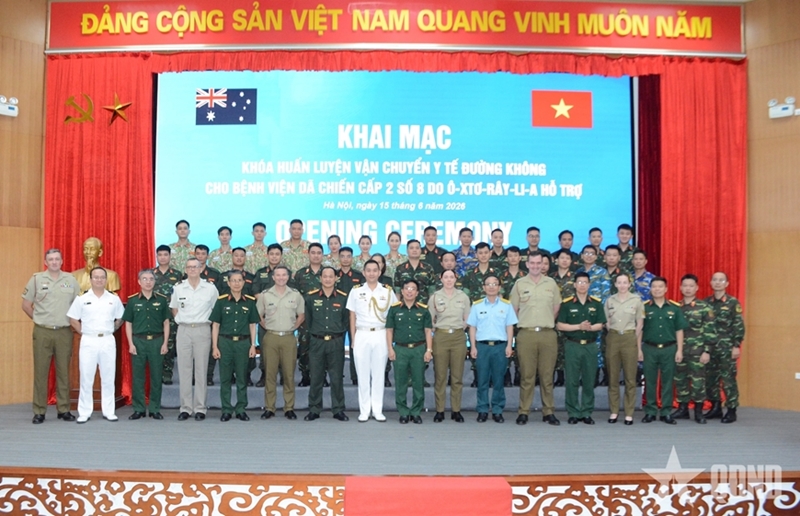
Delegates pose for a group photo. |
Major David NgoThanh, Australian Deputy Defense Attaché, emphasized that aeromedical evacuation is a critically important component of mission operations. This capability plays a pivotal role in humanitarian assistance, disaster response, and ensuring the safety of forces operating in remote, high-risk areas.
Throughout the course, trainees will master both theoretical knowledge and practical skills regarding patient stabilization, emergency transport protocols, coordination with various specialized forces, and strict adherence to international standards.
Translated by Chung Anh