The meeting was attended by more than 40 delegates from the 11 APCN member countries, representatives of the ASEAN Secretariat, and the Integrated Training Service under the U.N. Department of Peace Operations (ITS/DPO). The Vietnamese Ministry of National Defense delegation was led by Major General Pham Manh Thang, Director of the Vietnam Department of Peacekeeping Operations (VNDPKO).
    |
 |
|
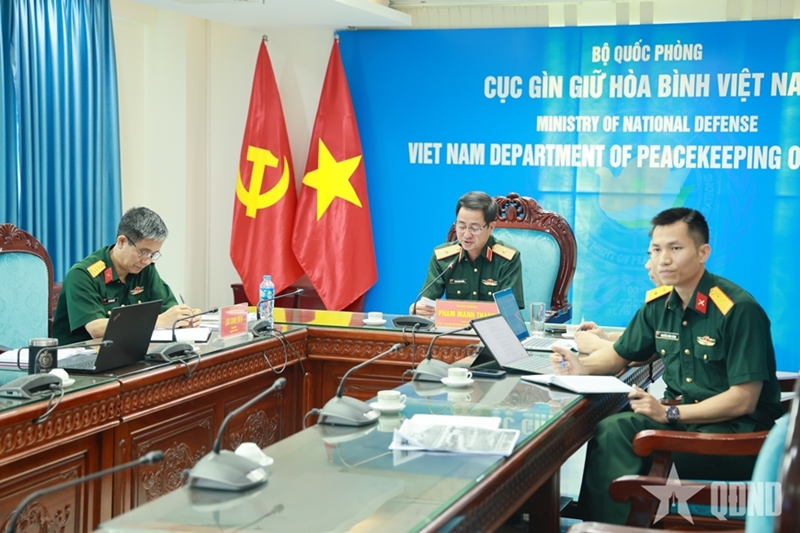
Major General Pham Manh Thang, VNDPKO Director, speaks at the plenary session of the meeting. |
The event aimed to strengthen regional cooperation, improve coordination and readiness of peacekeeping forces, and provide a forum for exchanging experience, sharing expertise, and enhancing training cooperation among member states.
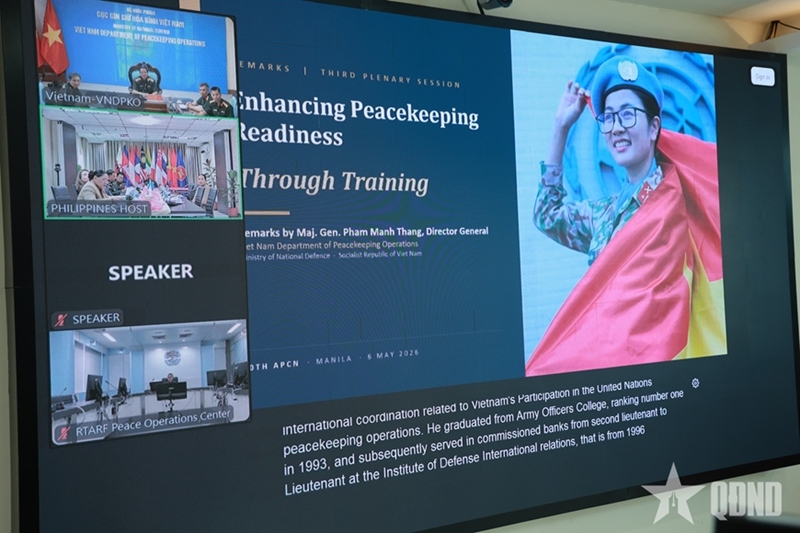
Within the framework of the meeting, on May 6, Major General Pham Manh Thang delivered a presentation during the plenary session on the theme “Enhancing peacekeeping readiness through training.” He highly valued the APCN meeting as an important platform for ASEAN member states to maintain momentum and deepen cooperation in capacity-building through training in order to contribute more effectively to U.N. peacekeeping missions, especially as U.N. peacekeeping operations face emerging challenges.
He noted that major challenges include liquidity crises, budget and force reductions, while security environments in missions are becoming increasingly complex and dangerous due to rising non-traditional threats.
Major General Pham Manh Thang affirmed that Vietnam has actively supported and implemented the United Nations’ Action for Peacekeeping (A4P) and Action for Peacekeeping Plus (A4P+) initiatives to enhance the effectiveness of U.N. peacekeeping operations through stronger responsibility-sharing, improved capacity, and expanded partnerships among member states, particularly in improving training quality and deployment readiness.
|
|
 |
|
Online venues of the 10th APCN meeting |
In his presentation, the Director of the VNDPKO shared several of Vietnam’s lessons learned in preparing forces for U.N. peacekeeping missions, including developing synchronized pre-deployment training programs for both individual personnel and units in line with U.N. standards, mission realities, and requirements of the Ministry of National Defense; building a contingent of high-quality, internationally qualified instructors; applying modern training methods and tools; implementing simulation-based training models; and updating and sharing practical lessons from U.N. missions.
He stated that Vietnam has proactively strengthened its self-reliant training capacity and standardized advanced training courses to international standards. Vietnam now has the first internationally accredited International Trauma Life Support (ITLS) Training Center in Vietnam and Southeast Asia. In March, the U.N. Department of Peace Operations awarded certification recognizing the United Nations Staff Officer Course (UNSOC) organized by the VNDPKO as meeting U.N. pre-deployment training standards.
The certification marked a significant qualitative advancement, reaffirming Vietnam’s peacekeeping training capacity and contributing positively to efforts to enhance the capabilities of the region’s peacekeeping training network. Accordingly, the training center of the VNDPKO is being developed into a high-quality training establishment with regional and international prestige.
|
|
 |
|
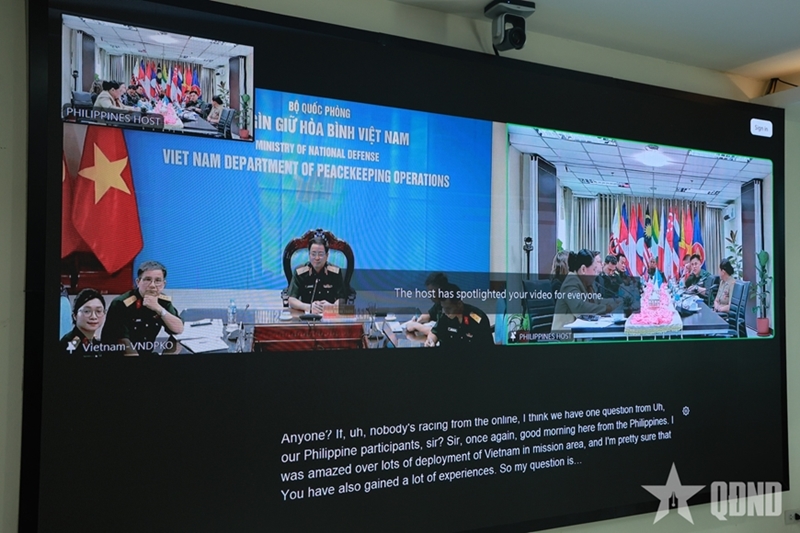
The Vietnamese delegation attends the 10th APCN meeting virtually. |
At the event, delegates highly appreciated Vietnam’s presentation, describing it as rich in practical and valuable experience. Many expressed interest in Vietnam’s successful practices, particularly in organizing training, preparing forces for deployment, and developing high-quality instructors through international cooperation. Notably, the Philippine representative proposed that Vietnam dispatch mobile instructor teams to share successful models and practical experience with countries in the region.
The meeting also discussed measures to strengthen partnerships, apply technology, improve deployment readiness, and promote the role of women in peacekeeping operations. Participants reviewed APCN’s orientations for 2026 and the coming years, reaffirming the network’s role as an active and effective cooperation mechanism for connecting, coordinating, and enhancing the capabilities of ASEAN peacekeeping centers, thereby contributing to ASEAN Community-building and multilateral peacekeeping cooperation.
Translated by Trung Thanh