Although Viet Nam and Azerbaijan established diplomatic relations in 1992, the foundations of their ties date back to President Ho Chi Minh's historic visit to Azerbaijan in 1959. The relationship has since been nurtured by generations of leaders and people from both countries over several decades, including Azerbaijani national leader Heydar Aliyev's visit to Viet Nam in 1983. The thought, spiritual, and cultural legacies of President Ho Chi Minh and national leader Heydar Aliyev continue to guide the two countries in strengthening their friendship and cooperation for peace and prosperity in both nations, their respective regions, and the world.
    |
 |
|
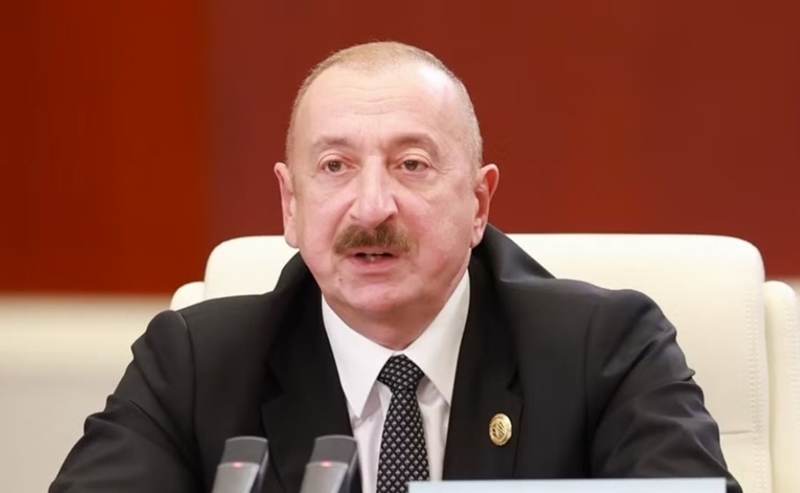
Azerbaijani President Ilham Aliyev |
The elevation of bilateral ties to a strategic partnership during General Secretary To Lam's state visit to Azerbaijan in May 2025 marked a historic milestone, opening a new chapter in bilateral relations and reflecting the political determination and shared vision of the two countries' leaders for the future of their partnership.
Over the 34 years since establishing diplomatic relations, Viet Nam and Azerbaijan have weathered numerous changes in the international landscape. Both countries and the world have undergone profound transformations, but mutual respect and goodwill have remained a strong bond. Built on traditional friendship and strengthened by trust, their bilateral ties have created opportunities for cooperation across various fields.
In economic and trade cooperation, bilateral trade has generally expanded in recent years, reaching nearly 150 million USD in 2023 and almost 60 million USD in the first nine months of 2026. To help businesses from both countries better capitalize on their respective potential and advantages, the two sides have established the Viet Nam-Azerbaijan Intergovernmental Commission on economic, trade, and scientific-technical cooperation at the ministerial level. The commission has held three sessions to date, helping deepen bilateral cooperation across various fields.
In defense cooperation, the two sides have sought to expand collaboration in line with the level of their state-to-state relations, particularly in delegation exchanges, defense industry, humanitarian mine and explosive ordnance clearance, and support for and participation in international multilateral activities hosted by either side. During General Secretary To Lam's state visit in May 2025, the two countries signed a Memorandum of Understanding on defense cooperation, providing an important foundation for more practical and effective bilateral collaboration in this field.
Cooperation in other areas, including science and technology, education and training, culture, and tourism, has also gradually advanced, with considerable room for further development. Education and training remain a traditional area of cooperation, as Azerbaijan previously trained many Vietnamese students and specialists during the Soviet era. This cooperation is gradually being revived, with Vietnamese students recently pursuing studies in oil and gas and international relations in Azerbaijan. Each year, Azerbaijan also provides training for Vietnamese naval officers and experts in the oil and gas and judicial sectors.
The two countries also maintain close coordination and mutual support at international organizations and multilateral forums, particularly the United Nations, the Non-Aligned Movement, the Conference on Interaction and Confidence Building Measures in Asia (CICA), and other international mechanisms in which both participate. Such cooperation contributes positively to peace, stability, cooperation, and development in their respective regions and the world.
Building on their longstanding friendship, the official visit to Viet Nam by Azerbaijani President Ilham Aliyev and his spouse is expected to generate significant political and diplomatic momentum and open up new opportunities to translate the two countries' strategic vision into concrete cooperation. The visit is expected to provide fresh impetus for expanding bilateral ties in politics, diplomacy, the economy, trade, investment, energy, education, science and technology, and people-to-people exchanges, bringing tangible benefits to the peoples of both countries.
Translated by Quynh Oanh