Addressing the forum, themed "Vietnam's Pathway to Net Zero," the Deputy PM, who also chairs the National Council for Sustainable Development, said the country has entered a new stage of development when ensuring energy security, accelerating green transition and enhancing national competitiveness have become more urgent than ever.
He said the forum is an opportunity to translate commitments into concrete actions and strategies into practical projects while mobilizing the participation of the whole society, particularly the business community.
    |
 |
|
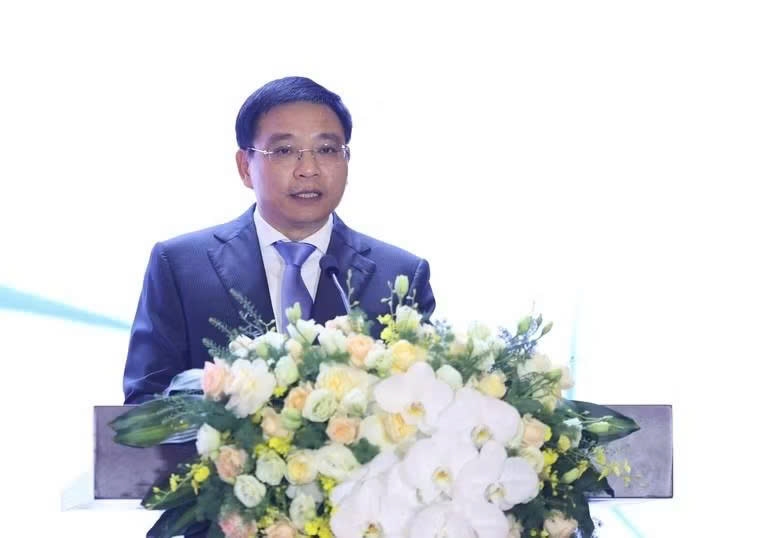
Deputy Prime Minister Nguyen Van Thang speaks at the World Energy and Environment Forum–Vietnam 2026 in Hanoi on July 8. (Photo: chinhphu.vn) |
Thang noted that climate change remains one of the world's greatest challenges, strongly affecting every aspect of socio-economic development. As a fast-growing and highly open economy with rising energy demand, Vietnam is among the countries most vulnerable to its impacts.
He reaffirmed the Party and State's commitment to pursuing fast growth alongside sustainable development, ensuring that economic expansion goes hand in hand with social progress, environmental protection and innovation.
Representatives from ministries and central agencies shared policy orientations for implementing Vietnam's commitment to achieving net-zero emissions by 2050.
Speakers agreed that energy security and green transition are complementary goals that should be advanced simultaneously through a modern and diversified energy system, efficient resource use, innovation, science–technology, and stronger private-sector engagement.
At the 26th United Nations Climate Change Conference (COP26), Vietnam pledged to achieve net-zero emissions by 2050. The commitment has since been incorporated into key national policies and strategies on energy security and energy development.
To advance energy transition, Thang said the Government will continue improving policies and mechanisms to build a comprehensive energy system, diversify energy sources, expand renewable energy and promote energy efficiency.
He stressed that Vietnam will continue investing in power transmission networks, energy storage, power system dispatch and a competitive electricity market while encouraging greater private-sector participation.
The transition will not involve the abrupt elimination of traditional energy sources. Instead, they will be used more efficiently through the application of advanced technologies to strictly control emissions and gradually reduce their share in the energy mix according to an appropriate roadmap, Thang said.
According to the Deputy PM, the transition must simultaneously meet three key requirements: ensuring sufficient energy for economic growth, reducing emissions in line with Vietnam's international commitments, and guaranteeing a just transition for workers, businesses and localities.
He reaffirmed Vietnam's principle of not sacrificing the environment for economic growth, saying the Government will strengthen environmental protection, tackle pollution more effectively and restore natural ecosystems. It will also accelerate the development of a circular economy and promote greener production and consumption to build a low-carbon economy.
Thang highlighted green finance and the domestic carbon market as key pillars of the country's climate strategy. He said Vietnam will continue refining its legal framework, expand green capital markets through green bonds and green credit, integrate environmental criteria into public budget management, and strengthen cooperation with international financial institutions to mobilize concessional financing and advanced technologies.
He also called on businesses to take the lead in developing emissions reduction roadmaps, integrating environmental, social and governance (ESG) standards into their long-term strategies, and investing in clean technologies. Localities, particularly those with strong renewable energy potential, should improve planning, better the investment environment, and streamline administrative procedures to create the best possible conditions for green investment projects.
The Government, he affirmed, will continue working closely with businesses and local authorities to remove obstacles and support Vietnam's journey towards its net-zero target.
Source: VNA