Growth momentum strengthened
Viet Nam’s economy is entering the final months of 2026 on a relatively solid growth footing. Gross domestic product (GDP) grew 8.18 percent year-on-year in the first half of the year, with growth drivers relatively broadly distributed across economic sectors.
    |
 |
|
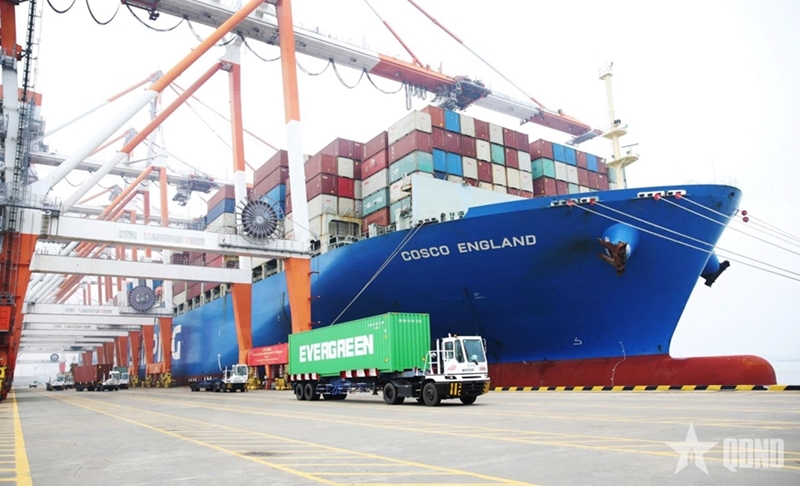
Cargo handling and transportation operations at Tan Cang-Cai Mep International Terminal, Saigon Newport Corporation. |
In the first eight months of 2026, industrial production increased 11.9 percent, with manufacturing and processing up 12.9 percent. Total retail sales of goods and consumer services revenue rose 13.3 percent, or 7.6 percent after excluding price factors. Disbursed foreign direct investment (FDI) reached 17.25 billion USD, up 12 percent. Exports totaled 374.84 billion USD, up 22.4 percent, while imports reached 395.3 billion USD, up 35.3 percent. Public investment disbursement stood at VND 513.3 trillion as of September 3, equivalent to 50.2 percent of the plan assigned by the Prime Minister.
Building on Viet Nam’s recent economic performance, the Asian Development Bank (ADB) on September 23 raised its forecast for Viet Nam’s 2026 GDP growth to 7.8 percent, up from its previous projection of 7.2 percent. It also raised its 2027 forecast from 7 percent to 7.6 percent.
In a longer-term outlook, Bain & Company, DBS and Vriens & Partners forecast average growth of 4.8 percent for the six largest Southeast Asian economies over 2026-2035 (Indonesia, Malaysia, the Philippines, Thailand, Singapore, and Viet Nam), with Viet Nam continuing to be a leading growth driver in the region.
|
|
 |
|
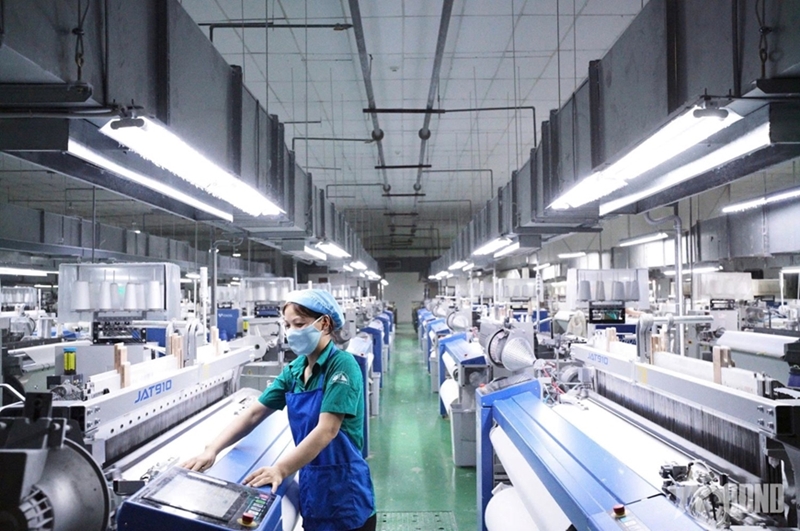
Workers operate a modern textile production line at the Textile Factory, Corporation 28, under the General Department of Logistics and Technical Services. |
At a recent seminar, experts from the Institute of Viet Nam and World Economy (IVAWE) projected that Viet Nam’s economy could grow by around 8.5 percent in 2026, significantly higher than ADB’s latest forecast.
Viet Nam has strong growth drivers, but risks remain
The differences among growth forecasts reflect different perspectives and assumptions, but the sources broadly identify the same key drivers of Viet Nam’s growth. ADB said manufacturing and processing, domestic consumption, FDI and supportive policies would remain important growth drivers. Meanwhile, experts from the IVAWE placed additional emphasis on public investment in the final months of the year, the potential for FDI to provide additional capital for industry, the recovery of tourism and transportation, and the impact of improved cash flow for businesses.
Domestic experts said manufacturing and processing could continue to make a major contribution, while public investment could generate additional construction demand in the fourth quarter. Accelerating tax refunds, public investment disbursements, and project licensing procedures could also help businesses fulfill orders more quickly.
|
|
 |
|
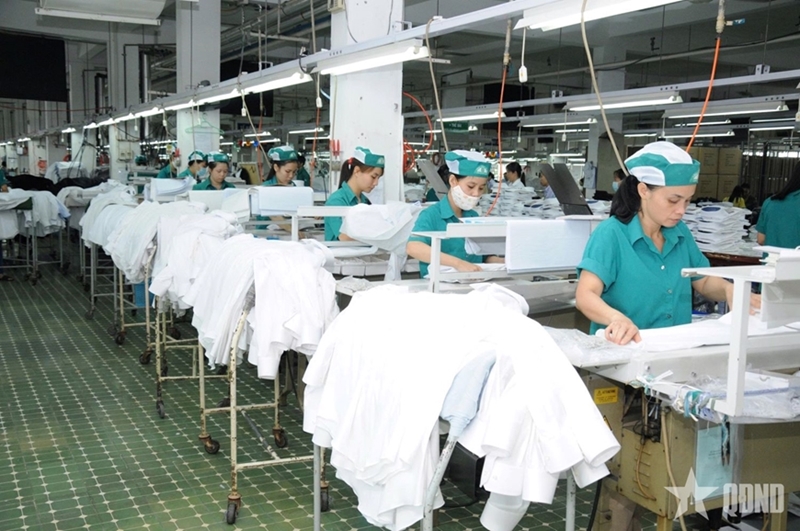
Workers at Joint Stock Company 28 Hung Phu (Corporation 28) inspect finished men’s shirts before delivery. |
Both approaches point to considerable room for Viet Nam’s economy to maintain growth in 2026.
It should be emphasized that a positive outlook does not mean that the path ahead will be easy. ADB warned that rising global uncertainty could put pressure on exports, investment, inflation and the exchange rates. The economy’s increasing reliance on investment and credit could also heighten risks to liquidity and financial stability. Meanwhile, weaker global demand would have a direct impact on Viet Nam, an economy with a high degree of trade openness.
Experts from the IVAWE pointed to more specific domestic risks. Real purchasing power could grow more slowly than production; the cost of capital remains high; and rapidly rising imports are placing greater demands on the efficiency of input use. Volatility in oil and energy prices could add to cost pressures, while growing trade risks could emerge if major export markets impose additional tariffs.
Another issue is the pace of investment. If some key projects are delayed, the spillover effects of public investment on construction, building materials, transportation and related services would fall short of expectations.
Based on these assessments, experts recommended that Viet Nam turn its existing growth drivers into stronger underlying growth capacity.
|
|
 |
|
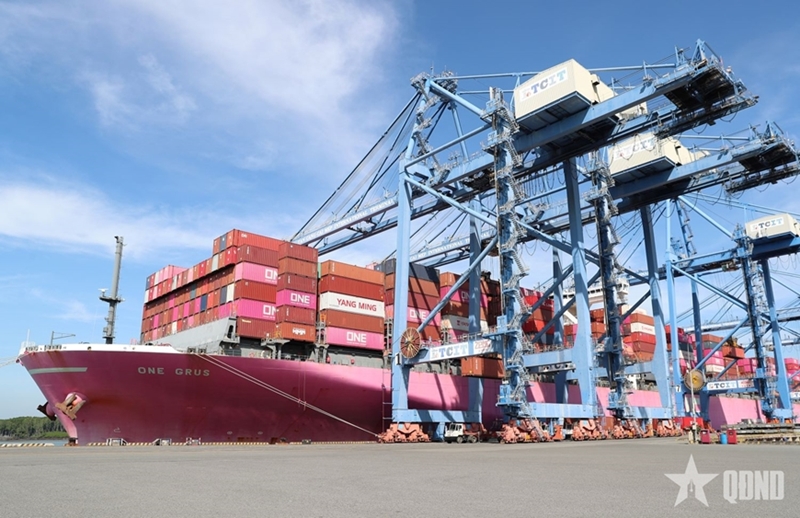
Cargo handling and transportation operations at Tan Cang - Cai Mep International Terminal, Saigon Newport Corporation |
ADB recommended that Viet Nam continue to pursue prudent macroeconomic management, control inflation, safeguard financial stability, accelerate structural reforms and direct investment toward areas that can improve productivity.
Experts from the IVAWE proposed classifying public investment projects according to actual construction conditions in order to focus resources; continuing to shorten the time required for tax refunds and payments of eligible obligations; and assessing access to capital based on different groups of businesses and borrowing purposes. They also called for proactive energy scenarios, support for businesses in meeting rules of origin, standards and requirements in individual markets, and stronger resilience of transportation routes and production areas to natural disasters.
From the perspective of both international and domestic experts, Viet Nam is well-positioned to maintain a high growth rate in 2026. The ADB’s 7.8-percent forecast and the 8.5-percent scenario projected by the IVAWE clearly reflect experts’ confidence based on scientific evidence and empirical data.
Viet Nam’s advantage at this point is that growth momentum has already been established. The challenge is to turn that momentum into higher productivity, stronger resilience and more efficient investment. These factors will be important to Viet Nam’s growth prospects in 2026 and provide a foundation for the years ahead.
Translated by Quynh Oanh